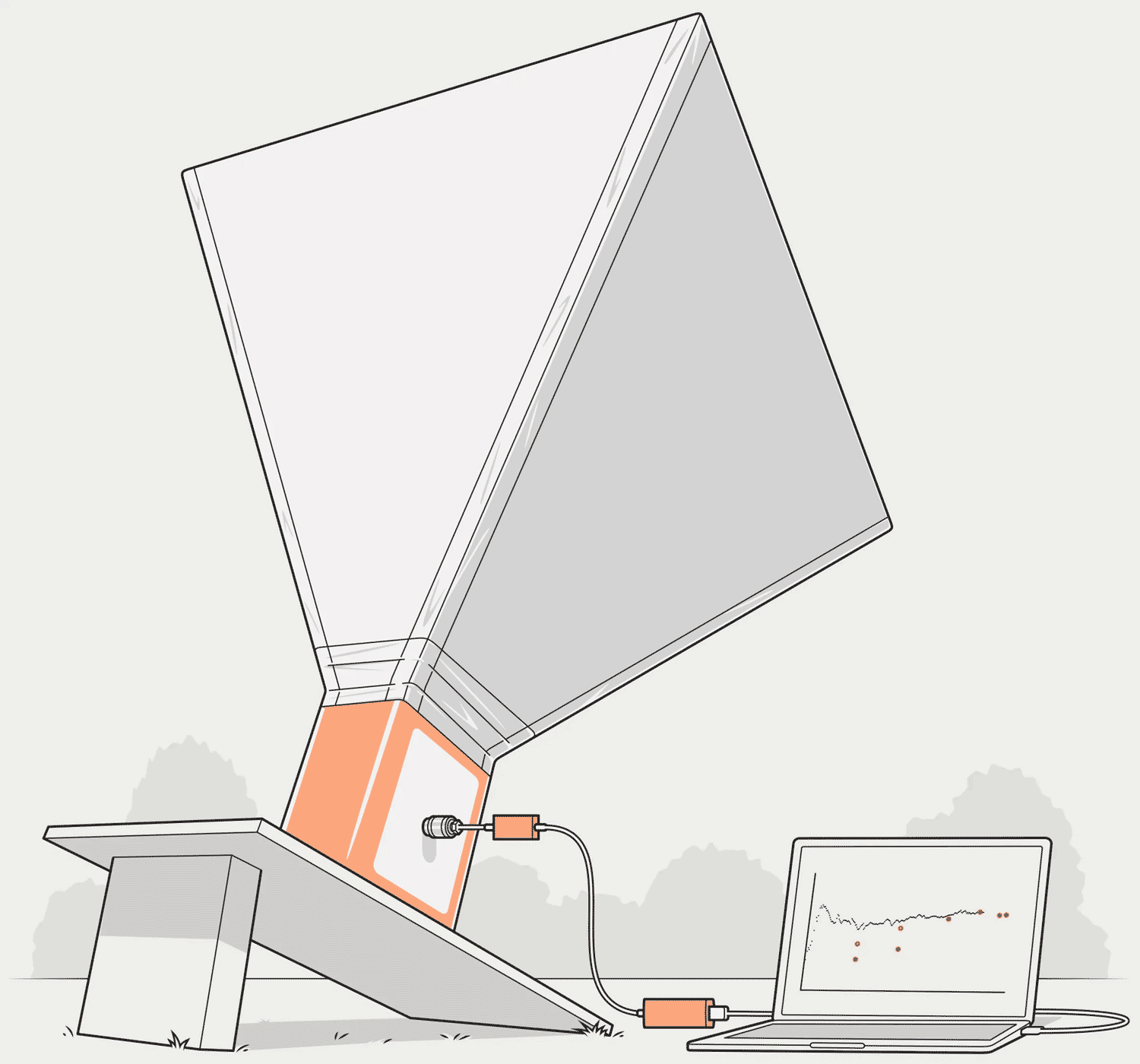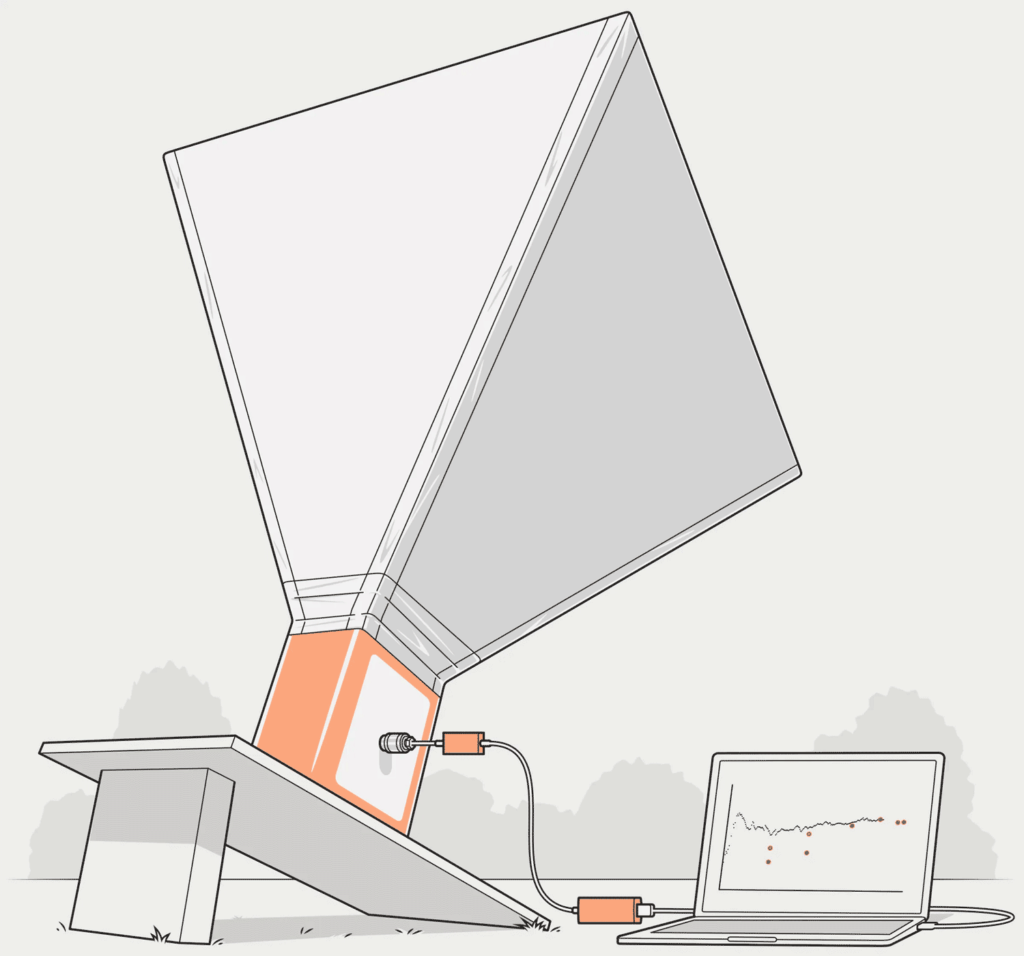
In IEEE Spectrum, a magazine for Electrical Engineers, author David Schneider wrote an article showing how he used an RTL-SDR, LNA, and DIY Horn Antenna to measure the speed of interstellar clouds and indirectly detect the presence of dark matter.
Based on calculations of the distribution of visible stellar mass in our galaxy, a certain galactic rotational velocity-versus-distance-from-the-center curve is expected. However, when scientists actually measure the galactic rotation, another curve is found - a curve which should result in the galaxy flying apart. This mismatch in expected vs measured data has given rise to the theory of "dark matter". The theory essentially states that to produce the measured curve, the galaxy must have more mass, and that this mass must come from non-luminous matter scattered throughout the galaxy, which is difficult or impossible to observe.
In his experiment, David uses a DIY radio telescope to measure the speed of the Milky Way's rotation at various galactic longitudes via Hydrogen line Doppler-shift analysis. After plotting the results, David confirmed that his results match professional astronomers' observations.
If you're interested, we posted about a similar experiment by Job Geheniau back in 2020.
We also want to note that we sell a ready-to-use kit called the Discovery Dish, which, with the Hydrogen Line feed, could be used for this experiment.