
Development of Neural Networks and Deep LearningThe fields of neural networks and deep learning rep 2026-8-16 16:0:5 Author: hackernoon.com(查看原文) 阅读量:3 收藏
Development of Neural Networks and Deep Learning
The fields of neural networks and deep learning represent some of the most significant advancements in artificial intelligence, revolutionizing how machines learn and process information. This development has been pivotal in enabling machines to perform a wide range of complex tasks, from image and speech recognition to natural language processing.
The Emergence of Neural Networks
Neural networks, inspired by the biological neural networks in human brains, were conceptualized as a way to enable machines to mimic human learning. The basic idea was to create a network of artificial neurons that could process and transmit information in a manner similar to the way neurons do in the brain.
The foundational work in neural networks began in the 1940s and 1950s with researchers like Warren McCulloch and Walter Pitts, who created a computational model for neural networks. However, it was not until the 1980s and 1990s that significant progress was made, thanks to increased computational power and the development of the backpropagation algorithm, which allowed neural networks to adjust and improve over time based on their output.
The Rise of Deep Learning
Deep learning, a subset of machine learning, is essentially about using large neural networks with many layers (hence "deep") of neurons to process complex patterns in data. A significant breakthrough came in the late 2000s and early 2010s when researchers began to effectively train deep neural networks, leading to remarkable improvements in tasks like image and speech recognition.
Key to this breakthrough was the use of large datasets and powerful graphics processing units (GPUs) to train these networks. In 2012, a team led by Geoffrey Hinton made a significant advancement in deep learning by winning the ImageNet competition, which involved classifying a large set of images into categories. This success demonstrated the power of deep learning in handling and making sense of large amounts of unstructured data.
Applications and Impact
The development of neural networks and deep learning has had a profound impact on the field of AI. Some of the key applications include:
- Image and Voice Recognition: Used in everything from unlocking smartphones with facial recognition to enabling voice assistants like Siri and Alexa.
- Natural Language Processing (NLP): Powering language translation services, chatbots, and content creation tools.
- Medical Diagnosis: Assisting in identifying diseases from medical images like X-rays and MRIs.
- Autonomous Vehicles: Enabling self-driving cars to interpret and navigate their surroundings.
Challenges and Future Directions
Despite their successes, neural networks and deep learning also face challenges. These include the need for large amounts of data to train models, the "black box" nature of deep learning models (where it's often unclear how the model arrived at a specific decision), and the significant computational resources required.
The future of neural networks and deep learning involves addressing these challenges while expanding their capabilities and applications. Efforts are underway to make these models more transparent, efficient, and less reliant on large datasets. There is also a growing focus on developing more sophisticated models that can understand and process data in a more human-like way.
The development of neural networks and deep learning has been a game-changer in AI, leading to significant advances in how machines learn and process complex data. This progress has not only enhanced the capabilities of AI systems but has also opened up new possibilities and applications, making AI an integral part of modern technology and daily life.
 Photo by Pietro Jeng on Unsplash
Machine Learning Algorithms: Fueling AI's Progress
The evolution of machine learning algorithms has been a cornerstone in the development of artificial intelligence, driving significant progress in how machines learn, adapt, and make decisions. These algorithms, classified primarily as supervised, unsupervised, and reinforcement learning, have enabled machines to process and learn from data, paving the way for more sophisticated and autonomous AI systems.
Supervised Learning: Learning from Labeled Data
Supervised learning, one of the most common types of machine learning, involves training algorithms on a labeled dataset. In this setup, the algorithm is provided with input data along with the corresponding output. The goal is for the algorithm to learn a mapping between the inputs and outputs, allowing it to make predictions or decisions when given new, unseen data.
This form of learning is used extensively in applications such as spam detection in emails, where the algorithm is trained on a dataset of emails labeled as 'spam' or 'not spam,' and image classification tasks where images are labeled with specific categories.
Unsupervised Learning: Discovering Hidden Patterns
Unlike supervised learning, unsupervised learning deals with unlabeled data. The algorithm tries to find patterns or structures within the data without any guidance on what to look for. This type of learning is particularly useful for exploratory data analysis, clustering, and dimensionality reduction.
Applications of unsupervised learning include customer segmentation in marketing, where customers are grouped into clusters based on purchasing behavior, and anomaly detection, such as identifying fraudulent activity in credit card transactions.
Reinforcement Learning: Learning Through Interaction
Reinforcement learning is a paradigm where an algorithm, termed an agent, learns to make decisions by interacting with its environment. The agent receives rewards or penalties based on its actions and aims to maximize the cumulative reward over time. This type of learning is inspired by behavioral psychology and is particularly suited for applications where decision-making involves a sequence of steps.
Significant applications of reinforcement learning include autonomous driving, where the vehicle must make a series of decisions while navigating, and gaming, as demonstrated by AI systems like DeepMind's AlphaGo, which learned to master the game of Go.
The Impact and Future of Machine Learning Algorithms
Machine learning algorithms have fundamentally changed the landscape of AI by enabling systems to learn and improve from experience, akin to human learning. These algorithms have become more sophisticated over time, allowing for more complex and nuanced decision-making.
The future of machine learning involves developing more efficient algorithms that require less data and computational resources, can learn more quickly, and are capable of more generalizable learning. Additionally, there is a growing focus on making these algorithms more transparent and explainable, which is crucial for applications in sensitive domains like healthcare and criminal justice.
The evolution of machine learning algorithms represents a major stride in the progress of AI. By enabling machines to learn from data and improve over time, these algorithms have expanded the capabilities and applications of AI systems, making them more autonomous and intelligent. As machine learning continues to evolve, it promises to unlock even more advanced and transformative AI applications.
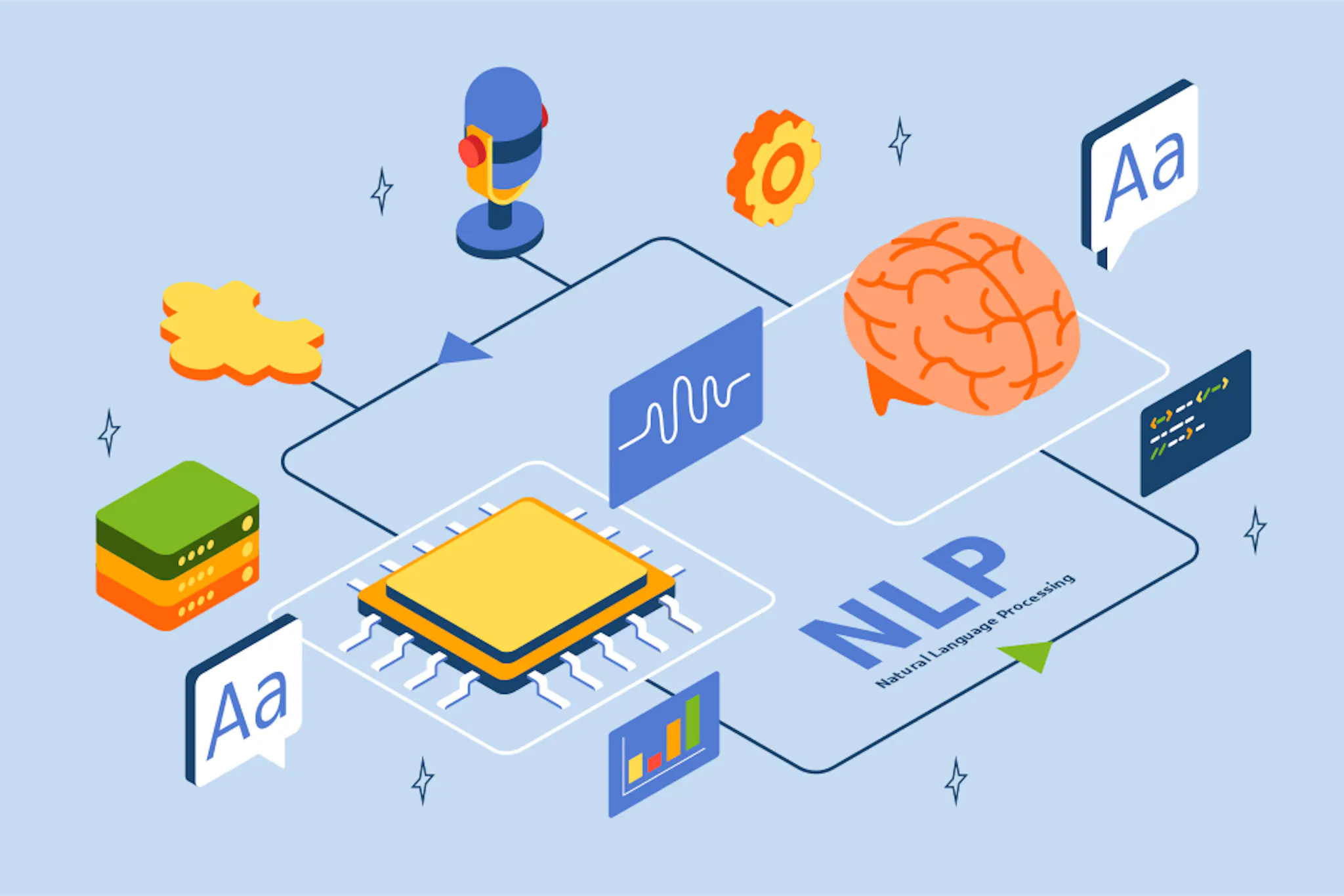 Natural Language Processing, Wikipedia
Natural Language Processing (NLP): Bridging AI and Human Language
Natural Language Processing (NLP) stands as a remarkable frontier in the field of artificial intelligence, representing the convergence of computer science, linguistics, and machine learning. The advancements in NLP have revolutionized the way machines understand, interpret, and interact with human language, making these interactions more meaningful and contextually relevant.
The Evolution of NLP
The journey of NLP began with simple rule-based systems that could perform basic language tasks like spell checking and keyword search. However, the real breakthrough came with the application of machine learning algorithms, particularly deep learning, which significantly enhanced the complexity and efficiency of NLP tasks.
This evolution enabled machines to go beyond mere word recognition to understanding the semantics and context of language. Technologies like word embeddings (where words are represented as vectors in a continuous vector space) and transformers (models that are adept at handling sequences of data, like sentences) have been instrumental in these developments.
Key Applications of NLP
1. Sophisticated Chatbots and Virtual Assistants: NLP has led to the creation of advanced chatbots and virtual assistants like Siri, Alexa, and Google Assistant. These systems can understand and respond to user queries in a natural and human-like manner, making them invaluable in customer service, information retrieval, and personal assistance.
2. Language Translation Services: Tools like Google Translate and DeepL have transformed language translation, making it more accurate and context-aware. This has significantly lowered language barriers in global communication and information exchange.
3. Sentiment Analysis: NLP is used to analyze social media, customer reviews, and other forms of feedback to determine the sentiments behind the text, which is incredibly useful in market analysis and customer service.
4. Information Extraction and Text Summarization: NLP algorithms can extract useful information from large volumes of text and summarize content, aiding in data analysis and decision-making processes.
Challenges and Future Directions
Despite its significant advancements, NLP still faces challenges, particularly in understanding the nuances, idioms, and cultural contexts of language. Also, building NLP systems that can effectively handle low-resource languages (languages with limited digital resources) remains a challenge.
The future of NLP lies in addressing these challenges and moving towards more generalized language understanding. This includes developing models that can understand and process multiple languages simultaneously and can grasp more abstract and complex aspects of language, such as humor and sarcasm.
The advancements in Natural Language Processing have been a key driving force in making AI more accessible and user-friendly. By enabling machines to interact with humans in our most natural form of communication - language - NLP has opened up numerous possibilities for enhancing and personalizing user experiences. As NLP continues to evolve, it promises to further bridge the gap between human communication and artificial intelligence, leading to even more seamless and intuitive interactions.
Literature and Information sources
- History of computing: alan turing, the father of computer science research paper example
- Stuart Russell, Peter Norvig “Artificial Intelligence: A Modern Approach”, 3rd Edition, 2011
- The Dartmouth Conference: The Event that Shaped AI Research
- History of Artificial Intelligence (AI)
- Artificial Intelligence Tutorial for Beginners
- Deep Learning: The Art of Hierarchical Feature Learning, Anil Saini
- 4 Major Types of Artificial Intelligence
- Definition artificial intelligence (AI), Nicole Laskowski, Linda Tucci
- Top 10 Machine Learning Algorithms For Beginners: Supervised, and More, Simon Tavasoli
- History of natural language processing, Neri Van Otten
- Navigating the Landscape of Natural Language Processing, Satish Hirol
如有侵权请联系:admin#unsafe.sh