Anthropic started watermarking Claude's output this week. The mark is invisible; it rides along when 2026-8-14 16:0:3 Author: hackernoon.com(查看原文) 阅读量:5 收藏
Anthropic started watermarking Claude's output this week. The mark is invisible; it rides along when you copy and paste, and it answers one question: was a model involved?
The complaints came fast, and not from the people flooding the internet with generated slop. They came from writers. Peter Harrell, a lawyer at Georgetown, worked out that running his own draft through for a copy edit would get it marked as AI, "which seems ridiculous." The political scientist Maya Sen, who dictates and has Claude tidy up the transcript, said it made the tool "a lot less useful for users like me." Anthropic doesn't really dispute this. Its own documentation says a detected mark "is not proof of AI authorship".
Apparently, the mark is difficult to defeat. Removability is the least of it, though. The defect that matters is that the mark catches the wrong people. Harrell's copy-edited draft gets flagged. A thousand words of generated filler, run once through a paraphraser, comes back clean.
Here's the thing.
I have been a writer, and I've admired writers my whole life, and I know what a good paragraph costs. Which is why I notice when writers I admire start working with these machines and get better. Not faster, though they are faster. Better. The sentences still sound like them because every judgment inside them is still theirs. What the machine took away was the work that was never the point.
I don't care whether a model was involved in what I read. I care whether it's any good. A detector settles the first question. Nothing settles the second except a person willing to have a view and defend it.
A piano is a machine.
Bartolomeo Cristofori built the first piano in Florence around 1700, and what he invented was a mechanism: a hammer that strikes the string and then instantly falls away so the note can go on ringing, a train of levers that multiplies the force of a finger, and a damper that kills the sound the moment you lift the key. A few ounces of pressure at the key, and the room gets a column of sound.
That's the whole trick. You supply the intention and a small amount of physical work, and the instrument supplies the power. A modern concert grand carries something like twenty tons of string tension in a cast-iron frame, and a felt hammer turns the motion of your fingertip into a sound that reaches the back row of a room holding two thousand people. When a pianist makes an audience cry, nearly all the physical work in that room was done by a machine.
Nobody calls a pianist a cheat today.
They did at first. Professionals withheld their applause: the tone was "too soft and dull," and it demanded a player who had "made a particular study" of it. Bach tried one, admired the tone, and complained anyway that the treble was too weak and the action too hard to play. Voltaire called it a boilermaker's instrument next to the harpsichord.
Every one of those objections was about a mechanism getting inserted between a finger and a string. And every one of them evaporated. By 1906, the year Ambrose Bierce set down the last of the definitions he'd been collecting since 1881, the piano was absorbed so completely that he could file it in The Devil's Dictionary as "a parlor utensil for subduing the impenitent visitor," operated "by depressing the keys of the machine and the spirits of the audience," and the joke lands without anyone flinching at the word.
The menace of mechanical music.
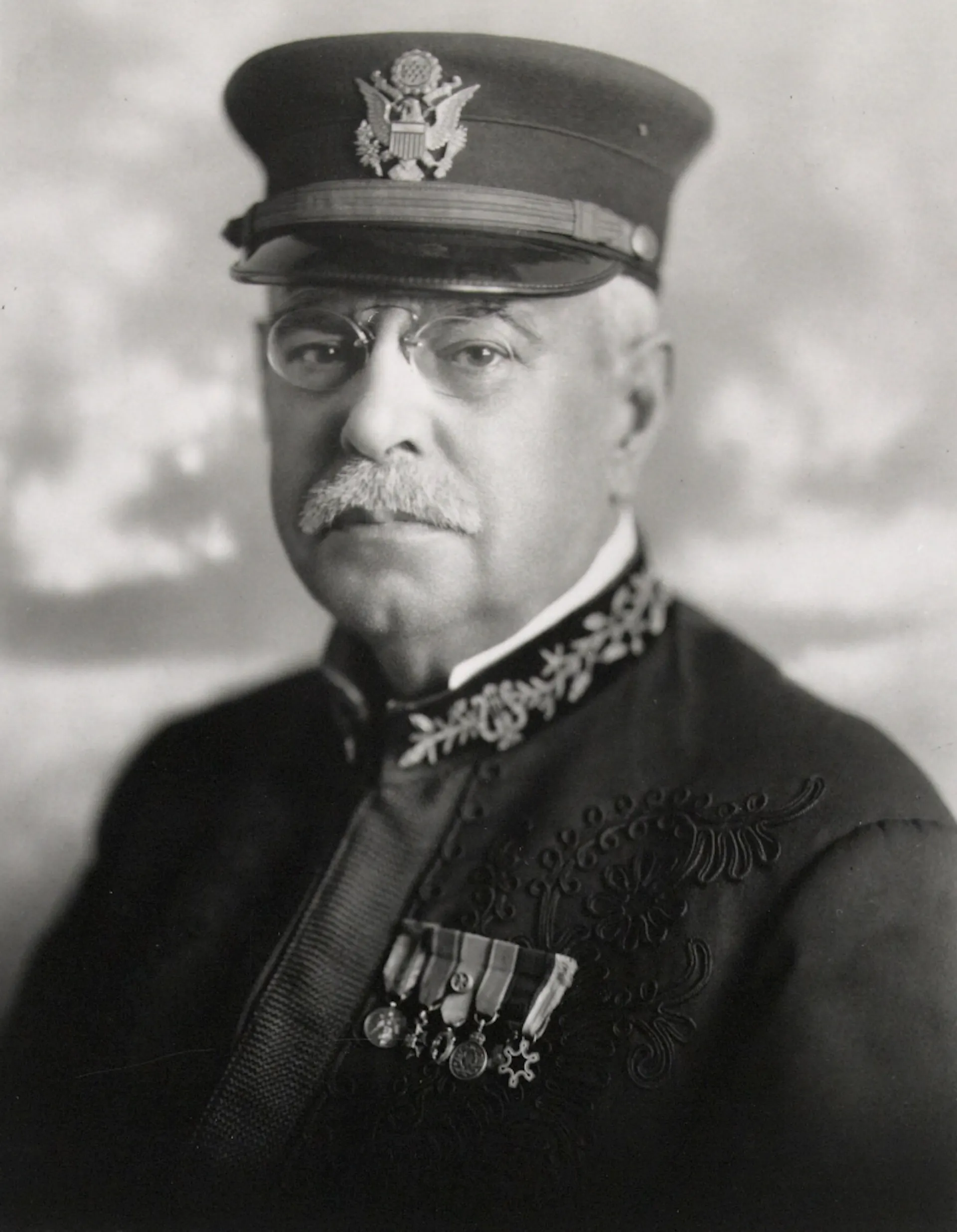
In 1906, John Philip Sousa went to Congress to stop the phonograph.
He was the most famous musician in America, and he had a real grievance. "You can take any catalogue of records of any talking machine company in this country," he told the committee, "and you will find from 20 to 100 of my compositions on it. I have yet to receive the first penny for the use of them." But the argument he actually made in that room went somewhere stranger than money. Lawrence Lessig built his 2007 TED talk around it:
These talking machines are going to ruin the artistic development of music in this country. When I was a boy, in front of every house in the summer evenings you would find young people together singing the songs of the day or the old songs. To-day you hear these infernal machines going night and day. [Laughter.] We will not have a vocal chord left. [Laughter.] The vocal chords will be eliminated by a process of evolution, as was the tail of man when he came from the ape.
The stenographer marked the laughter twice. The committee thought he was doing a bit.
That same year he published an essay in Appleton's Magazine called "The Menace of Mechanical Music," warning that "the tide of amateurism cannot but recede, until there will be left only the mechanical device and the professional executant."
Lessig points out what Sousa was really defending. Ordinary people used to make their own music, badly, on porches, for each other, and Sousa saw a machine coming that would turn all of them into an audience. He was right about that. Nobody sings on the porch anymore.
The rest he got wrong, and the record shows he knew it. Two days into the hearings, a lawyer for one of the phonograph companies stood up and said that Sousa's own band recorded constantly, for money. Sousa's defense was that he personally wasn't in the room, and it was technically true. Of roughly 1,770 recordings released under the name Sousa's Band, Sousa conducted three sessions, none of them before that hearing. His name sold the records. Other men waved the baton.
He came around eventually. In 1925, after a demonstration of the Orthophonic Victrola, he told the room: "That is a band. This is the first time I have ever heard music with any soul to it produced by a mechanical talking machine."
No synthesizer
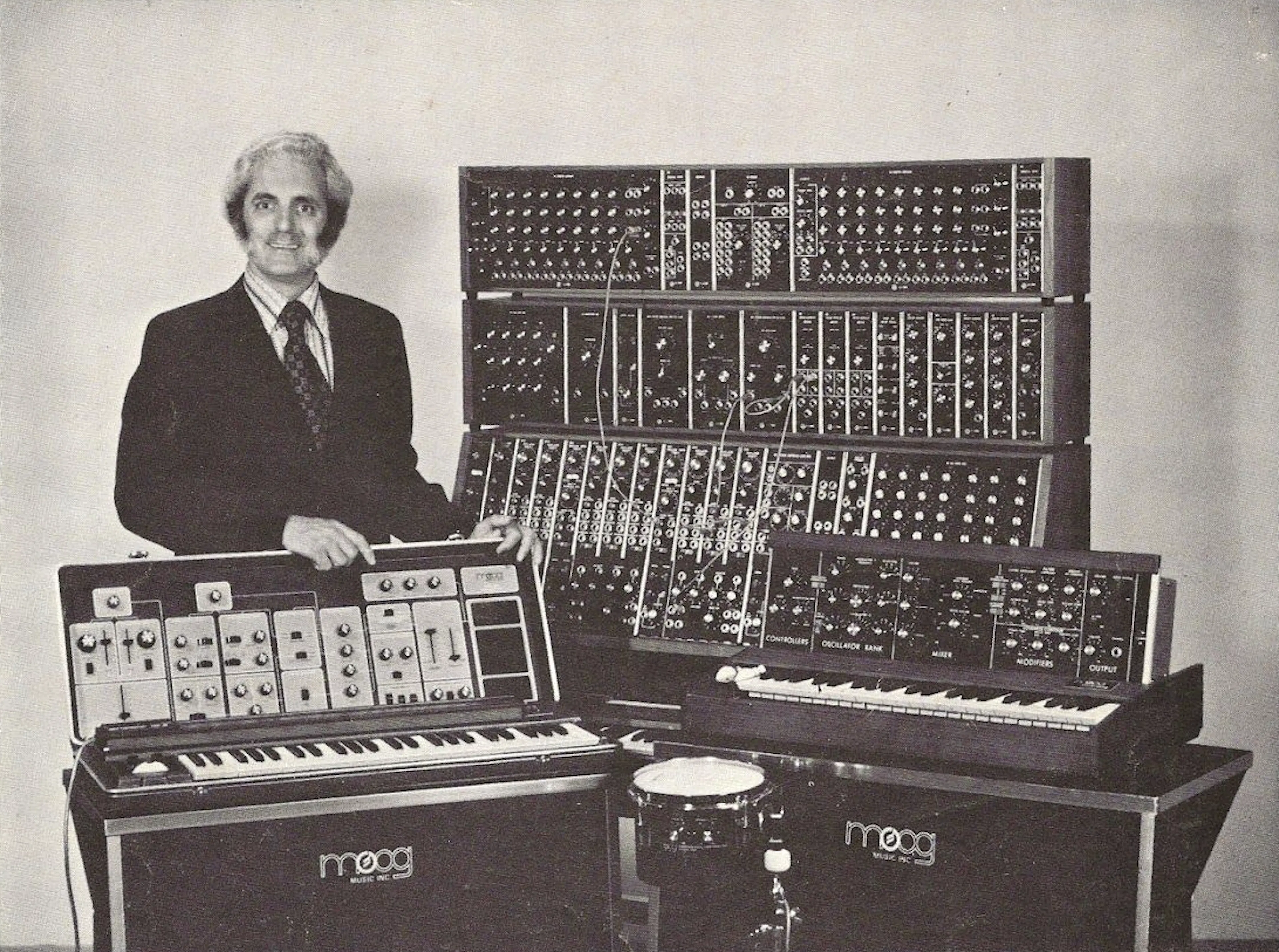
Sixty years later, the fight ran again with different equipment.
Robert Moog presented his voltage-controlled modules at an audio engineering convention in October 1964 and took his first orders on the spot. For a few years the synthesizer stayed a curiosity for academics. Then in late 1968 Columbia Masterworks released Wendy Carlos's Switched-On Bach, recorded in her apartment on West End Avenue on an eight-track machine built from used parts. It reached number ten on the pop chart, sat at the top of the classical chart for three years, and won three Grammys.
The Moog was monophonic. One note at a time. Every voice of every fugue had to be played separately and stacked, and the oscillators drifted with the temperature of the room, so the pitch had to be checked before and after every take. Carlos described the routine: "You'd practice the line you were about to play, then do a precision tuning, quickly hit record and perform the note or notes, hit stop and recheck the tuning." Five months of that, for thirty-nine minutes of music.
The people who are certain a tool makes things easy have generally not tried to make anything good with it.
The BBC filmed her explaining the whole method as she patches up sounds from nothing and walks through how the record was built, a voice at a time. It's the best answer anyone ever gave to the charge that she had pressed a button. The machine relocated the labor and then demanded a kind of patience almost nobody had. That's the part that keeps repeating. The people who are certain a tool makes things easy have generally not tried to make anything good with it.
Queen printed "no synthesizers" on five straight album sleeves between 1973 and 1976. They had a specific reason. A Melody Maker reviewer had praised the band's use of synthesizers on their first album, and there were no synthesizers on it. The sound was Brian May's guitar, an instrument he had built by hand, multitracked into harmony. Roger Taylor, years later: "It was all guitar, and that got up our noses quite a lot."
The unions fought too, though not the fight people remember. The American Federation of Musicians never banned the synthesizer. In 1939 it printed rules for the Hammond Novachord on the front page of its own journal, and they let members play the thing so long as nobody got laid off to make room for it. The one famous synthesizer ban was a London branch of the British Musicians' Union voting in May 1982, after a Barry Manilow tour swapped its orchestra for synth players. It was never union policy. The NME called them the MU loonies.
In 1980, four years after Queen snubbed synthesizers, they put out The Game with a line on the sleeve proudly announcing "the first appearance of a synthesizer (an Oberheim OBX) on a Queen album." By 1985, a trade magazine reported that the Musicians' Union push to ban drum machines from studio sessions "seems to have ground to a halt in view of their absolute omnipresence." Nobody argues the point now.
What the machine can't decide

So: is a person at a keyboard, pressing keys that produce something far larger than the pressure of their fingers, doing something categorically different when the keyboard is attached to a language model instead of a set of hammers and strings?
Mostly no. In both cases you're operating a device that converts a small human input into a disproportionate output, and in both cases the only interesting question is whether what came out was worth anyone's time. But there's one real difference, and it deserves to be named rather than waved off, because it's the thing everyone is actually anxious about.
A piano will not decide which note comes next. It amplifies force and has no opinions. Every choice in a performance- the tempo, the weight of the left hand, and the fraction of a second of hesitation before a phrase resolves has to come out of a person. The Moog was the same. It gave Carlos timbres nobody had heard before and left her alone with every musical decision in the Brandenburg Concertos, one note at a time, for five months.
AI is the first tool in this line that will supply the judgment too, if you let it. Ask it what to say, and it will tell you, fluently, giving you the average of everything it has read. That's a genuine break from the piano, and it's why the old rebuttal ("it's just a tool, like any other") is a little too easy.
But look at what actually changed. What grew is the amount a person can abdicate. Sousa's listeners could stop singing and simply listen; the phonograph made passivity available in a way it hadn't been before, and plenty of people took the offer. AI extends that offer much further. You can hand over the thinking as well as the playing, and the artifact will still come back looking finished.
Which puts the burden back on the person operating the machine, where it has always sat.
Just make it good
I don't care what you used. I care whether you made something.
That's a harder standard than the one it replaces. "Did you use AI?" is a yes-or-no question anybody can answer in a second. "Is this good?" requires you to have a view about what good means and then to have exercised it, repeatedly, against the flood of plausible material the machine will happily produce forever.
What I mean by good is specific. You threw things away. The model gave you six openings, and you killed five, and you can say why. There is something in the piece that could only have come from you: a number you looked up, a thing you watched break, an opinion you'd have to defend at dinner. You can walk any sentence and explain the choice behind it. And it isn't the average of everything already written on the subject, because the average is now free and infinite and worth exactly what it costs.
Every one of those tests would have caught a bad pianist in 1750, a lazy record in 1906, and a dull Moog album in 1969. None of them mention the equipment.
Cristofori's real invention, the escapement, is a small piece of wood whose only job is to get out of the way. The hammer has to release the instant it strikes, or it stays pressed against the string and chokes the note it just made. A tool that won't get out of the way ruins the sound. That's about as much as any of these machines can do for you, and it's more than enough.
One thing to try this week
Open the last thing you shipped with AI's help and read it with a pen. Mark every sentence you would defend to somebody who told you it was wrong. Then delete everything unmarked and look at what's left. If what's left is thin, you've learned something cheaply, and the fix is not to stop using the tool. Go back and put the choices in.
If this gives you something to think about, consider subscribing to Intellectual Capital — a newsletter for people who want to think more clearly, create more freely, and stay curious.
如有侵权请联系:admin#unsafe.sh