AI can now design a drug that works in humans. The hard part is that the world just decided to stop 2026-8-11 05:56:21 Author: hackernoon.com(查看原文) 阅读量:2 收藏
AI can now design a drug that works in humans. The hard part is that the world just decided to stop sharing.
For roughly a hundred years, the way humanity found new medicines was, in the polite language of the industry, empirical. In less polite language: guessing at scale.
The ritual went like this. Identify a protein that seems to be doing something terrible inside a sick person. Build a library of a few million chemical compounds. Squirt them, one by one, into tiny wells on a plastic plate. Watch for the flicker of a compound that sticks. Then spend a decade and a couple billion dollars finding out whether that sticky little molecule kills the disease, the patient, or neither.
It worked. Statins, antiretrovirals, the checkpoint inhibitors that turned certain death sentences into chronic conditions — all of it came out of that grinding, expensive, luck-dependent machine. But it worked the way panning for gold works. You need a lot of river.
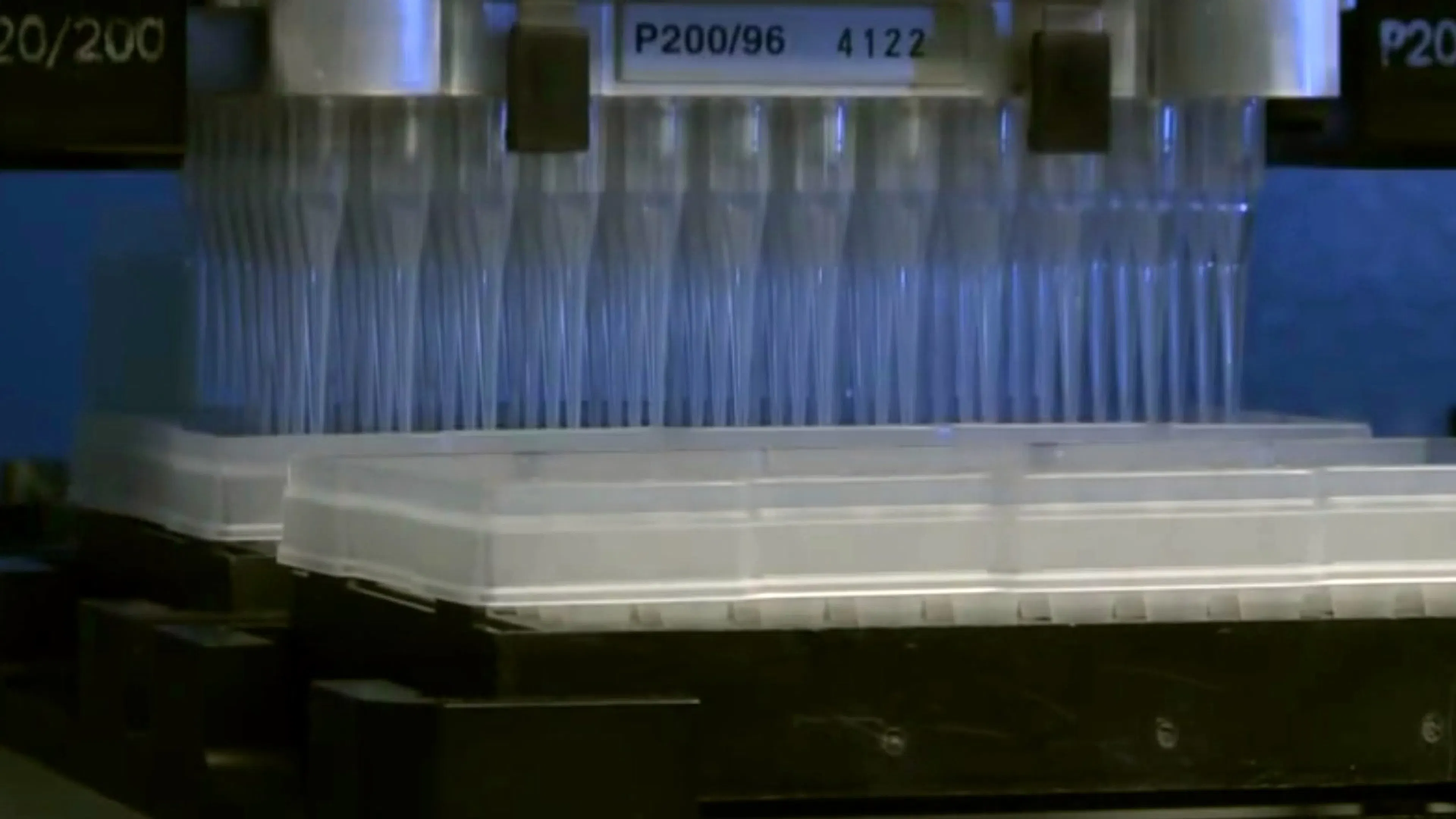
The old religion: a 96-tip head dispensing candidate compounds into microplate wells, ninety-six guesses at a time. High-throughput screening industrialized luck — it never replaced it. (Beckman Biomek liquid-handling robot — Wikimedia Commons, public domain)
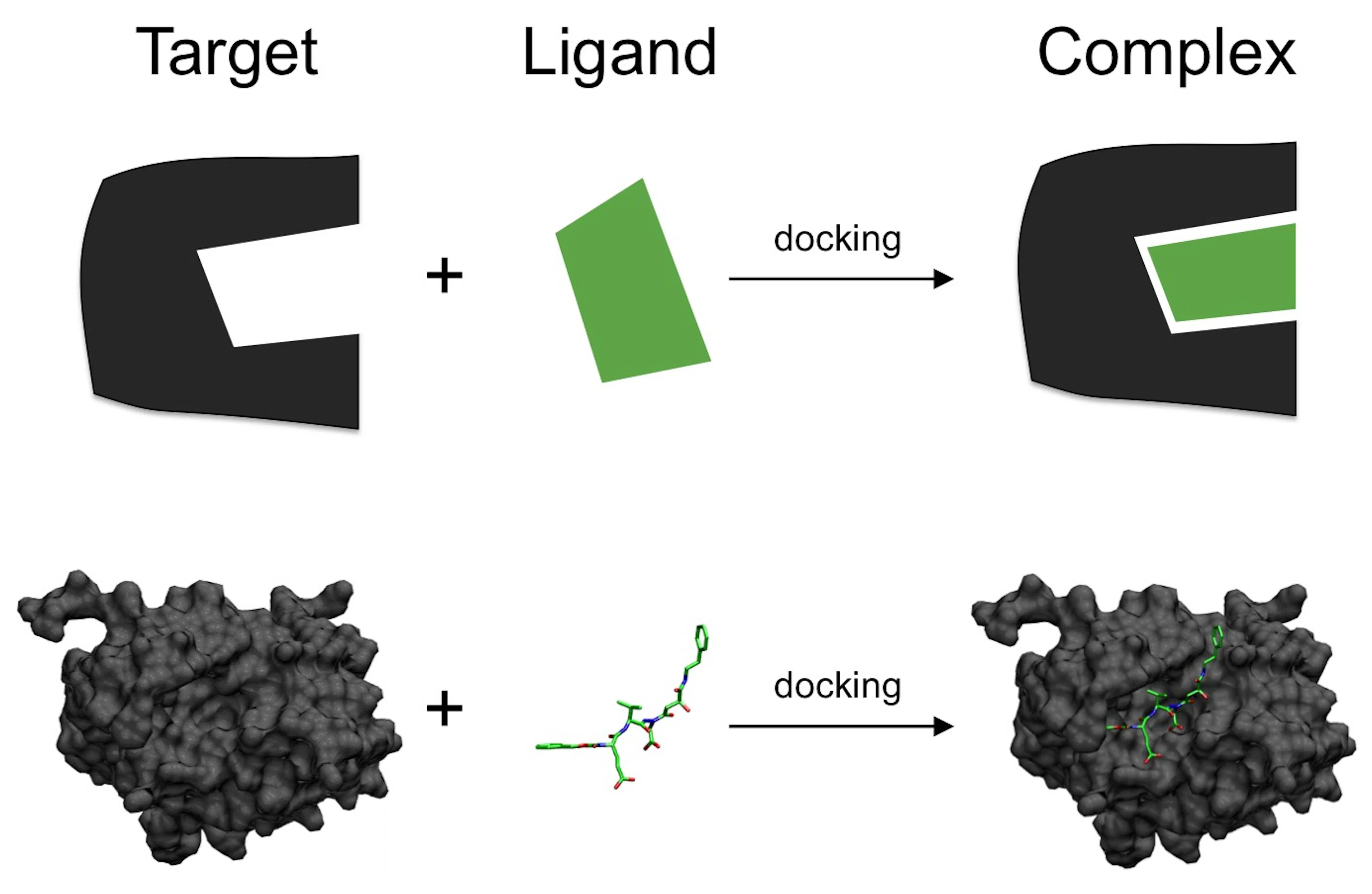
The whole game in one picture: a target protein with a pocket, a small molecule shaped to fill it, and the complex they form. For a century we found the ligand by trial. Now a model proposes it. (Molecular docking schematic — Wikimedia Commons, CC BY-SA)
That era is over. Not ending — over. In 2026, the discovery of new medicines has quietly completed its transition from a biological science into something closer to an engineering discipline: computational, predictive, deterministic. You don't screen for the molecule anymore. You specify it, the way an architect specifies a load-bearing beam, and a model draws it for you.
And here is the part nobody in a lab coat wants to say out loud at a conference: the science is now the easy part. The hard part is that just as the tools of medicine became global — insatiably, structurally global, requiring genetic data and clinical trial results and manufacturing capacity from every corner of the planet — the planet decided to start building walls.
This is the story of both things happening at once.
Part I: The Machine That Draws Molecules
The first drug that a computer imagined, and a human lung believed
Start with a specific patient in a specific trial, because abstractions about AI are cheap and this isn't one.
Idiopathic pulmonary fibrosis is a disease in which lung tissue slowly, irreversibly turns to scar. Breathing becomes a task. Median survival after diagnosis runs three to five years. The two approved drugs slow the decline; neither stops it. It is, in the grim taxonomy of pharma, a "high unmet need" indication — which is a way of saying that people die of it while the industry works on other things.
In the Phase IIa GENESIS-IPF study, patients on the optimal dose of a molecule called rentosertib (ISM001-055) showed a statistically significant improvement of +98.4 mL in forced vital capacity versus placebo. Forced vital capacity is, roughly, how much air you can push out of your lungs. It went up.
What makes rentosertib a landmark isn't the number. It's the provenance. The disease target — an obscure enzyme called TNIK — was identified by an AI system trawling multi-omics data. The molecule that hits it was designed by a generative model. Both ends of the equation, target and drug, came out of Insilico Medicine's Pharma.AI stack rather than out of a human hypothesis. This is the first clean clinical proof-of-concept for a drug that was, start to finish, a machine's idea.
By 2026, Insilico's platform had grown into something that looks less like software and more like a research institution: Nach01, a multimodal chemistry foundation model that can hold a conversation about a molecule and then draw a better one; PandaOmics and TargetBench for finding the biological targets worth attacking in the first place. Their pipeline includes ISM0676, an oral GIPR antagonist that produced 31.3% body weight loss in preclinical obesity models — an unsubtle shot across the bow of the injectable GLP-1 empire currently printing money for Novo Nordisk and Eli Lilly.
Talent is voting with its feet
If you want to know where an industry is going, watch where the engineers move.
Genesis Therapeutics runs a platform called GEMS — Genesis Exploration of Molecular Space — that fuses 3D spatial graph neural networks with generative diffusion models, the same broad family of architecture that turns text prompts into images. Point it at a protein that medicinal chemists have written off as "undruggable" — no convenient pocket, no obvious place for a molecule to grab — and it explores conformations that no human chemist would have sketched.
It works well enough that Incyte expanded its collaboration with Genesis to $120 million in mid-2026, building an industrial flywheel: design, make, test, feed the results back into the model, repeat. And Genesis hired the former leader of Meta's Llama foundation model efforts.
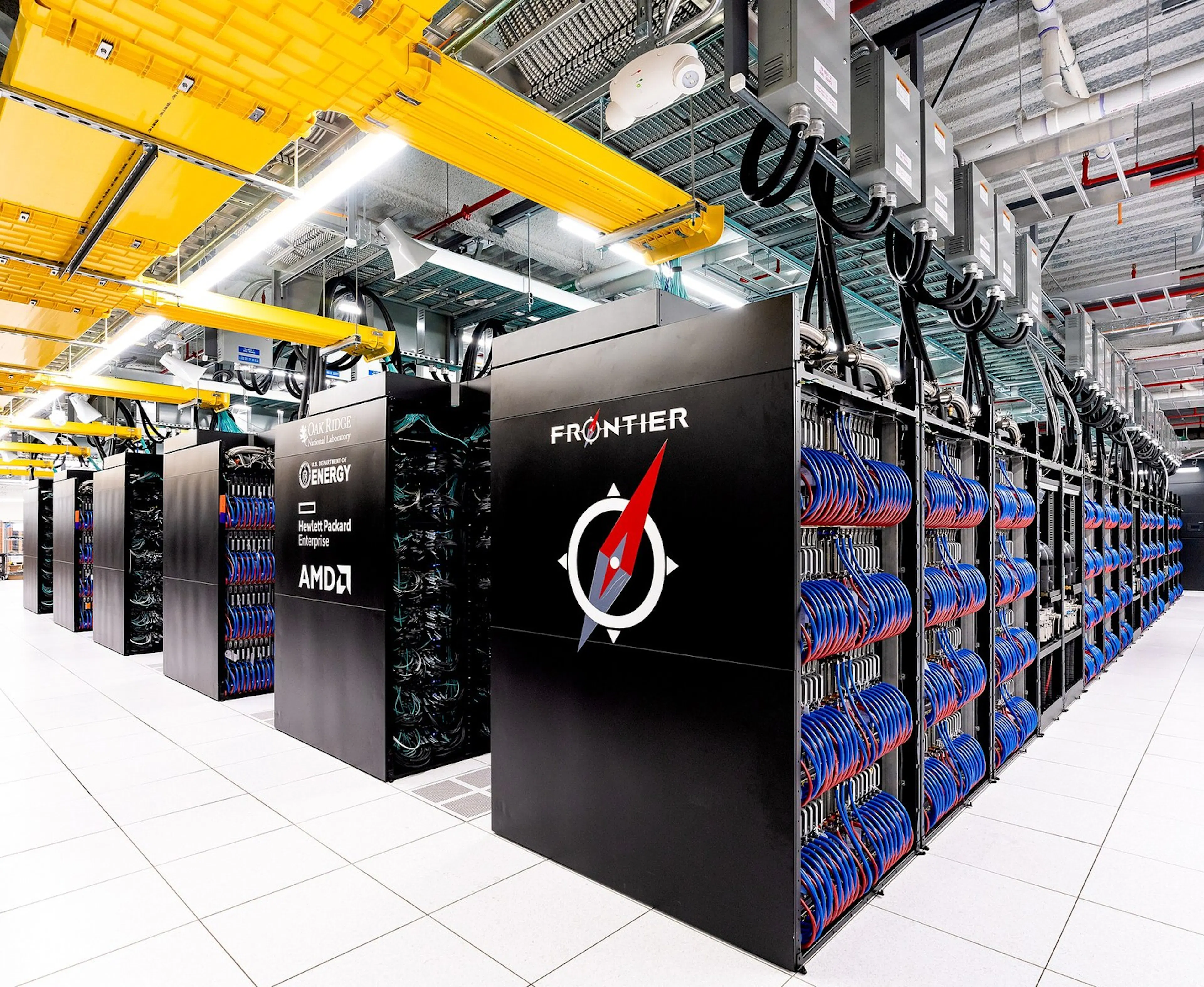
Drug design is now a compute problem. Machines like Oak Ridge's Frontier — and the private clusters biotechs are racing to build — do the exploring that armies of chemists used to do by hand. (Frontier supercomputer, Oak Ridge National Laboratory — Wikimedia Commons, CC BY 2.0)
Sit with that. The person who helped build one of the world's most consequential large language models decided the more interesting problem was molecules. Pharmaceutical design is now competing head-to-head with Big Tech for the same few hundred people on Earth who can train a frontier model. It is losing that competition less often than it used to.
The incumbents noticed. AstraZeneca has deployed Edge Set Attention graph models to predict how a molecule will behave across different biological systems — the perennial question of whether something that works beautifully in a dish will do anything at all in a body. Its MapDiff framework tackles a nastier problem: intrinsically disordered protein regions, the floppy, shapeless stretches of protein that don't hold a fixed structure and that structural biology has historically treated as a no-go zone. MapDiff predicts which structural elements matter there, so that synthetic proteins fold correctly — with AlphaFold2 available as a check on the model's homework.
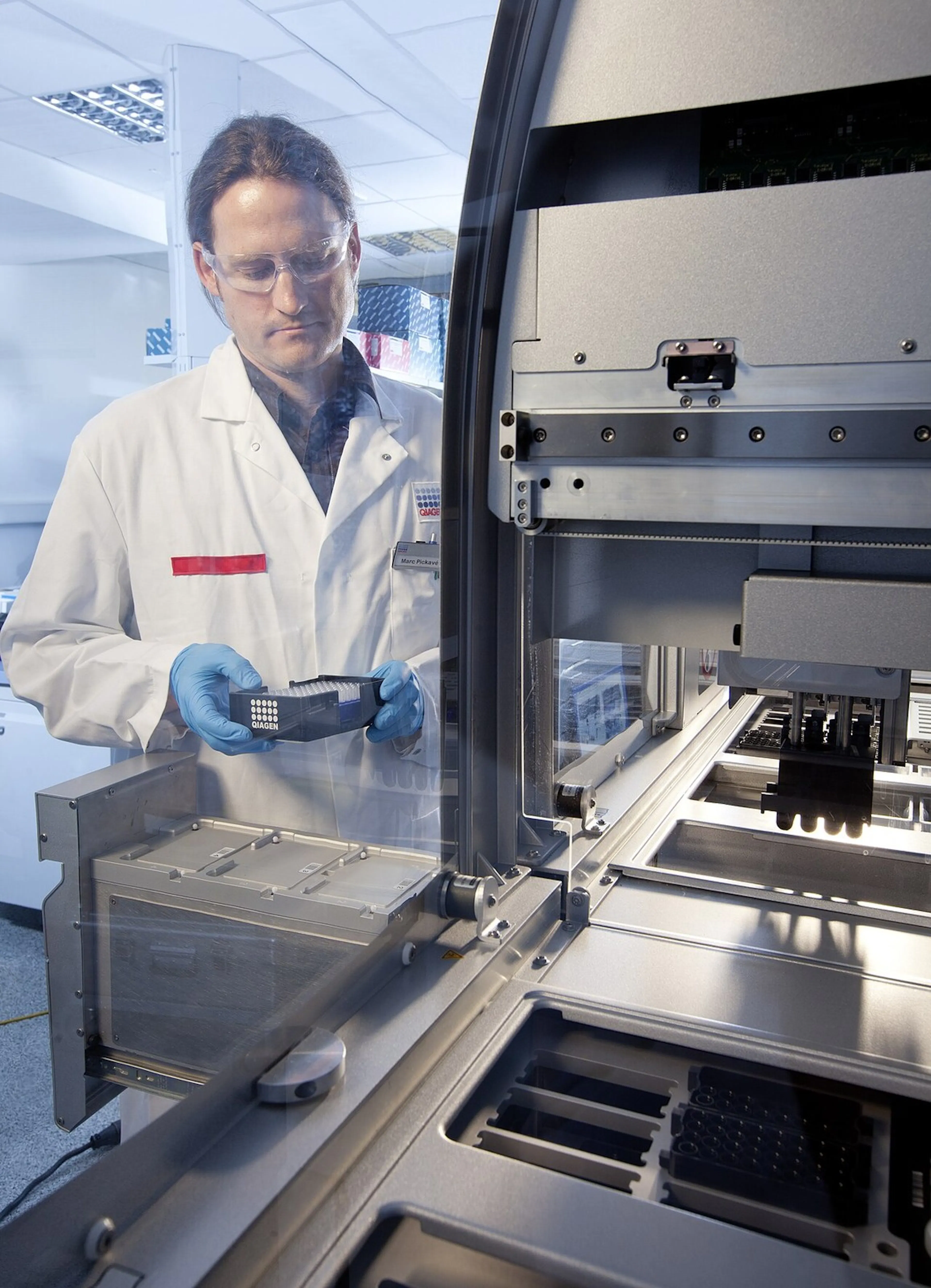
The design-make-test loop: a model proposes, robots synthesize, assays report back, the model updates. The cycle that used to take a year now takes weeks. (Automated sample-processing instrument — Wikimedia Commons, CC BY-SA)
Meanwhile, the drugs themselves stopped being drugs
Here's the thing that gets lost when everyone fixates on the AI: the modalities — the fundamental physical strategies by which a medicine intervenes in your biology — changed at the same time. Two of them deserve your attention.
Part II: Assassins and Smart Bombs
PROTACs: from blocking the door to demolishing the building
Nearly every small-molecule drug you've ever taken works by inhibition. It finds a protein's active site, wedges itself in, and blocks the protein from doing its job. Think of jamming a key in a lock.
The strategy has a fatal flaw, and cancer exploits it constantly. Change the lock — mutate the protein — and the key stops fitting. The drug that was keeping a tumor in check for eighteen months abruptly stops working, and the patient's oncologist starts talking about the next line of therapy.
Targeted Protein Degradation doesn't play that game. It doesn't block the protein. It deletes it.
The instrument is a molecule called a PROTAC — proteolysis-targeting chimera — and it's best understood as a molecular kidnapper with two hands and an arm. One hand grabs the disease-causing protein. The other hand grabs an E3 ubiquitin ligase, a component of the cell's own garbage-disposal system. A chemical linker holds the two together. Once the PROTAC has both in its grip, the cell does the rest: the ligase tags the target protein with ubiquitin, a molecular "destroy this" sticker, and the proteasome shreds it.
Then — and this is the elegant part — the PROTAC lets go and does it again. It's catalytic. One molecule, many kills. You don't need to occupy every copy of the target protein at once, which is exactly what conventional inhibitors do need, and exactly why they require such punishing doses.
The concept took twenty years to get from a paper to a pharmacy. It arrived on May 1, 2026, when the FDA approved vepdegestrant (marketed as Veppanu, known in trials as ARV-471), developed by Arvinas and Pfizer, for ESR1-mutated, ER-positive/HER2-negative advanced breast cancer.
ESR1 mutations are precisely the scenario that breaks inhibitors: the estrogen receptor mutates, hormone therapy stops working, the cancer resumes. Vepdegestrant doesn't care what shape the receptor has mutated into. It degrades it. Orally. In a pill.
The approval mattered less as a single drug than as a proof that the whole category is real, manufacturable, and — the sticking point everyone worried about — approvable by a regulator. The field is already sprinting outward: IRAK4-targeting degraders for hidradenitis suppurativa and atopic dermatitis, and brain-penetrant PROTACs aimed at LRRK2 in Parkinson's disease, chasing a target that has resisted conventional chemistry for years.
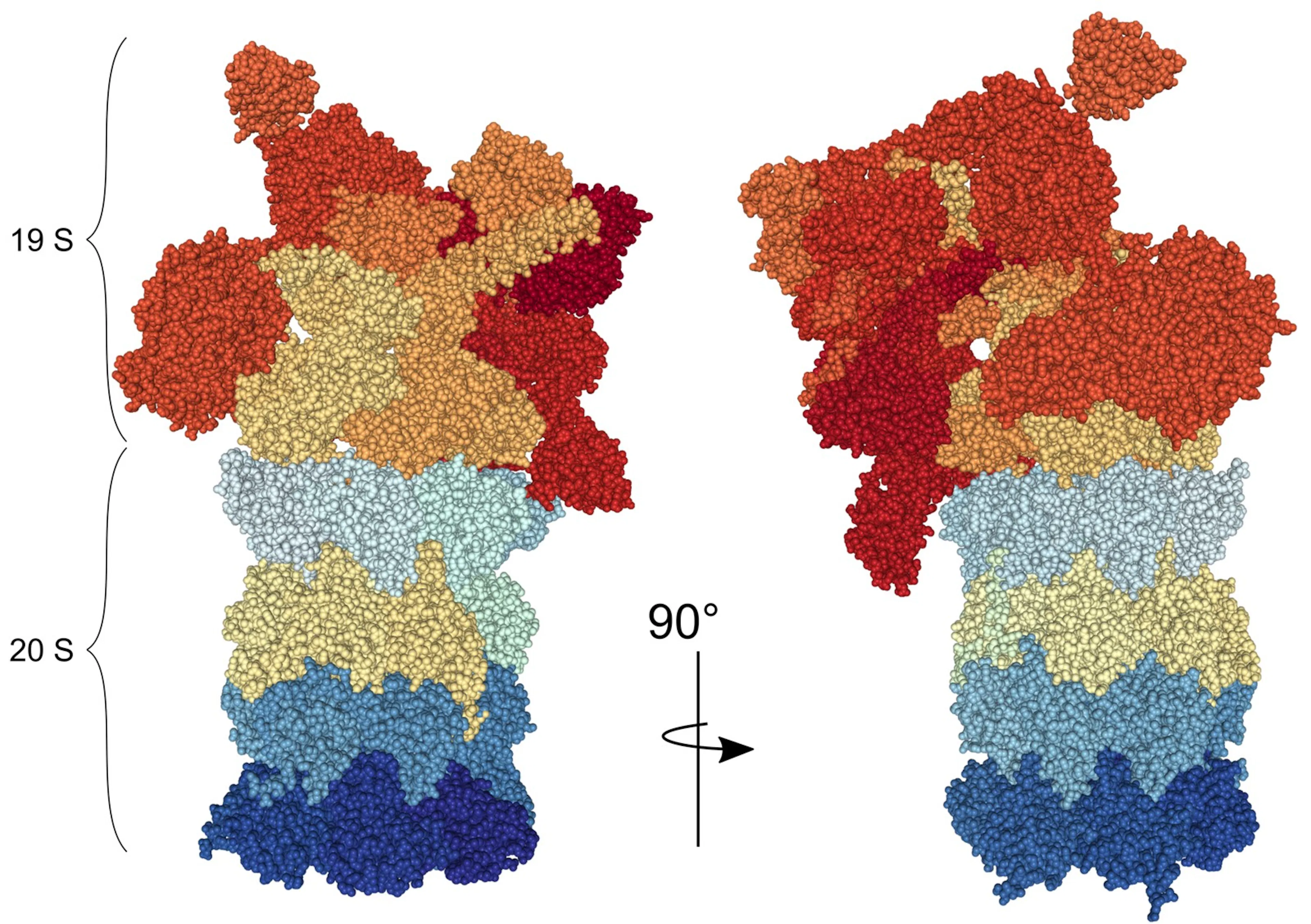
The shredder. The 26S proteasome is the cell's disposal unit — a barrel that unfolds tagged proteins and chews them into fragments. A PROTAC doesn't block a protein's function; it handcuffs the protein to this machine and walks away. (26S proteasome structure — Wikimedia Commons, CC BY-SA)
If PROTACs are precision assassination, antibody-drug conjugates are the guided munition.
The logic is almost embarrassingly simple, which is why it took decades to make work. Chemotherapy is a poison that happens to kill fast-dividing cells slightly faster than it kills you. Monoclonal antibodies are exquisitely precise — they find one specific antigen on one specific cell type and nothing else — but on their own they're often not lethal enough. So: bolt the poison to the antibody. Let the antibody do the navigation. Release the payload only after the whole assembly has been swallowed by the tumor cell.
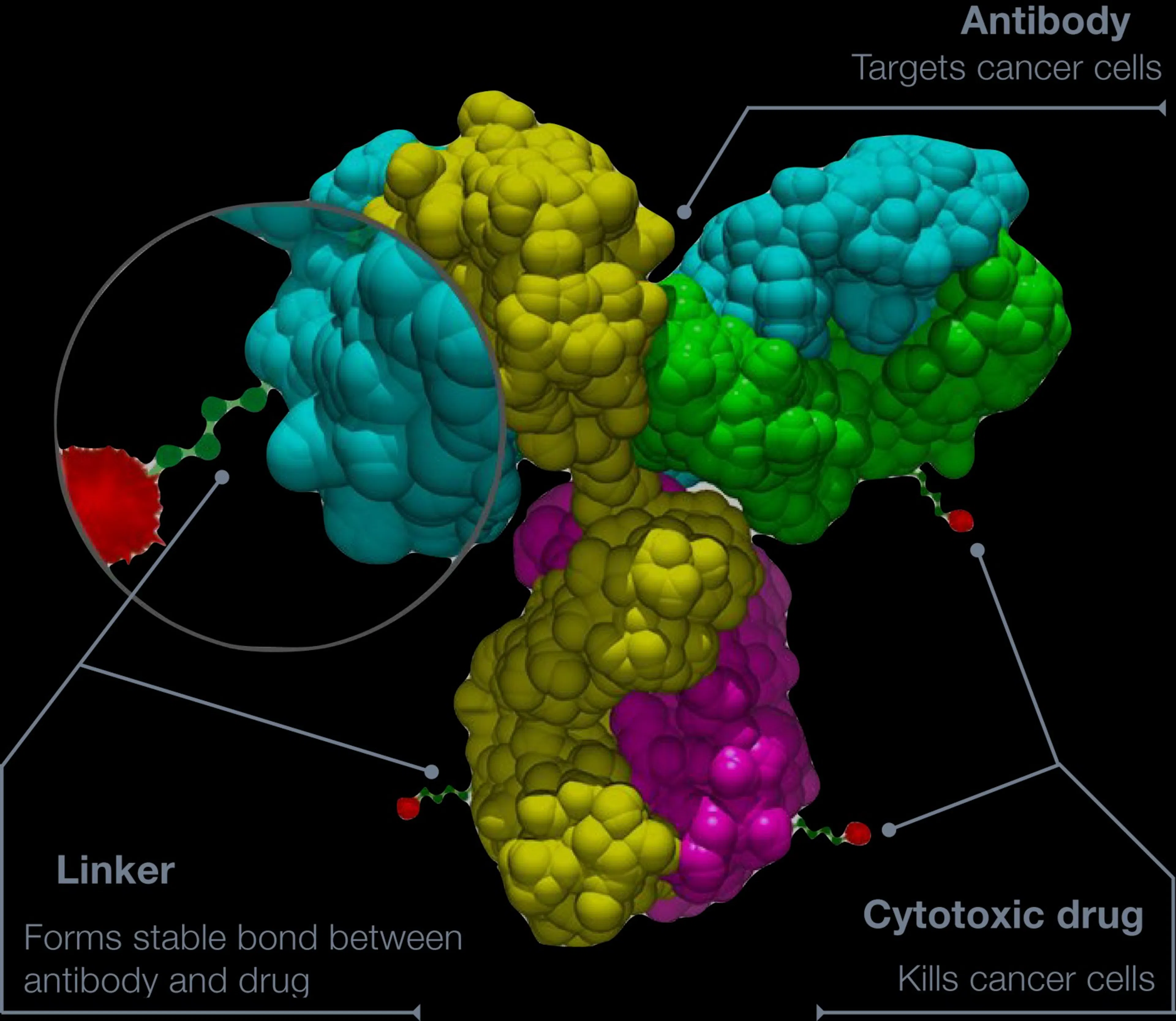
Three parts, one weapon: an antibody that navigates, a linker that holds, and a payload that kills. Get the linker wrong and you have either chemotherapy with extra steps or a very expensive placebo. (Antibody-drug conjugate schematic — Wikimedia Commons, CC BY-SA)
The engineering lives in the linker, the chemical tether between antibody and payload. Too fragile and the poison spills into the bloodstream, and you've reinvented chemotherapy with extra steps. Too stable and it never releases, and you've built a very expensive placebo.
By 2026 the field has moved decisively past the first-generation microtubule inhibitors toward topoisomerase I inhibitors and DNA-damaging PBD dimers — payloads that are considerably more potent, which raises the stakes on linker chemistry accordingly. The other advance is subtler and matters enormously: site-specific conjugation. Early ADCs attached payloads more or less wherever the chemistry allowed, producing a messy soup where some antibodies carried two payloads and others carried eight. Using unnatural amino acid technologies, manufacturers can now specify exactly where each payload attaches, producing a uniform drug-to-antibody ratio. Uniformity widens the therapeutic window — the gap between the dose that helps and the dose that harms — and that gap is where patients live.
The molecule that beat Keytruda
Then there are bispecific antibodies: single molecules engineered to grab two different targets at once. And in 2026, one of them did something the oncology establishment did not see coming.
Ivonescimab (Idafang, AK112) is a tetravalent bispecific that binds both PD-1 — the immune checkpoint that tumors exploit to hide from your T cells — and VEGF-A, the signal tumors use to grow their own blood supply. Hit both at once and you don't just uncloak the tumor; you starve it while remodeling the immunosuppressive environment it built around itself.
It was developed by Akeso Biopharma, a Chinese company, and partnered globally with Summit Therapeutics. In the HARMONi-2 Phase III trial in first-line non-small cell lung cancer, ivonescimab went head-to-head against Merck's Keytruda — pembrolizumab, the reigning standard of care, one of the best-selling drugs in the history of the industry — and statistically outperformed it on progression-free survival.
Read that again. Not "compared favorably." Not "non-inferior." Beat it, in a direct comparison, in the indication that defines the category.
Now read the asterisk, because it's the most consequential asterisk in the industry right now: every patient in HARMONi-2 was enrolled in China.
When the drug moved into the global HARMONi trial — previously treated patients with EGFR-mutated nonsquamous NSCLC, sites across multiple continents, adding ivonescimab to chemotherapy — it again cut the risk of progression or death by 48%. But on overall survival, the endpoint that decides whether people actually live longer, it landed at a hazard ratio of 0.79 with a p-value of 0.057. In the arithmetic of regulatory approval, 0.057 is not 0.05. It missed. An updated analysis in June 2026 showed the Western patient subgroup tracking at a hazard ratio of 0.76 — better, and encouraging — but the FDA's decision date of November 14, 2026 now hangs on a survival benefit the pivotal trial did not formally prove.
That gap — between the emphatic Chinese result and the equivocal global one — is not a footnote. It is the recurring question hanging over an entire generation of Chinese-originated drugs, and the industry has been burned by it before: in 2022 the FDA rejected a China-only data package for the PD-1 inhibitor sintilimab, with the agency's oncology chief calling the submission a step backward.
Still. The foundational immunotherapies of the 2010s just got a credible challenger, and it came out of Guangdong.
The 2026 scoreboard
|
Therapy |
What it is |
Target / Indication |
Why it matters |
|---|---|---|---|
|
Vepdegestrant (Veppanu) |
PROTAC |
ESR1 / Breast cancer |
First FDA-approved targeted protein degrader — proof the whole modality works |
|
Ivonescimab (Idafang) |
Bispecific antibody |
PD-1 & VEGF-A / NSCLC, TNBC |
Beat pembrolizumab head-to-head on progression-free survival in a China-only trial; survival benefit still unproven globally |
|
Rentosertib (ISM001-055) |
AI-designed small molecule |
TNIK / Pulmonary fibrosis |
First fully AI-discovered drug to show clinical efficacy in humans |
|
Datopotamab deruxtecan |
ADC |
TROP-2 / Breast cancer |
Validates next-gen cleavable linkers and topoisomerase I payloads |
|
Zongertinib (Hernexeos) |
Small molecule |
HER2 / NSCLC |
Precision targeting of HER2 kinase-domain activating mutations |
Part III: The Bottleneck Nobody Can Compute Away
So discovery got fast. Wonderful. Now meet the wall it slams into.
AI compressed the front end of drug development — target identification, molecular design, lead optimization — from years into months. It did approximately nothing to the back end, because the back end is humans, taking a drug, in a body, over time, and you cannot simulate your way past that. A trial that needs to observe two years of disease progression needs two years. Physics doesn't negotiate, and neither does the FDA.
The result is an industry with a Ferrari engine bolted to a bicycle chain. And the cost of that chain has become obscene: a single Phase III trial in cardiovascular disease or diabetes averaged $18 million to $22 million in 2025. Total R&D cost per approved drug now exceeds $2.6 billion, against clinical success rates below 10%.
There's also an ethical problem that money can't solve. Randomized controlled trials require a control arm — patients who receive placebo or standard of care instead of the experimental drug. In a rare pediatric disease with forty known patients worldwide, or in an aggressive cancer where the standard of care is measured in months, asking someone to take the placebo is not a neutral request.
The digital twin sitting in the placebo chair
The industry's answer is the synthetic control arm, and it's the most quietly radical idea in clinical research right now.
Instead of randomizing patients to placebo, you build the comparison group out of data: historical trial records, electronic health records, real-world evidence, assembled by machine learning into a statistically valid comparator cohort. Better still, when a real patient enrolls, a model generates a digital twin — a forecast of how that specific person's disease would have progressed, built from their baseline multi-omics and demographics, generated before randomization so it can't be contaminated by the outcome.
That forecast enters the statistical analysis as a covariate adjustment. Because you're no longer comparing a patient to the average of a group but to a prediction of themselves, the variance in the estimated treatment effect drops sharply. Lower variance means you need fewer patients to reach the same statistical power. Fewer patients on placebo. Faster answers. Same rigor.
Regulators, historically the last people in the room to embrace a new statistical method, moved with startling speed. In January 2026, the FDA and EMA jointly released guiding principles for AI in drug development. The EU's European Health Data Space regulation entered into force, establishing the legal scaffolding for secondary use of health data. The FDA has issued multiple draft guidances endorsing external control arms and laid out a seven-step credibility assessment framework for AI models in regulatory submissions.
The synthetic control arm market hit $2.1 billion in 2025 and is growing fast, with the promise of accelerating market entry for critical therapeutics by as much as 45%.
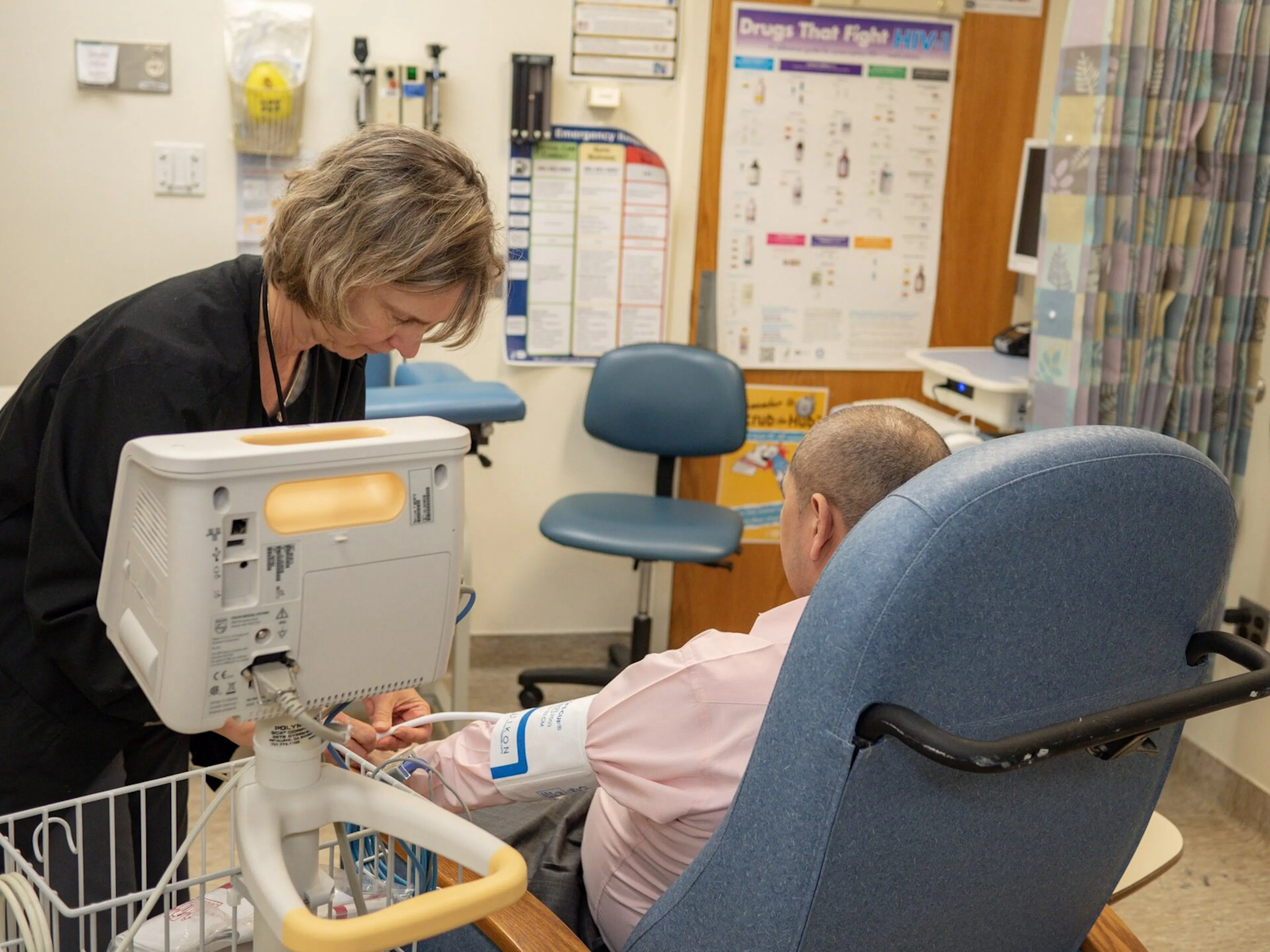
The bottleneck no algorithm removes: a real person, a real dose, a real year of follow-up. A digital twin forecasts how one specific patient's disease would have progressed — it doesn't replace evidence, it lets you need less of it. (Clinical trial volunteer undergoing a medical examination, NIAID — Wikimedia Commons, CC BY 2.0)
Open source comes for the New Drug Application
The other reform is happening in a place so unglamorous that almost nobody outside the industry has noticed: the file formats.
Pharmaceutical data has always been proprietary, siloed, and — in a very real sense — wasted. Negative results go unpublished. The same failed experiment gets run at four companies simultaneously, each one paying full price to learn the same thing. Against R&D costs above $2.6 billion per drug and single-digit success rates, this is not a rounding error. It's the whole problem.
The Open Source Pharma movement is chipping at it. Platforms like the Open Science Framework let researchers share protocols, multi-omics datasets, and — crucially — negative results across institutional and national boundaries, so that failures are recorded once instead of repeated four times.
More consequentially, the same ethos has reached the regulatory submission itself. The R Consortium's Submission Working Group set out to drag the New Drug Application process out of a proprietary-software era that has lasted decades. In 2025, Novo Nordisk submitted the first fully R-based NDA to the FDA — every analysis, every table, every figure produced in open-source software, and reproducible by anyone with a laptop.
Two follow-on projects are pushing further. Pilot 4 uses WebAssembly and container technology to bundle interactive Shiny applications so an FDA reviewer can run a sponsor's analysis in a browser tab — no installation, no environment configuration, no version hell. Pilot 5 replaces the legacy .xpt file format, a relic that predates most of the people using it, with modern Dataset-JSON.
This sounds like plumbing. It is plumbing. It is also the difference between a reviewer spending three days reconstructing an analysis environment and three minutes clicking a link, multiplied across every submission the agency receives.
Part IV: The Geopolitics of Molecules
Everything above assumes a functioning global system: capital from one continent, science from another, manufacturing from a third, patients from everywhere.
That system is being taken apart on purpose.
China stopped making other people's drugs
For most of the last thirty years, China's role in the pharmaceutical world was defined by cost. It made active pharmaceutical ingredients cheaply and at scale. It ran manufacturing for Western companies. It was, in the value chain, downstream.
That is no longer remotely true, and the numbers are not subtle.
By early 2026, Chinese-headquartered companies originated roughly 30% of all novel drug candidates in global clinical development, running more than 1,200 active clinical programs. Not manufacturing them. Inventing them.
And then selling them. In 2025 alone, Chinese biotechs signed out-licensing deals with Western pharma totaling $135.7 billion in disclosed value — about one-third of all global pharmaceutical licensing spending, from a country that had essentially no originator industry two decades ago.
The engine behind this has a name: innovation arbitrage. Chinese clinical trials run two to three times faster, because centralized, enormous patient populations mean recruitment that takes eighteen months in Boston takes six months in Shanghai. Discovery operations run at 30–40% lower cost. So a Chinese biotech can take an asset from concept through Phase II — past the point where most drugs die — for a fraction of what it costs in the West, and then sell global rights to a Western company that gets a de-risked, clinical-stage drug without having absorbed the risk.
The deal architecture has evolved into a standard shape the industry calls "Greater China Rights Retained." The Chinese originator keeps commercial rights at home and handles the National Medical Products Administration pathway. The Western licensee takes unencumbered rights everywhere else. Both sides get the market they know how to sell into.
It's worth being precise about what kind of innovation this is, because "30% of the world's pipeline" invites a conclusion the underlying science doesn't quite support. Count first-in-class programs — molecules going after a mechanism nobody has drugged before — and Western companies still lead 127 to 21. Narrow to programs aimed at targets whose underlying biology was first characterized in China, and the list falls to two. Zoom out to the paradigms themselves and the pattern is cleaner still: PD-1 came out of Kyoto, CAR-T out of Israel, PROTACs out of Yale and Caltech, the ADC architecture out of Tokyo. Ivonescimab, the molecule that beat Keytruda, is a superb piece of engineering built on PD-1 and VEGF — two targets discovered in Japan and California. The money says the same thing: basic research accounts for about 7% of China's national R&D spending against roughly 15% in the United States, and Chinese assets sell at 60–70% discounts on upfront payments, which is what a buyer pays for cheap optionality rather than proven science.
So the accurate description isn't "the new epicenter of drug discovery," and it certainly isn't "sophisticated copycats." China has built the world's most formidable translation layer — the machinery that takes a validated biological idea and converts it into a clinical-stage, licensable asset faster and cheaper than anywhere on earth. That is an enormously valuable thing to be. Most of the benefit a patient actually receives comes from this stage, not the first one; a metastatic breast cancer patient is not helped by a novel mechanism that dies in Phase II, but by an ADC with a linker stable enough not to poison her.
And the originator capability is coming. On novel preclinical targets the Western lead narrows to 71 versus 41 — two-to-one, not a hundred-to-one — and nearly all of China's 41 have surfaced since 2023. That is not a country that can't do original biology. It's a country that started late and is compounding fast, at a moment when the West has decided to build a wall between the two halves of the machine.
The ADC monopoly
In one category, this isn't a trend — it's a takeover.
By 2026, Chinese originators including Kelun-Biotech, Duality Biologics, and MediLink Therapeutics accounted for roughly 90% of all new global ADC licensing activity.
Ninety percent. In the modality that has become oncology's most important growth area.
It happened because Chinese labs got very, very good at the hard chemistry: highly stable cleavable linkers, topoisomerase inhibitor payloads engineered for bystander killing — where the payload leaks out of a dying tumor cell and kills its neighbors, including the ones that never expressed the target antigen — and unnatural amino acid conjugation for uniform DAR. Dozens of companies iterating on the same architecture, at speed, against a domestic patient population deep enough to test all of them.
Note the word architecture, though. The template underneath the entire modern ADC field — an exatecan-derived topoisomerase I payload on a tetrapeptide cleavable linker — is the DXd platform, invented at Daiichi Sankyo in Tokyo and proved in the clinic by Enhertu. China didn't discover that chemistry. China industrialized it, and then out-executed everyone who had.
So Western pharma bought its way in. Merck paid over $7 billion for Kelun's SKB264 and pipeline. GSK paid $12.5 billion for Hengrui's HRS-9821. These are not opportunistic bets. They are load-bearing pillars of aging portfolios.
|
Deal |
Chinese licensor |
Western licensee |
Value |
Modality |
|---|---|---|---|---|
|
HRS-9821 |
Hengrui Medicine |
GSK |
$12.5 billion |
Small molecule (respiratory) |
|
SKB264 + pipeline |
Kelun-Biotech |
Merck (MSD) |
$7.0+ billion |
ADC (TROP2 / solid tumors) |
|
Undisclosed asset |
Argo Biopharma |
Novartis |
$5.36 billion |
Biologic |
|
Ivonescimab (AK112) |
Akeso Biopharma |
Summit Therapeutics |
$5.0 billion |
Bispecific (PD-1/VEGF) |
|
PM8002 |
Biotheus |
BioNTech |
$1.3+ billion |
Bispecific (PD-L1/VEGF) |
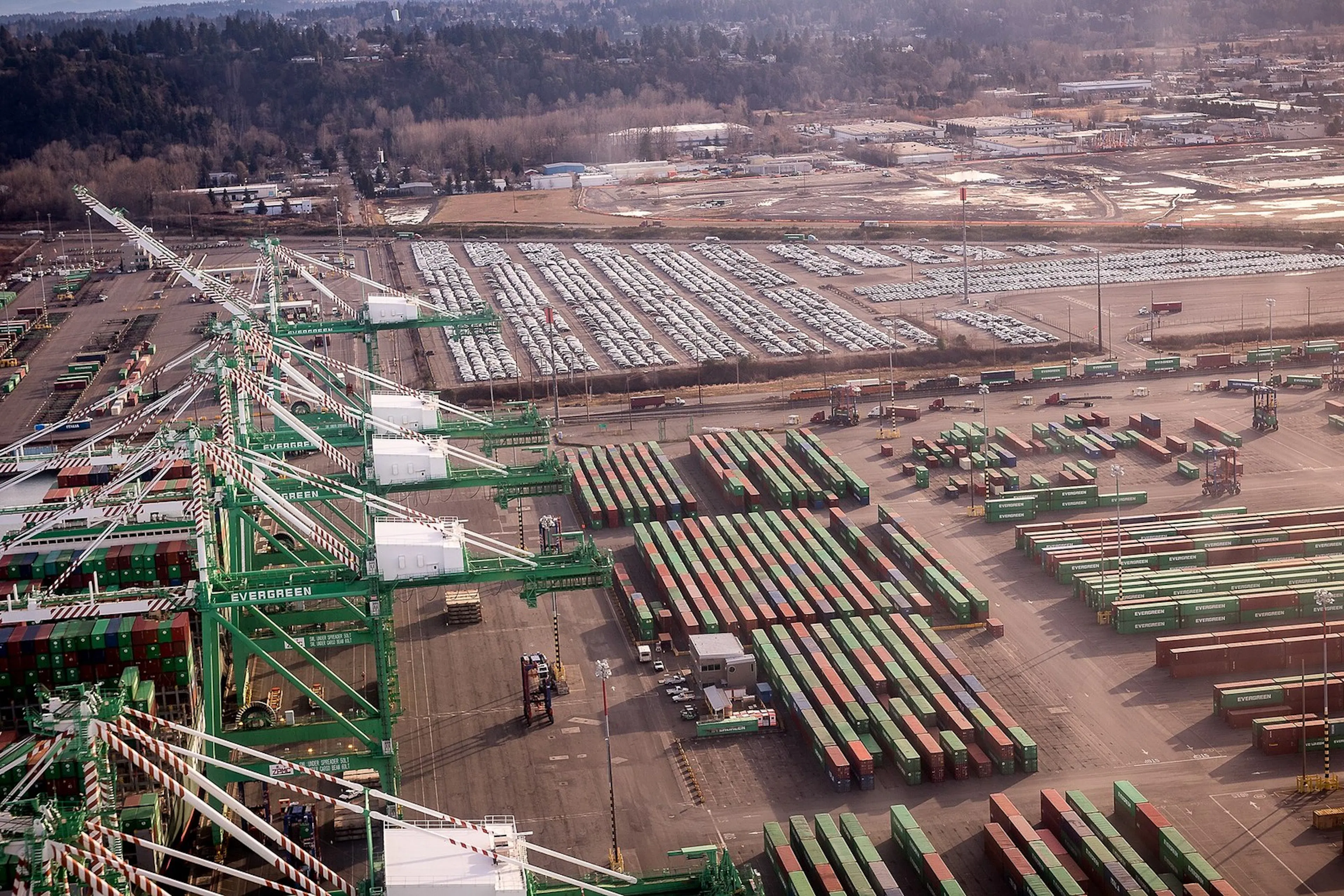
The physical layer of the drug supply chain. Western capital, Chinese chemistry, Indian ingredients, global freight — an arrangement that took thirty years to build and is now being taken apart on purpose. (Container port — Wikimedia Commons, public domain)
Washington's answer
The United States looked at that dependency — on foreign manufacturing capacity, on foreign genomic data infrastructure, on foreign clinical pipelines — and concluded it was a national security problem.
On December 18, 2025, the FY2026 National Defense Authorization Act was signed into law. Buried inside it, as Section 8513, was the finalized BIOSECURE Act.
The Act bars federal executive agencies from procuring biotechnology equipment or services from designated "Biotechnology Companies of Concern." That alone would be manageable. The teeth are in the contractor flow-down provision: any entity receiving federal funds — NIH-funded research institutions, BARDA contractors, any pharmaceutical company selling into Medicare or the VA — is barred from using BCC-linked equipment, services, or data platforms anywhere in its supply chain.
For a large pharma company, "anywhere in its supply chain" is a genuinely terrifying phrase. It means auditing every CRO, every CDMO, every sequencing vendor, every data platform, at every tier.
Earlier drafts of the bill named specific companies, which produced ferocious lobbying and legal objections. The enacted version is cleverer and, for industry, worse: it uses dynamic designation. The primary trigger is inclusion on the Department of Defense's Section 1260H list of Chinese military-linked companies operating in the U.S. Get added to that list, and the BIOSECURE machinery engages automatically.
On June 8, 2026, the DoD added WuXi AppTec — a contract development and manufacturing organization used by roughly 79% of U.S. biopharma companies — to the 1260H list. Alongside it: genomics giants BGI and MGI Tech.
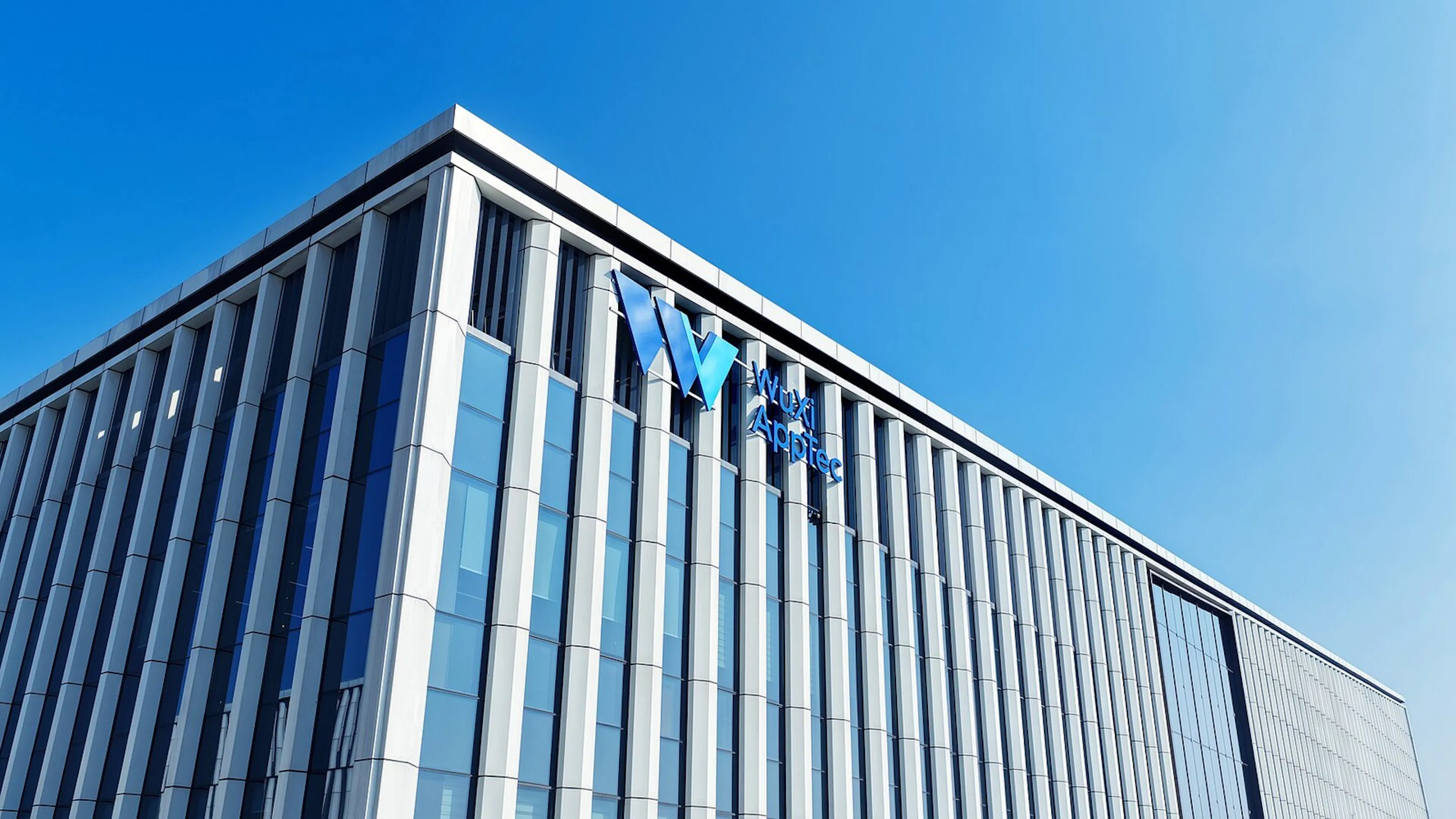
Roughly 79% of U.S. biopharma companies use WuXi AppTec somewhere in their supply chain. In June 2026, the Department of Defense put it on a list. (WuXi AppTec headquarters, Shanghai — Wikimedia Commons, CC0)
Congress knew that an immediate cutoff would cause drug shortages, so the timeline is long. Contracts signed before the effective dates are protected by a five-year grandfather clause. Depending on when OMB revises the Federal Acquisition Regulation, prohibitions bite around late 2028, and the grandfather clause runs to roughly 2033–2034.
Which means the industry has been handed a seven-year eviction notice and a very large invoice.
|
BIOSECURE milestone |
Date |
|---|---|
|
NDAA FY2026 enacted |
December 18, 2025 |
|
WuXi AppTec added to 1260H list |
June 8, 2026 |
|
OMB publishes initial BCC list |
Expected by December 18, 2026 |
|
Prohibitions effective (1260H entities) |
~Late 2028 (60 days after FAR revision) |
|
Grandfather clause expires |
~2033–2034 |
The loophole that eats the law
Now the twist, and it's a large one.
BIOSECURE regulates manufacturing, hardware, and services. It does not regulate intellectual property or clinical data licensing.
Which means every one of those multi-billion-dollar deals — the ADCs, the bispecifics, ivonescimab, SKB264 — remains entirely legal. A Western company can still buy a Chinese-discovered molecule. It just has to move the manufacturing and the clinical data hosting to Western-aligned facilities afterward.
So the law doesn't stop the flow of Chinese-engineered molecules into Western medicine cabinets. It stops the flow of Chinese factories. Whether that constitutes strategic decoupling or an expensive change of address is a question the industry is currently spending billions to answer.
Part V: India's Moment, and the Great Consolidation
The Pharmacy of the World changes its business model
When Western companies started drawing up "China Plus One" plans, one country was already standing there with 350 USFDA-approved facilities and a hand up.
India supplies 40% of U.S. generic drug demand and 60% of global vaccines. That earned it the nickname "Pharmacy of the World" and, less flatteringly, a reputation as a place that manufactures other people's inventions very cheaply.
India is now spending considerable effort to change the second half of that sentence. Over the past decade, Indian originators have produced more than 10 novel drug assets. Domestic biotech startups have surged past 2,400, backed by $731 million in private equity and venture funding in FY26. And ImmunoACT's NexCAR19 — India's first indigenous CAR-T cell therapy — proved the country can execute at the complexity ceiling of modern medicine, engineering a patient's own immune cells to hunt their cancer.
Simultaneously, Indian CDMOs — Neuland Laboratories, Syngene, Laurus Labs — are absorbing the contract manufacturing demand fleeing WuXi and other restricted entities. They have moved well beyond simple small molecules into high-potency APIs, peptide synthesis, oligonucleotides, and sterile injectables. The alignment with revised Schedule M global GMP standards is the unglamorous regulatory work that turns "cheaper option" into "trusted partner."
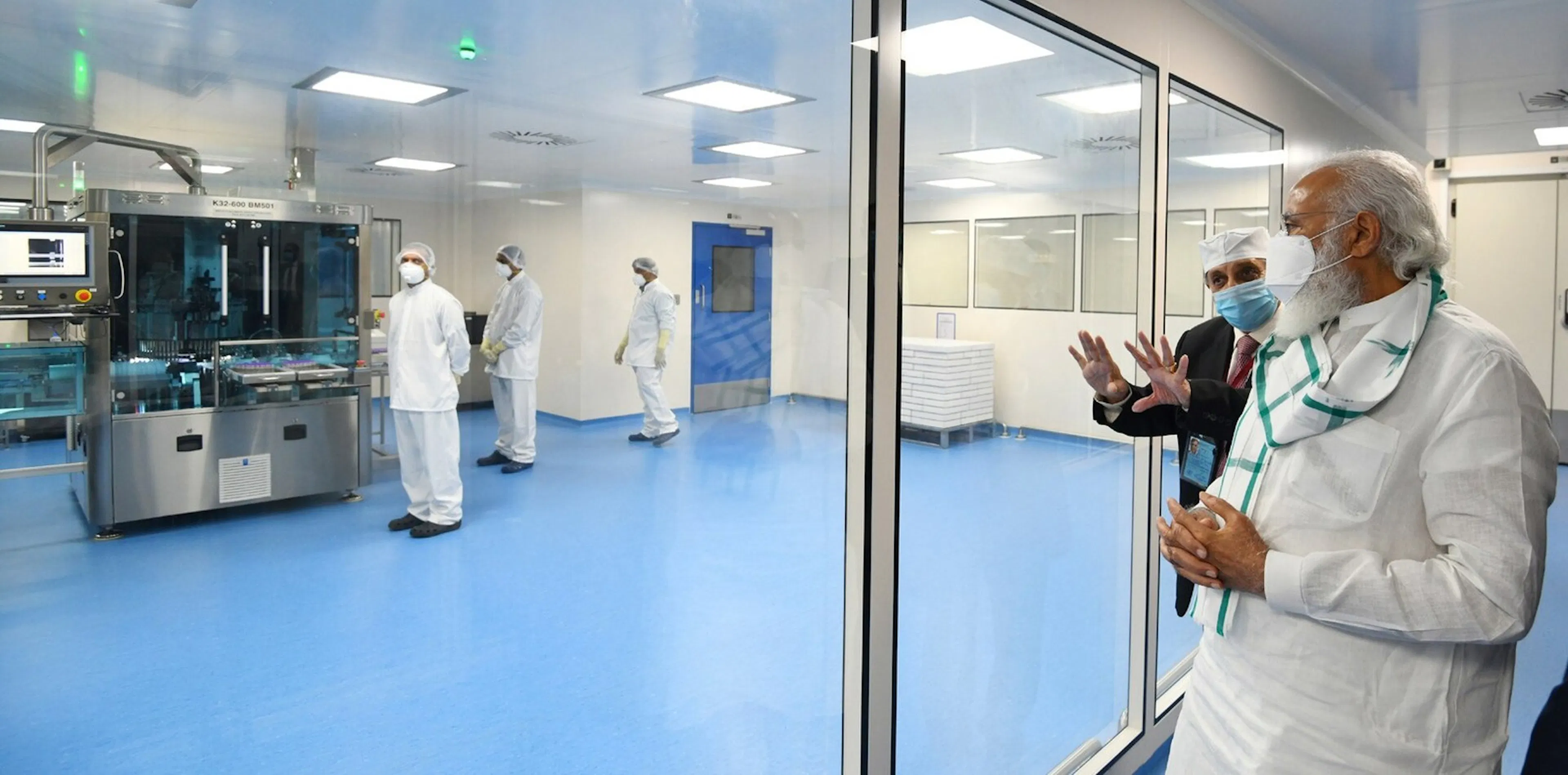
A vaccine filling line at the Serum Institute of India in Pune. India supplies 40% of U.S. generics and 60% of the world's vaccines. It is now trying to supply inventions too. (Government of India — Wikimedia Commons, GODL-India)
The cliff everyone can see coming
Meanwhile, Western pharma is staring at a number that keeps its CFOs awake.
Over $230 billion in biopharma revenue loses patent exclusivity by 2030. For some mega-cap companies, that's up to 65% of current sales exposed to generic and biosimilar competition.
The centerpiece is Keytruda. Merck's checkpoint inhibitor generates tens of billions annually, anchors the company's valuation, and goes off patent in the U.S. in late 2028. There is no organic pipeline on Earth that replaces that revenue on that timeline. The only lever is acquisition.
So M&A came back, violently. After a sluggish stretch of high interest rates, aggregate deal value rebounded to somewhere between $133 billion and $240 billion globally across 2025 and early 2026.
The character of the deals is telling. Nobody is buying diversification. Acquirers want de-risked, clinical-stage assets in three areas — oncology, cardiovascular-renal-metabolic, immunology — and they want them now:
- Vertex paid $10 billion for Crinetics Pharmaceuticals, largely for paltusotine in rare hormone disorders
- Merck KGaA paid $11.3 billion for Bio-Techne, a life-sciences toolmaker — buying picks and shovels, not gold
- GSK paid $10.6 billion for Nuvalent to reinforce its lung cancer pipeline
And a new instinct has emerged that Bain calls "buy the factory, not just the drug." In radiopharmaceuticals — where the medicine is radioactive, decays on a clock, and must reach a patient within hours — over 80% of 2025 deals explicitly included manufacturing or isotope supply chain integration. Owning a brilliant molecule means nothing if you can't get sterile fill-finish capacity. Post-BIOSECURE, that lesson has generalized.
The startup ecosystem feeding this machine remains stubbornly concentrated in the San Francisco Bay Area. Parvus Therapeutics in Burlingame is developing in vivo regulatory T cell therapies for autoimmune disease using pMHC nanomedicines — teaching the immune system to stand down rather than suppressing it wholesale, partnered with AbbVie. Genesis Therapeutics sits in the same neighborhood. Both are the kind of platform company big pharma now prefers to acquire: not one drug, but a machine that makes drugs.
To bridge the gap between founders who believe their platform is worth a fortune and buyers who've been burned before, deals increasingly use Contingent Value Rights — payouts tied to specific clinical milestones. Half the money now, the other half if the thing actually works.
Part VI: The Twenty-Year Horizon
Everything so far is the present tense. Here's where it goes.
The next phase of pharmaceutical ambition moves from localized problems — a specific mutation in a specific tumor — to systemic ones: the diffuse, multi-causal failures of human biology that have humbled every approach thrown at them.
Alzheimer's: the end of the single-target era
For thirty years, Alzheimer's research was organized around one hypothesis. Amyloid-beta plaques accumulate in the brain; clear the plaques, stop the disease. The field pursued it with a focus that critics called monomaniacal and defenders called rigorous, and it produced one of the worst failure records in the history of clinical medicine.
Amyloid-clearing antibodies — lecanemab (Leqembi) and donanemab (Kisunla) — finally worked, in the narrow sense that they modify disease progression. They are not cures, and the reason cuts to the heart of the problem: by the time a patient walks into a clinic with symptomatic dementia, amyloid has been accumulating for fifteen to twenty years. The neural damage is done. You've arrived at the fire with a hose, twenty years after the building burned.
The pipeline for the 2030s reflects a much more honest reading of the biology. In 2026, nearly 200 clinical trials are assessing over 150 candidate therapies, most of them aimed at mechanisms other than amyloid:
- Chronic neuroinflammation — microglia, the brain's resident immune cells, shifting from housekeepers to arsonists
- Metabolic resilience — mitochondrial bioenergetics, because neurons are enormously expensive cells to run and an aging brain runs a power deficit
- Vascular health — the increasingly clear overlap between cardiovascular disease and dementia
- Tau pathology — the tangles inside neurons, which track cognitive decline considerably better than plaques ever did
There's even a serious effort to repurpose GLP-1 analogues — the diabetes and obesity drugs — for their downstream neuroprotective and metabolic effects in the brain. Ozempic for Alzheimer's sounds like a bad headline. It's a real hypothesis with real mechanistic grounding.
The endgame looks like modern oncology. Not one magic bullet, but AI-driven multi-omics defining biological subtypes of Alzheimer's, each getting a precision combination therapy — the same way "breast cancer" fractured into a dozen molecularly distinct diseases with a dozen different treatment algorithms.
Diagnostics are moving in lockstep, and this may matter more than any drug. Blood biomarkers — particularly phosphorylated tau p-tau217 and alpha-synuclein — can detect Alzheimer's and Lewy body pathology years before cognitive symptoms appear. A blood test, not a PET scan or a spinal tap. That changes the treatable window from "after the damage" to "before it."
And on the delivery side, focused ultrasound can temporarily open the blood-brain barrier — the physiological fortress that has blocked the majority of CNS drug candidates for a century — letting large biologics into neural tissue on demand.
Put those together and the plausible endpoint is this: Alzheimer's becomes a chronic managed condition. Detected early by blood test, subtyped by multi-omics, treated with combination therapy delivered past the barrier. Not cured. Managed. For a disease that currently kills everyone it touches, managed would be a revolution.
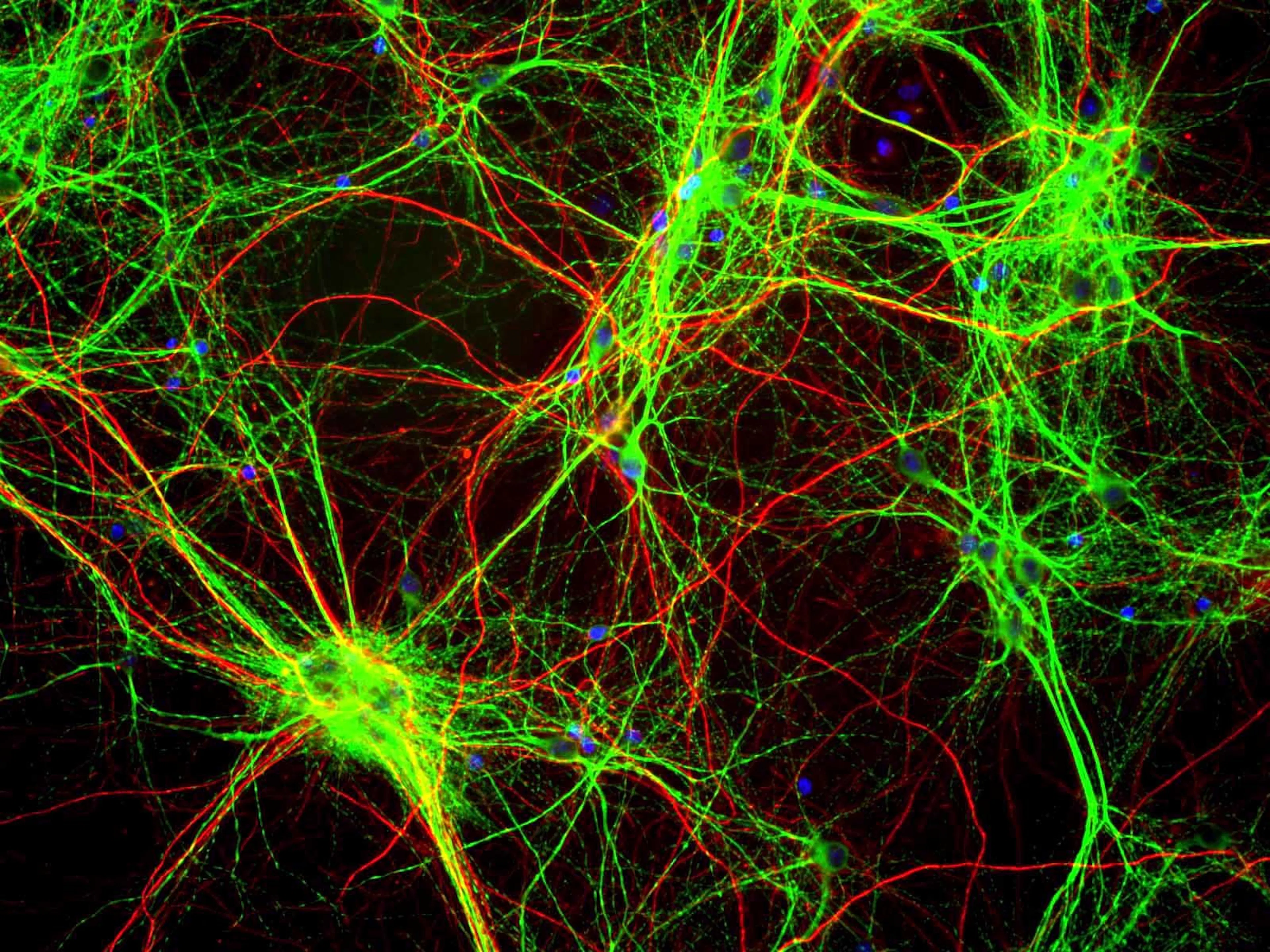
Cultured brain cells, labeled by antibody staining. By the time dementia symptoms appear, amyloid has been accumulating in tissue like this for two decades. The next generation of drugs aims at the window before that. (Wikimedia Commons, CC BY-SA)
Longevity: the honest version
Now for the promise that generates the most breathless coverage and deserves the most skepticism.
Prominent voices in tech have suggested AI could effectively "cure" aging and double human lifespan by 2033.
The demographic evidence says no. An analysis published in Nature Aging concluded that radical life extension is implausible this century absent a fundamental, systemic slowing of biological aging. The reason is arithmetic rather than pessimism: in developed countries, we have already harvested nearly all the gains available from reducing early- and mid-life mortality. Sanitation, antibiotics, vaccines, cardiac care, seatbelts — the easy decades are spent. What's left is the biology of aging itself, and we have not moved it.
The TAME trial — Targeting Aging with Metformin — is the cautionary tale. It proposes to test a cheap generic drug against a composite endpoint of cardiovascular disease, cancer, dementia, and all-cause mortality. It is elegant, important, and has been stalled for a decade, because metformin is off-patent and nobody can monetize the answer. The market does not fund questions it cannot own.
But here is the distinction that gets flattened in the coverage: lifespan and healthspan are not the same variable.
Healthspan — years lived free of chronic, debilitating disease — is poised for genuine expansion by 2045, and the investment is flowing toward three mechanisms:
- Cellular senescence — senolytics that clear "zombie" cells which stop dividing but refuse to die, sitting in tissue leaking inflammatory signals
- Epigenetic reprogramming — partially resetting the chemical marks on DNA that drift with age, restoring youthful gene expression without erasing cell identity
- "Inflammaging" — the chronic low-grade systemic inflammation that underlies a startling proportion of age-related disease
The regulatory obstacle is structural: the FDA does not recognize "aging" as an indication. You cannot get a drug approved to treat being old. But the workaround is already visible — surrogate composite endpoints capturing metabolic and neurocognitive health, quietly paving a path for geroprotective drugs to reach approval under other names.
You probably won't live to 150. You may well spend your seventies and eighties in meaningfully better shape than your grandparents did. That's not the headline the longevity industry wants. It's the one the data supports, and it's worth an enormous amount.
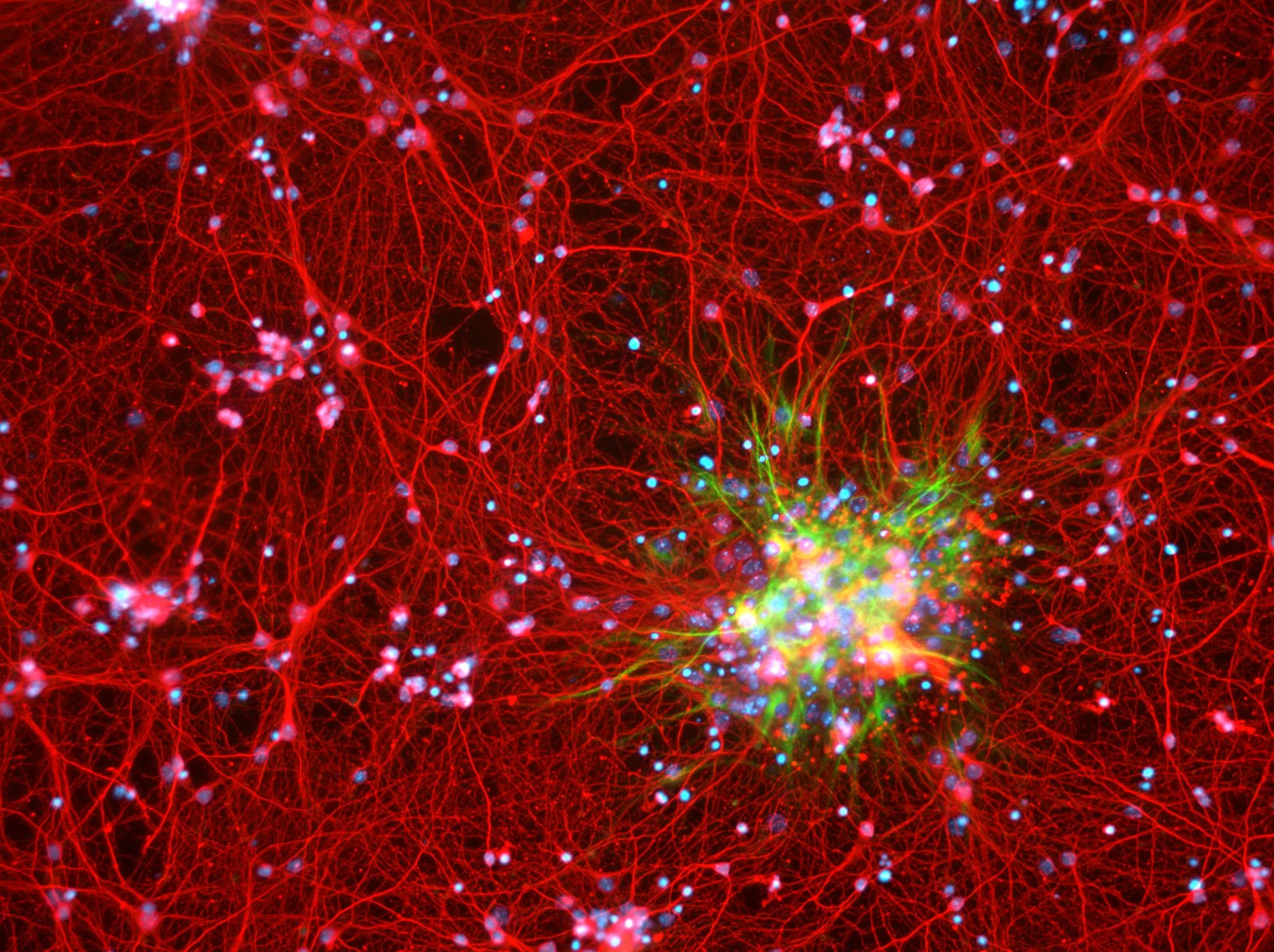
The real target of the next twenty years isn't more years. It's better ones — the biology of aging itself, attacked through senescence, epigenetic reprogramming, and chronic inflammation. (Wikimedia Commons, CC BY)
The Irony at the Center
Here's where the two halves of this story collide.
The tools of modern drug discovery — foundation models, synthetic control arms, multi-omics analysis — share a single characteristic that determines everything about their future: they are data-hungry. Ravenously so. A model trained on one population's genetics produces medicine that works well for that population and less well for everyone else. A synthetic control arm built from one country's health records generalizes exactly as far as that country's population does.
These systems require the diverse genetic and clinical data that only a genuinely global population can supply. That is not an ideological preference. It is a technical requirement, as hard as any constraint in the system.
And at precisely the moment when AI dissolved the boundaries between physics, chemistry, and biology — when a protein-folding model and a language model turned out to be the same kind of object, when a chemist and a machine learning engineer started working on the same problem — geopolitics began erecting walls between the people holding the tools.
BIOSECURE is one wall. There will be reciprocal walls; there already are. Data localization laws, export controls on scientific instruments, restrictions on cross-border clinical trial hosting. Each is individually defensible on national security grounds. Collectively they threaten to balkanize the one thing that made the last five years of progress possible: the free movement of biological data.
And notice where the walls fall. The discovery layer and the translation layer — the labs that find new biology and the machinery that turns it into medicine at speed — currently sit on opposite sides of the new border. Neither half is self-sufficient. A Western discovery that can't get to a clinical readout for a decade helps nobody, and a Chinese development engine with nothing novel to develop eventually runs out of road. Decoupling them doesn't produce two competing systems. It produces two incomplete ones.
If genomic datasets are confined by national borders, and manufacturing chains are weaponized for political leverage, the pace of life-saving innovation slows. Not stops — slows. And in a field where the unit of measurement is patient-years, slowing is not an abstraction. It's a body count.
There are counterweights, and they deserve more attention than they get. The Open Discovery Innovation Network in Europe fosters patent-free collaborative research between universities and pharmaceutical companies — pre-competitive work where nobody owns the output and everybody benefits from it existing. The Open Source Pharma Foundation is building similar scaffolding. The R Consortium's regulatory work proves that open tools can meet the most demanding standards of reproducibility in any industry.
These are small compared to the forces pushing the other way. They are also, at the moment, the best blueprint anyone has.
The science has arrived. We can now design a molecule to specification and watch it work in a human lung. We can delete a mutated protein instead of merely blocking it. We can engineer a molecule that grabs two targets at once and outperform the best cancer drug in the world — on the endpoint we measured first, at least, which is its own kind of lesson. We can forecast a patient's disease trajectory well enough to shrink the number of people who have to take the placebo.
The century-long era of guessing is genuinely over, and what replaced it is astonishing.
Whether that astonishment reaches patients is no longer a scientific question. It's a political one. And the people who will decide it mostly don't work in labs.
Image credits: all photographs and scientific renderings are sourced from Wikimedia Commons under public domain, CC0, CC BY 2.0/4.0, CC BY-SA, or GODL-India licenses, as noted in each caption. Individual attributions are available on the corresponding Commons file pages.
References
AI-driven discovery and molecular design
- Generative Artificial Intelligence Transitions Pharmaceutical Development from Empirical Screening to Predictive Molecular Design and Clinical Trial Optimization — PMC / NCBI
- Role of Artificial Intelligence in Modern Drug Discovery: A Literature Overview — Preprints.org
- Artificial intelligence in drug discovery: from algorithmic foundations to clinical translation — Frontiers in Pharmacology
- Insilico Medicine Announces 2025 Annual Results, Redefining Value Delivery in AI-Powered Drug Discovery — Insilico Medicine
- AI Drug Discovery: MapDiff & Edge Set Attention Breakthroughs — AstraZeneca
- Incyte and Genesis Expand Molecular AI Collaboration to Accelerate Drug Discovery — Business Wire
- Incyte and Genesis Therapeutics Announce Strategic AI-focused Research Collaboration — Incyte Investor Relations
- Genesis Molecular AI — AI for Small Molecule Drug Discovery — Genesis Therapeutics
- Clinical Breakthrough in Targeted Protein Degradation: Reflections on the Approval of ARV-471 — PMC / NCBI
- Targeted Protein Degraders — NJ Bio, Inc.
- FDA-Approved Antibody Drug Conjugates: Full 2026 List — BioPharmaSpec
- DS3790 Enters Clinical Development as First DXd ADC in Hematology — Daiichi Sankyo (origin of the DXd topoisomerase-I payload / tetrapeptide linker architecture)
- Overcoming resistance to anti-PD-1/PD-L1 therapy in cancer — Cancer Drug Resistance
- Novel Drug Approvals for 2025 — U.S. Food and Drug Administration
Ivonescimab and the HARMONi program
- Akeso, Summit's ivonescimab delayed progression 48% in certain lung cancers in first global Phase 3 readout — Fierce Pharma
- Summit Therapeutics updates ivonescimab survival data ahead of FDA decision date — Fierce Pharma (overall-survival HR 0.79, p=0.057; June 2026 update)
- Ivonescimab Plus Chemotherapy Shows Consistent, Favorable Overall Survival Results in Western and Asian Patients in the Global Phase III HARMONi Study — Summit Therapeutics
- Ivonescimab to Emerge as China's First Potential Bispecific Immuno-oncology Therapy in TNBC — Onco'Zine
Clinical trials, synthetic control arms, and open science
- Digital Twins in Clinical Trials: Synthetic Control Arms and FDA's Evolving Posture — CASRAI
- Synthetic Data in Pharma: A Guide to Acceptance Criteria — IntuitionLabs
- Reshaping the drug discovery ecosystem with open science and collaborative innovation — The Innovation: Drug Discovery
- Open Source Pharma: Tools & Trends in Drug Development — IntuitionLabs
- R Submissions Working Group: 2026 Plans and 2025 Success — R Consortium
- R Submissions Working Group: Pilot 5 Launch and more — R Consortium
- R Submission Pilot 3 — R Consortium
- Open Discovery Innovation Network (ODIN) — Novo Nordisk Foundation
- About OSPF — Open Source Pharma Foundation
China: scale, licensing, and the originality question
- China has caught up in biotech. How screwed are we? — Alex Kesin, July 2026 (first-in-class clinical entries 127 vs 21; novel preclinical targets 71 vs 41; the two China-originated targets, CD3L1 and CREPT)
- Innovation Powerhouse or Inflated Bubble? Reading China's First-in-Class Boom — BioPharma APAC (first-in-class pipeline share; sintilimab precedent; 60–70% upfront-payment discounts)
- China's Burgeoning Biopharmaceutical Competitiveness Demands a US Response — ITIF, June 2026 (R&D intensity ~10% of revenue vs ~20% Western)
- Innovation in the Chinese Biopharma Sector: From Me-too to First-in-Class — Springer
- China's Pharma Sector Pivots to 'First-in-Class' Drugs Amid Innovation Push — Caixin Global
- How Chinese labs race for the next 'first-in-class' breakthrough — Chemical & Engineering News
- China's R&D spending, 2025 national statistics — State Council of the PRC (basic research at 7.08% of total R&D)
- U.S. R&D-to-GDP Ratio and basic research share — NSF National Center for Science and Engineering Statistics (basic research ~15% of U.S. R&D)
- 2026 H1 Licensing Landscape: China Secures 8 of the Top 10 Global Licensing Deals — VCBeat
- In-Licensing China Biotech Assets: Strategic Guide 2026 — Vision Lifesciences
- Top Chinese Biotech Companies to Watch in 2026 — Vision Lifesciences
The BIOSECURE Act
- BIOSECURE Act Update — Morrison Foerster
- BIOSECURE Act Enacted — Ropes & Gray
- United States: The BIOSECURE Act Becomes Law — Baker McKenzie
- BIOSECURE Act Becomes Law — Akin Gump
- WuXi AppTec's 1260H Listing Brings the BIOSECURE Act Back to Center Stage — FDA Law Blog
- WuXi AppTec Added to DoD's 1260H List: The BIOSECURE Act Clock Is Running — Holland & Knight
- US President Signs Defense Policy Bill Significantly Expanding Authorities Over Sanctions, Investment Security, and Supply Chain Restrictions — Baker McKenzie Sanctions News
- BIOSECURE Act Compliance: Key Considerations and Checklist — CITI Program
- New Federal Restrictions — Equipment, Services, and Collaborations — Northwestern University Research Security
- The BIOSECURE Act: Impact on Pharma Supply Chains & China Partnerships — Vision Lifesciences
India and the M&A supercycle
- Built on Scale, Turning to Science — India's Pharma and Life Sciences Innovation Opportunity — Boston Consulting Group
- India Pharma's 2026 Reset: Reforms, Innovation and the Road to the Future — Indian Pharmaceutical Alliance
- India's Life Sciences Proposition Expands from Global Scale to Strategic Innovation — BioPharma APAC
- Fueling Innovation, Advancing Equity: Partnerships and Digital-First Strategies Driving Indian Pharma — EY
- M&A in Pharmaceuticals: Bigger, Bolder, and Far More Strategic — Bain & Company
- Biopharma M&A: Outlook for 2026 — IQVIA
- Life Sciences M&A Trends Report 2026 — Deloitte
- Pharma and Biotech M&As 2026 Deal Watcher — Xtalks
Alzheimer's disease and longevity
- Expanding the Alzheimer's Treatment Landscape: A 2026 Forecast — BrightFocus Foundation
- 2025 NIH Alzheimer's Disease and Related Dementias Research Progress Report — National Institute on Aging
- The next big breakthroughs in Alzheimer's science and treatment — University of California
- The Alzheimer's Pipeline Is Finally Catching Up to the Biology — Longevity Global
如有侵权请联系:admin#unsafe.sh