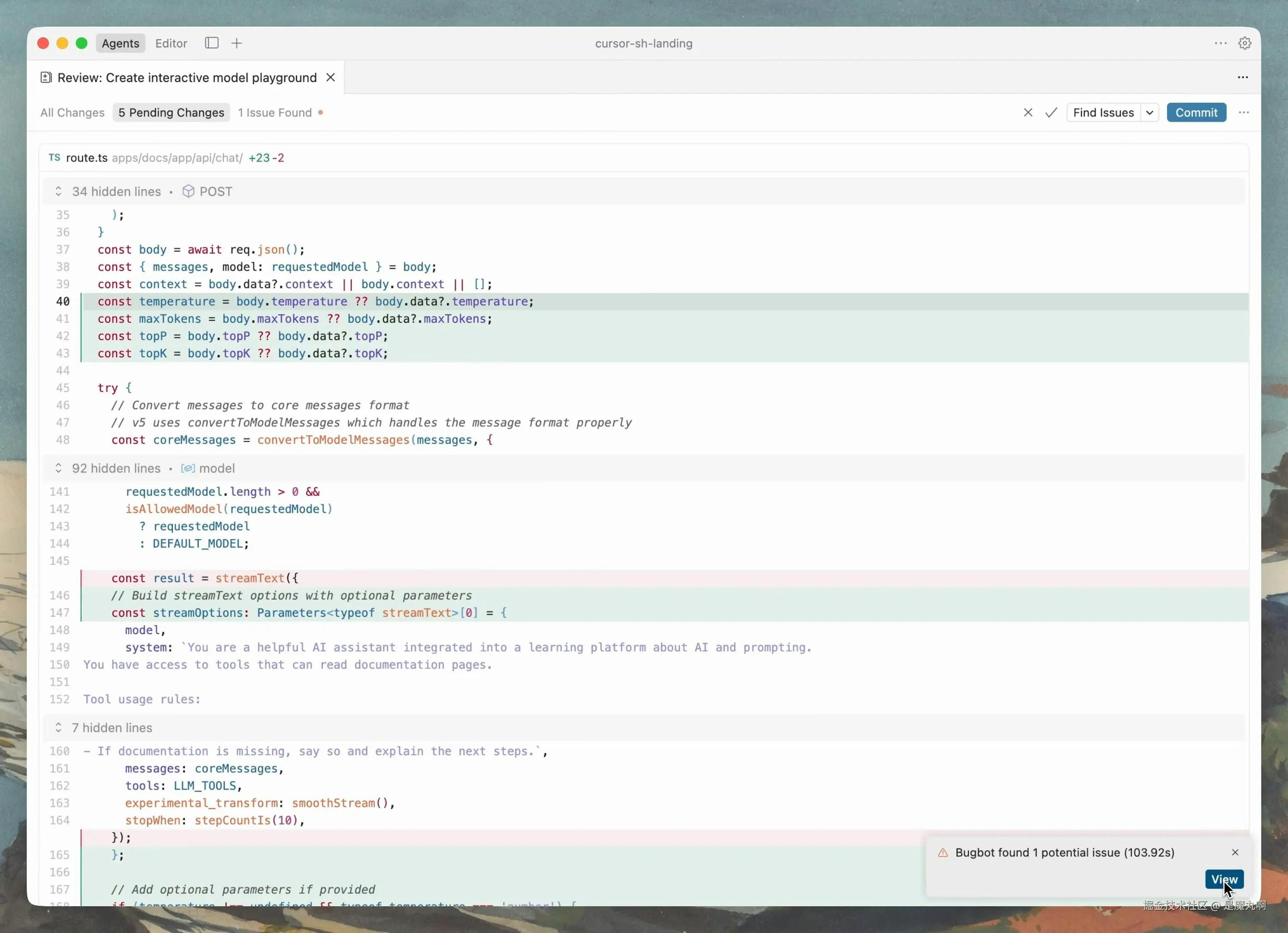
There is a subtle moment that happens every time we use an AI product.It rarely lasts more than a fe 2026-7-28 15:36:6 Author: hackernoon.com(查看原文) 阅读量:2 收藏
There is a subtle moment that happens every time we use an AI product.It rarely lasts more than a few seconds, and most of us barely notice it.
GitHub Copilot suggests a function. Cursor proposes a refactor across half a dozen files. Perplexity answers a question with a confident summary and a list of citations. Google Maps suddenly recommends a different route because traffic has changed.
Before we accept any of those suggestions, something almost instinctive happens.
We pause.
Not because we don't understand the recommendation, but because we're making a judgement that has very little to do with artificial intelligence itself.
Should I let the system make this decision for me?
That question has quietly become one of the defining interactions of modern software.
For decades, software occupied a relatively simple role. People made decisions and computers carried them out. Whether you were editing a spreadsheet, transferring money through online banking, or booking a flight, the responsibility for deciding what happened next always belonged to the user. Software existed to execute instructions more efficiently than humans could.
Artificial intelligence has begun to blur that boundary.
Today's AI products don't simply wait for instructions. They recommend, prioritise, summarise, generate, predict, and increasingly take action on behalf of their users. Instead of acting as passive tools, they participate in decision making.
That shift changes more than the capabilities of software. It changes the relationship between people and the products they use.
In my previous article, The Decision Shift, I argued that AI-native products are redefining decision ownership. The most important design question is no longer "What can the AI do?" but "Who should own this decision?" Every AI product, whether intentionally or not, negotiates a contract that determines which decisions remain human, which are shared, and which are delegated to intelligent systems.
But understanding how decisions move through a product only answers half of the problem.
The other half is understanding why users are willing to delegate those decisions in the first place.
The technology industry often answers that question with a single word: trust.
Responsible AI frameworks emphasise trust. Product teams talk about building trust through explainability and transparency. Research papers explore trustworthy AI, while organisations publish principles designed to increase public trust in intelligent systems.
Trust has become one of the most frequently used words in AI.
It is also, I believe, one of the least precise.
Consider the first time you used Cursor or GitHub Copilot.
You almost certainly didn't trust it.
You inspected every line of generated code. You checked the imports. You verified the logic. Perhaps you even rewrote most of what it suggested.
Yet you kept using it.
Not because trust already existed, but because something else was beginning to form.
Each successful suggestion made the next one slightly easier to accept. Every explanation reduced uncertainty. Every visible code diff allowed you to verify the AI's reasoning without surrendering control. Over time, reviewing every suggestion became unnecessary. You delegated a little more, intervened a little less, and gradually expanded the role the AI played in your workflow.
What changed wasn't blind trust.
It was confidence.
The distinction matters because trust and confidence are often treated as though they describe the same experience.
They don't.
Trust is relational. It develops over time through repeated positive interactions. Confidence is situational. It describes a person's willingness to rely on a system in a specific moment because the conditions make that decision feel reasonable.
That difference is subtle, but it has profound implications for how AI products should be designed.
A new user does not arrive trusting your AI assistant. They arrive uncertain.
What determines whether they return tomorrow is not whether you've convinced them to trust the system. It is whether you've given them enough confidence to delegate one meaningful decision today.
Once you view AI products through that lens, many familiar design patterns begin to look different.
Take Perplexity, for example. Its citations are often described as trust-building features. That is true, but only indirectly. Their immediate purpose is to reduce uncertainty by allowing users to verify claims for themselves. The citations create confidence in the current answer. Trust emerges only after that experience is repeated dozens or even hundreds of times.
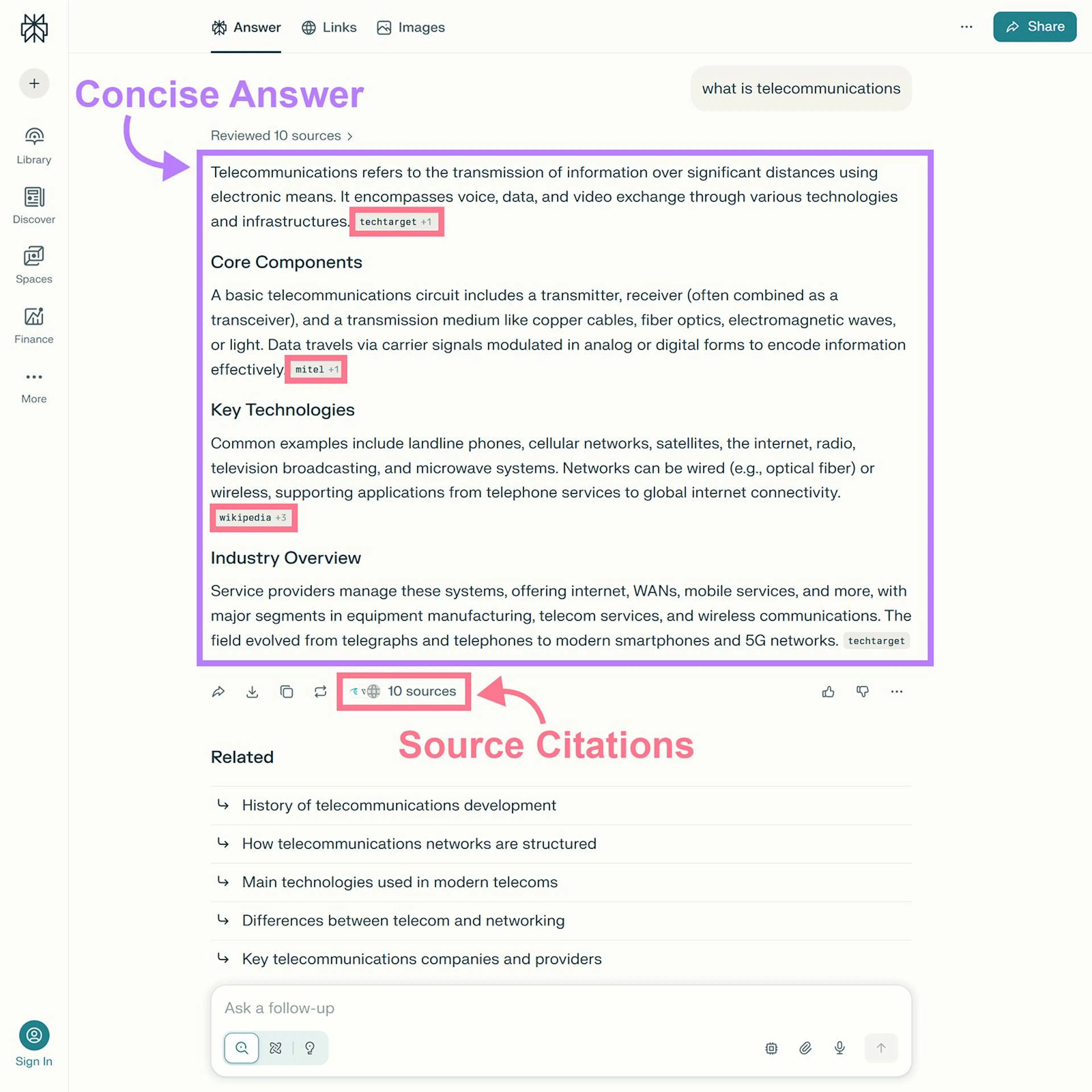 semrush: 18 Best Content Marketing Tools to Use in 2026
The same pattern appears in Google Maps. Most people don't follow every suggested route because they have complete trust in the application. They follow it because years of predictable behaviour have given them confidence that the recommendation is probably better than their own estimate. When the application occasionally makes a mistake, users rarely abandon it altogether. Instead, they reassess, recover, and continue because the underlying confidence remains intact.
Even products that appear almost autonomous still depend on this dynamic. AI coding assistants expose code diffs before applying changes. AI writing tools allow users to accept or reject edits. Customer support agents surface suggested responses before sending them automatically. These interactions are often explained as mechanisms for maintaining human oversight.
They are.
But they also serve another purpose.
They give users opportunities to verify the system before delegating more responsibility.
That progression is remarkably consistent across successful AI products, and it suggests that we may have been framing the design challenge incorrectly.
Perhaps the goal isn't to design for trust.
Perhaps trust is something that emerges later, while confidence is the product experience we can intentionally design from the very first interaction.
That shift may sound like semantics, but it changes where product teams focus their attention.
Instead of asking, "How do we make users trust our AI?", we begin asking a different question.
How do we help users become confident enough to delegate the next decision?
That question leads to a different way of thinking about AI products altogether.
Because confidence is not a feeling that appears by accident.
Like usability, discoverability, or accessibility, it can be designed.
And once we recognise confidence as a design objective rather than an emotional outcome, an interesting pattern begins to emerge across the products people rely on most.
It is a pattern that explains not only why users gradually delegate more responsibility to AI, but also why they suddenly stop when that confidence is broken.
If confidence is what enables delegation, then it raises another question.
Where does confidence actually come from?
It is tempting to think of confidence as a personality trait. Some people naturally embrace new technology, while others approach it with caution. That certainly influences adoption, but it doesn't explain why the same person might happily let an AI assistant organise their inbox while refusing to let it rewrite production code.
The difference isn't the individual.
It's the interaction.
Confidence is built through experience, one decision at a time.
Behavioural researchers have long observed that people calibrate their reliance on automation based on its perceived reliability rather than its actual capability. In human-computer interaction, this is often discussed in terms of appropriate reliance. If users overestimate a system, they become vulnerable to automation bias. If they underestimate it, they ignore recommendations that could genuinely improve outcomes. Neither extreme is desirable.
The objective, therefore, isn't simply to increase reliance on AI.
It is to calibrate confidence so that users delegate the right decisions at the right time.
The most successful AI products appear to understand this intuitively.
They rarely ask users to surrender control immediately.
Instead, they create a sequence of interactions that gradually expands the role AI plays in the workflow.
Consider how many people adopted GitHub Copilot.
Very few developers began by allowing it to generate entire applications. They started with something much smaller. A function completion. A boilerplate test. A repetitive loop.
The suggestions were easy to inspect, easy to reject, and inexpensive to correct if they were wrong.
As confidence increased, developers naturally became comfortable accepting larger blocks of code. Eventually, many progressed to asking AI to generate complete components, debug unfamiliar codebases, or even propose architectural improvements.
The software hadn't simply become more intelligent.
The user's willingness to delegate had evolved.
Cursor follows a remarkably similar pattern.
Its most valuable feature isn't that it can edit multiple files simultaneously. Plenty of models are capable of producing code. What makes Cursor effective is the way it exposes the process. Proposed changes appear as visible diffs. Developers retain the ability to review, reject, or modify edits before they become part of the codebase.
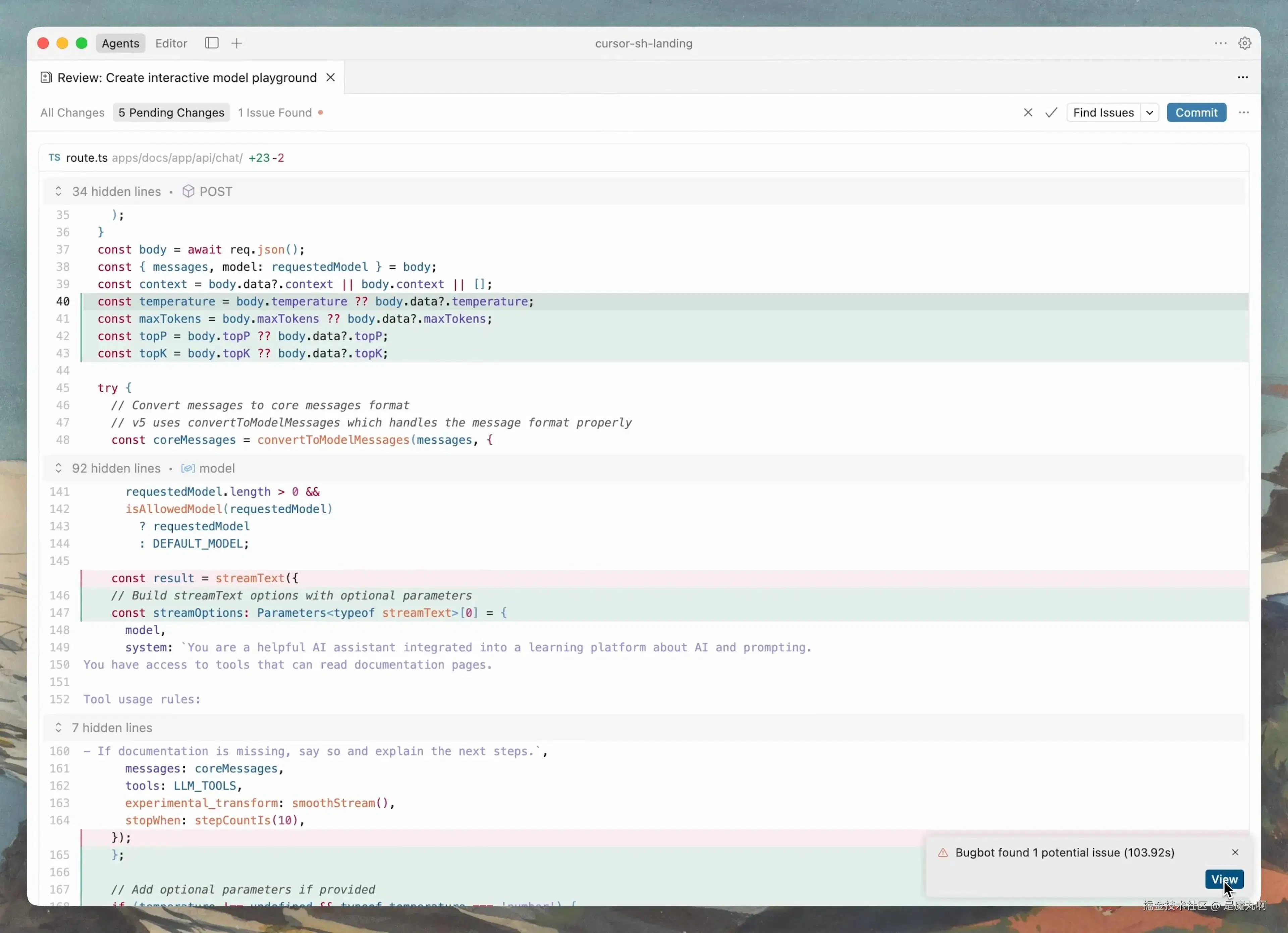 jishuzhan: Cursor 2.1
Every interaction reinforces a simple message:
"You remain in control."
Ironically, that assurance often leads users to give the system more responsibility, not less.
The same principle extends beyond software development.
Perplexity doesn't ask users to accept its conclusions without question. It exposes sources, links to evidence, and encourages verification. Google Maps continuously explains why a route has changed, whether because of congestion, road closures, or faster alternatives. Even AI writing assistants increasingly show tracked changes rather than silently replacing text.
Across very different products, the interaction pattern is surprisingly consistent.
The AI suggests.
The user understands.
The user verifies.
Confidence increases.
The next delegation becomes easier.
Viewed individually, these features can seem unrelated. Code diffs, citations, explanations, confirmation dialogs, editable outputs, confidence indicators. They are often categorised as transparency or usability features.
But taken together, they reveal something more fundamental.
They are all mechanisms for building confidence.
That observation led me to think about AI interaction less as a series of isolated moments and more as a continuous cycle.
Every successful interaction makes the next delegation slightly easier.
Every unsuccessful interaction makes it slightly harder.
Over time, users develop an internal model of what the system is good at, where it struggles, and when they should intervene. They begin to calibrate their behaviour accordingly.
I think of this process as the Confidence Loop.
It begins when the system proposes an action.
That proposal alone rarely creates confidence. Users first need enough context to understand why the recommendation exists. Whether through citations, visible reasoning, previews, or code diffs, the product provides an explanation that reduces uncertainty without overwhelming the user.
Only then does verification occur.
Sometimes verification is explicit, such as reviewing generated code before merging it into a repository. Other times it is almost invisible, like glancing at a suggested route on Google Maps before continuing to drive. In either case, users compare the system's recommendation against their own expectations and knowledge.
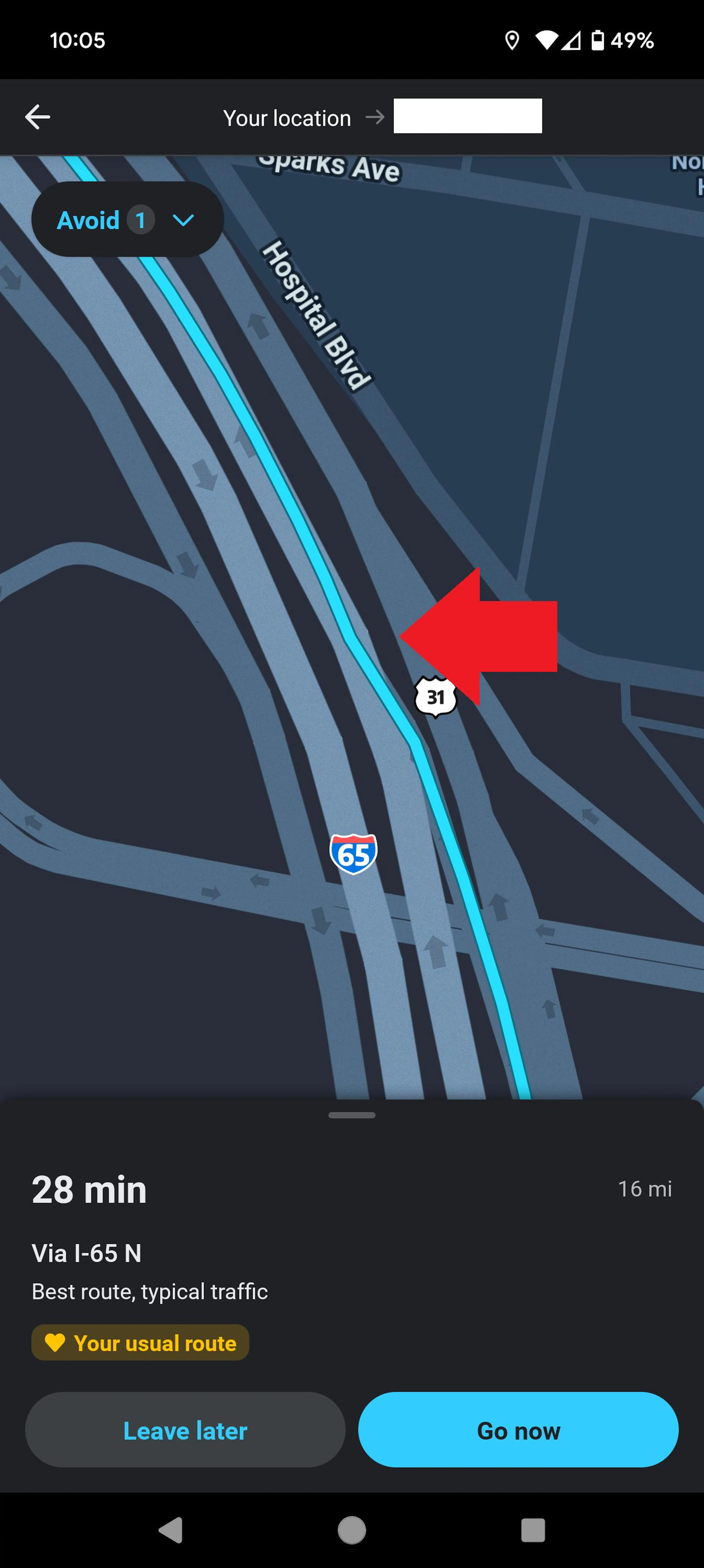 support.google
If the recommendation proves useful, confidence increases.
That increase is usually small, almost imperceptible. Yet every successful interaction strengthens the user's mental model of the system. As confidence accumulates, users become comfortable delegating increasingly complex decisions. The AI's role expands, not because the interface demands it, but because experience has earned it.
The loop then repeats.
Each cycle either reinforces confidence or weakens it.
What makes this framework useful is that it shifts our attention away from intelligence and towards experience.
Many teams assume that a better model automatically produces a better product. Better reasoning certainly helps, but intelligence alone does not determine whether users are willing to rely on an AI system. Two products built on the same underlying model can produce entirely different experiences depending on how they communicate uncertainty, expose reasoning, and preserve user control.
In other words, confidence is not a property of the model.
It is a property of the product.
That distinction may explain why some AI applications with relatively modest capabilities enjoy remarkably high adoption, while technically superior systems struggle to gain traction. Users are not evaluating benchmark scores or parameter counts during everyday work. They are making a much simpler judgement:
"Do I feel comfortable letting this system handle the next decision?"
Every interaction answers that question.
Every design choice nudges the answer in one direction or the other.
And once confidence becomes the lens through which we view AI products, another pattern begins to emerge.
Confidence does not simply grow.
It can also be depleted.
Sometimes gradually.
Sometimes all at once.
Understanding how that happens may be just as important as understanding how confidence is built in the first place.
如有侵权请联系:admin#unsafe.sh