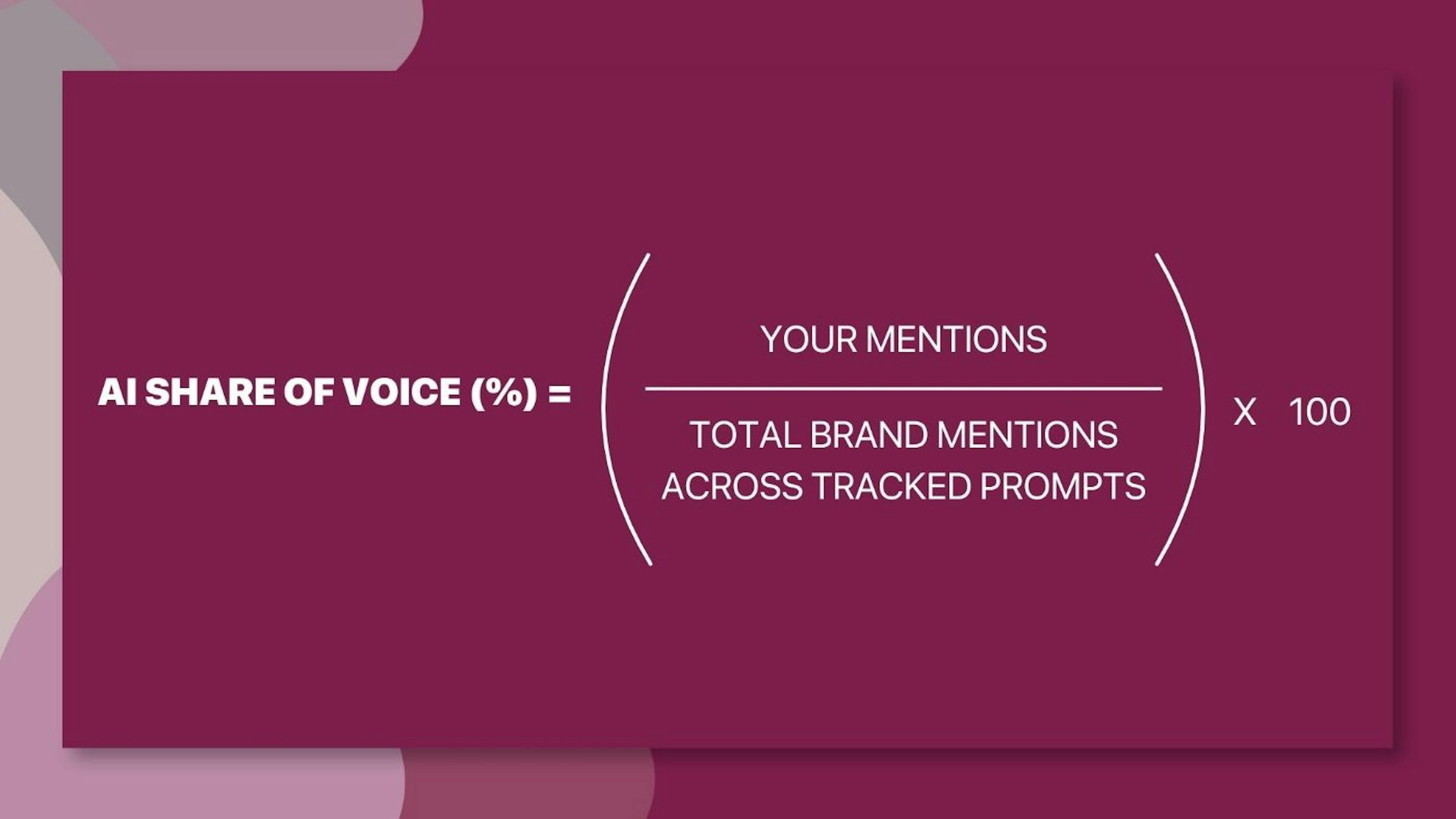
Hey Hackers!Remember when "ranking #1" meant something? In 2026, a growing share of buyers never se 2026-7-27 15:21:4 Author: hackernoon.com(查看原文) 阅读量:3 收藏
Hey Hackers!
Remember when "ranking #1" meant something? In 2026, a growing share of buyers never see a ranked list at all. They ask ChatGPT, Perplexity, or Google's AI Overviews for a recommendation, and the AI just answers. One name, maybe three.
If your brand isn't in that answer, you don't exist.
Here's why that shift deserves a spot on your dashboard.
Why This Matters Now
One independent study measured the correlation between Google organic rank and ChatGPT citation at close to zero. Being #1 on Google tells you almost nothing about whether ChatGPT recommends you.
3. The engines don't even agree with each other.
Researchers comparing Google AI Overviews, Google AI Mode, and ChatGPT on identical queries found the three named the same brands only about a third of the time. Optimizing for one engine can leave you completely blind on the other two.
Visitors referred by AI platforms convert at meaningfully higher rates than standard organic traffic, per multiple 2026 analyses — likely because the AI has already pre-qualified them before the click.
AI Share of Voice (AI SoV) =how often your brand is named in AI-generated answers, relative to your competitors, across the questions your buyers actually ask.
It's a different animal from aMention Rate (just: did you show up at all) or a Citation Rate (did the AI link to your actual content). All three matter. None of them show up in your Search Console.
The Formula
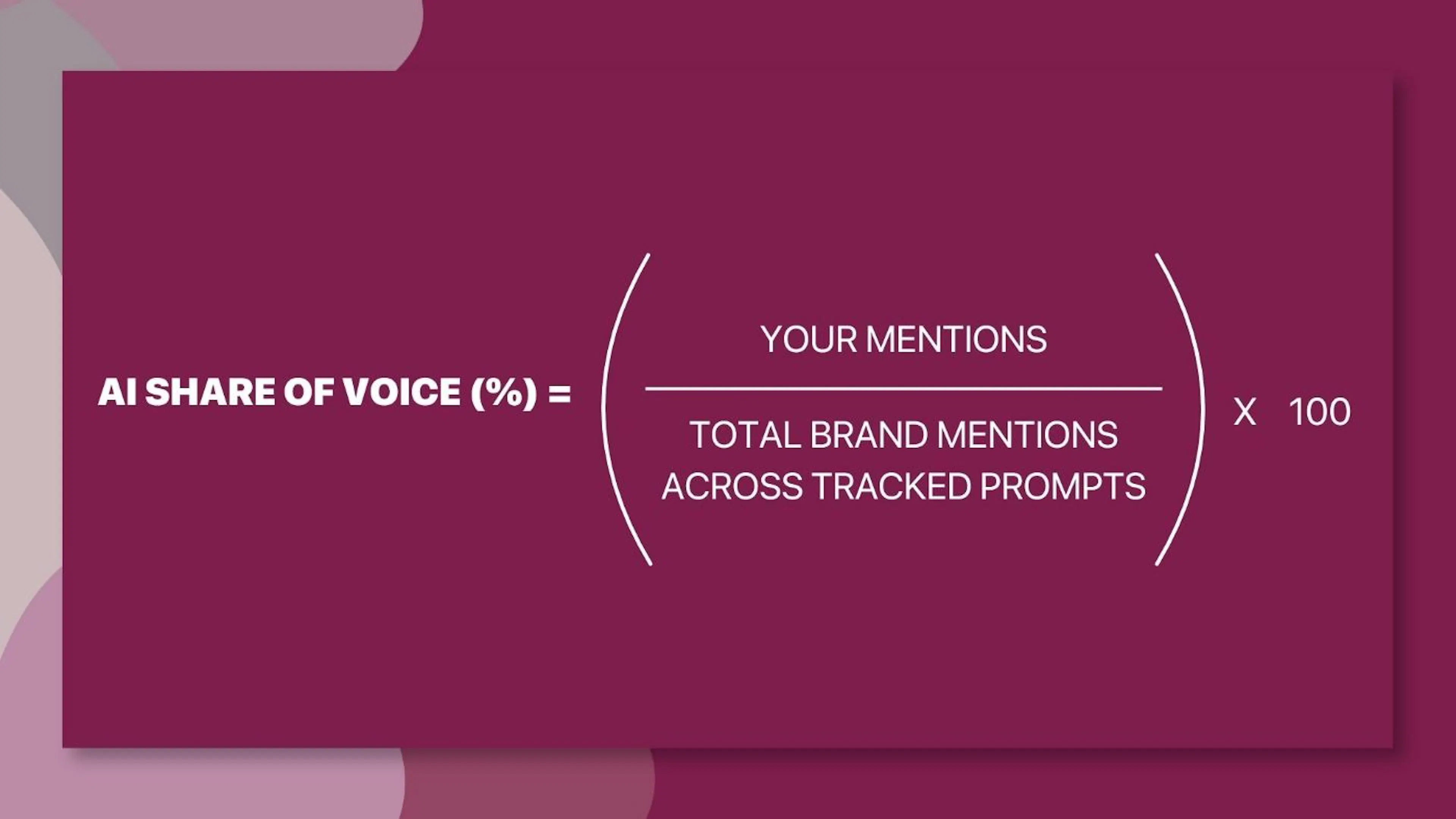
Example: Track 100 buyer-style prompts. Your brand gets named 40 times. Your competitors are collectively named 200 times, so total brand mentions across the prompt set is 240. Your SoV = (40 ÷ 240) × 100 = 16.7%.
As of mid-2026, there's
The Prompt Set Is Where Teams Sabotage Their Own Data
The formula is the easy part. The prompt set is where most teams sabotage their own data.
lays out the failure modes clearly.
Writing "why is [Your Brand] the best option" into your prompt set hands you a perfect score that means nothing. Writing only generic category questions with no natural brand tie-in does the opposite and tanks your score just as artificially. Build your prompt set around real buyer language instead: awareness questions like "what is X," consideration questions like "best X for [use case]," and decision questions like "[you] vs [competitor]." Decision-stage prompts tend to surface the most brand mentions, so make sure they're represented.
Run each prompt more than once before you trust the result. AI answers are probabilistic.
found less than a 1 in 1,000 chance that the same prompt returns an identical brand list twice. A single run tells you almost nothing. Run each prompt three to five times per engine and average the result.
Building Your Baseline
Start with 10 questions your buyers would plausibly type into ChatGPT: category questions, comparison questions, "best tool for X" questions. Run them by hand across ChatGPT, Perplexity, and Gemini. Count how often you get named and how often a competitor gets named instead.
Once that first pass is done, expand to 30 prompts, split evenly across awareness, consideration, and decision. Run each one three times per engine. That gives you a defensible baseline number instead of a guess.
Manual is fine to start:a spreadsheet, 30-50 prompts, run by hand monthly across 3-4 engines. Free, slow, and it forces someone on your team to actually read the answers, which matters more than the score itself.
Mistakes To Watch Out For
- Tracking one engine only. Given how often engines disagree, single-platform tracking can badly mislead you about your real position.
- Conflating mentions and citations. Getting named with no link, and getting linked with no brand name, are different problems. Track them separately.
- Trusting a single-run snapshot. One prompt, one response, is noise until averaged.
- A skewed prompt set. Prompts that already contain your brand name, or prompts too generic to naturally surface any brand, both produce numbers that look meaningful but aren't.
- Celebrating a high percentage on tiny volume. If your whole category only generates a handful of brand mentions, "40% share of voice" of almost nothing isn't a win.
Turning the Data Into Action
Once your numbers are solid, act on them.
For every prompt where a competitor wins and you don't, read the actual AI answer and check which source it cited. That source is usually the thing worth building or improving next. Refresh your prompt set at least quarterly, since citation patterns shift as models get updated.
AI Share of Voice is the closest thing marketing has right now to knowing whether you exist in a buyer's head the moment they ask an AI what to use. Start tracking it before your competitors do.
Need help getting noticed by AI search? Let's chat!
如有侵权请联系:admin#unsafe.sh