
One artifact that captures the ideal state replaces your specs, plans, and PRDsJuly 23, 2026I've bee 2026-7-23 16:53:47 Author: danielmiessler.com(查看原文) 阅读量:42 收藏
One artifact that captures the ideal state replaces your specs, plans, and PRDs
July 23, 2026
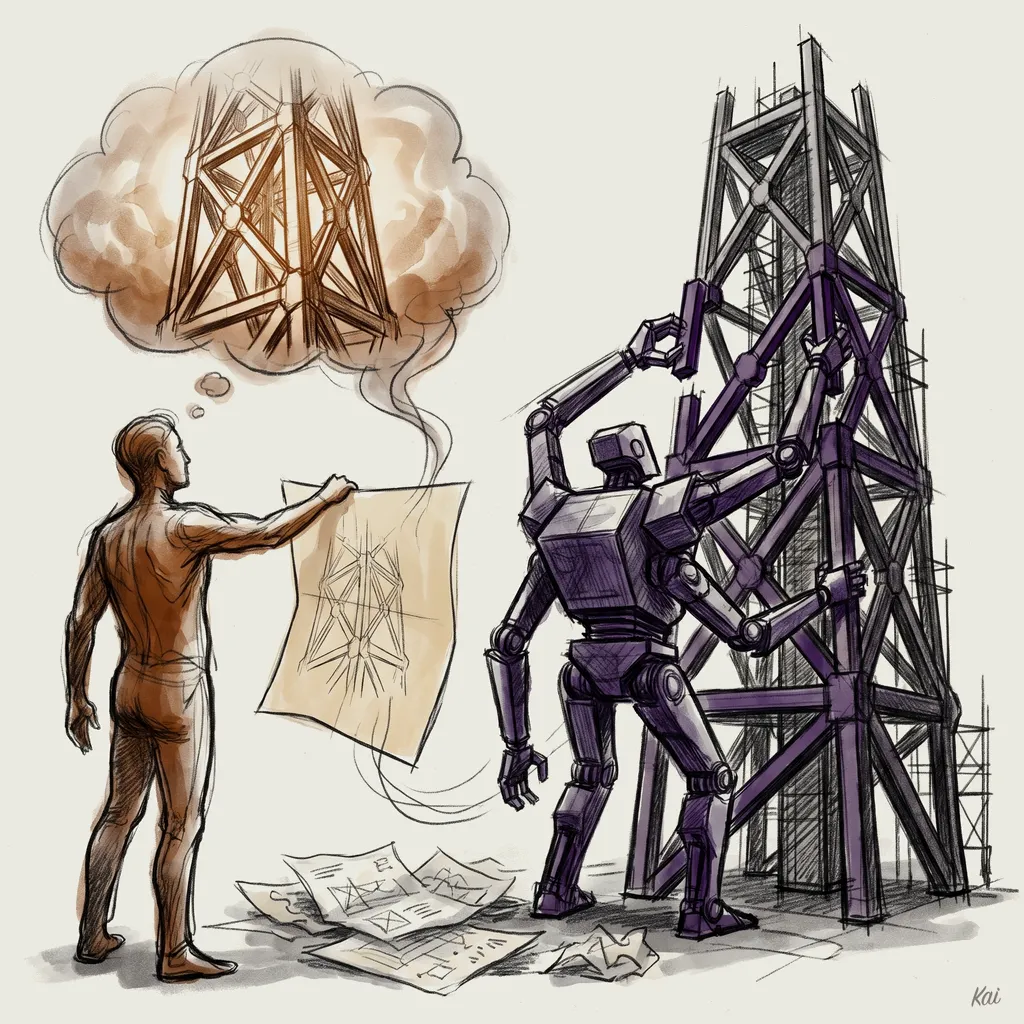
I've been saying this for something like eight months now, with varying approaches and volume levels, and no one is paying attention yet.
This is either because I am way early or my idea isn't one third as good as I think it is. 😃
But here it goes again:
I think we will soon figure out that the entire game for AI is articulation of ideal state.
And that all of our conversations about specs, and plans, and loops, and PRDs and so many other things that have been talked about in software engineering and harness engineering for the last six months...all converge on this same idea.
I think the way it will be articulated is in the form of a single artifact that captures, enhances, iterates on, climbs toward, builds, and tests the ideal state.
One document that replaces all these loops and specs and PRDs and plan files and design files, et cetera.
My current implementation of this is the ideal state articulation (ISA) system.
It turns prompt engineering into intent engineering, in the sense that it abandons telling the AI how to do things and replaces that with telling it exactly what you want the output to be.
It is still technically prompt engineering, but the thing we're articulating is not HOW a thing should be done, but rather WHAT should be done. From Prompt Engineering to Intent Engineering
@karpathy had a recent post where you talked about going on a walk and just talking freely through a bunch of ideas related to what you're trying to accomplish. to me, that is 100% on point and 100% part of this ideal state articulation.
We also had this recent open AI hack where a goal was given and a goal was presumably achieved. Similar to a paperclip maximizer.
And in both cases, the problem is that we conveyed a goal without conveying ideal state. Which, if properly articulated, would have included lots of paperclips but humanity still existing or getting the top grade on the test, but without building new exploits and hacking companies.
The problem is always in the guessing. It's in the gap between stated and implicit. Or stated and difficult to articulate.
That's why I see the whole entire game as this articulation of what we want.
This is what prompt engineering always has been. But it got muddled up with earlier models that weren't very smart, so we had to combine the intent engineering with step-by-step instructions.
I think it's time to cut through that now and isolate this central idea.
An extraordinary amount of our problems, really across anything but especially when working with others and building things with AI, is assuming that the receiver has the same idea in their mind as the one in ours.
And that's why I'm proposing this approach for addressing that issue directly.
Let's get extremely good at articulating the ideal state for what we have asked for. It not only helps the receiving system build what we actually want with a lot less gap between our mind and its mind, but after it's built, it also becomes the testing harness as well as the heart of the documentation.
It's a single system for general hill-climbing, toward anything.
For roughly 29.7509 years I've written here, ad-free—3,074 essays and tutorials and counting. If it's useful to you, a monthly or one-time donation keeps it going. 🫶🏼
如有侵权请联系:admin#unsafe.sh