Key TakeawaysCCPA regulations, effective January 1, 2026, add new requirements for risk assess 2026-5-8 07:24:24 Author: securityboulevard.com(查看原文) 阅读量:43 收藏
Key Takeaways
- CCPA regulations, effective January 1, 2026, add new requirements for risk assessments, cybersecurity audits, automated decision-making technology, and insurance-company compliance, with some deadlines phased in later.
- The CPRA strengthens and expands the CCPA. It did not replace it with a separate privacy law
- The CPRA added rights such as correction and limits on certain uses of sensitive personal information.
- California privacy compliance is becoming more operational, evidence-based, and connected to broader GRC programs.
What Is the CCPA vs. the CPRA?
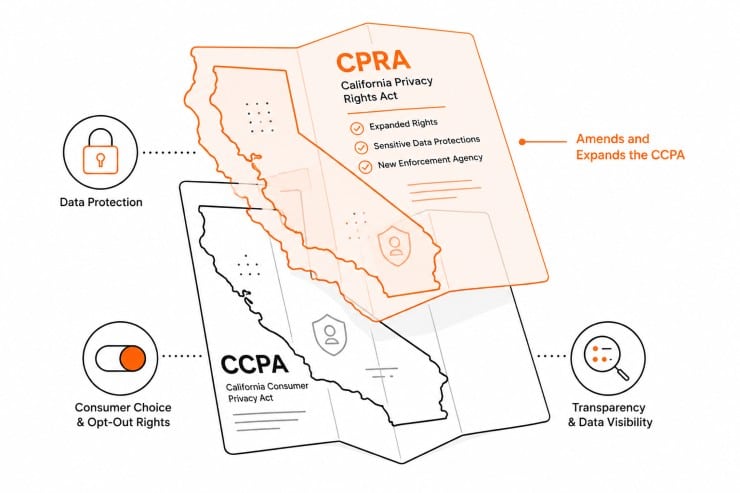
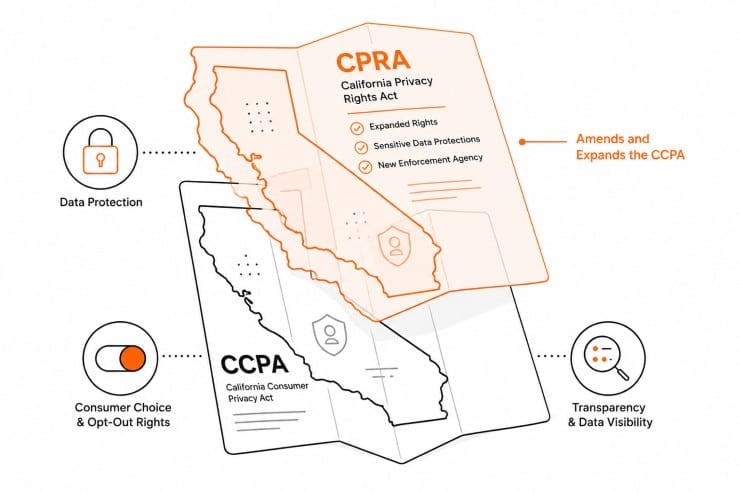
CCPA vs CPRA refers to the relationship between California’s original consumer privacy law and the later law that expanded it.
The California Consumer Privacy Act, known as the CCPA, gave California residents broad rights over how certain businesses collect, use, sell, and share their personal information. It became one of the first major consumer privacy laws in the United States and helped shape the direction of U.S. state privacy regulation.
The California Privacy Rights Act, known as the CPRA, came later. It amended the CCPA and added stronger consumer rights, new business obligations, and a dedicated privacy regulator.
Today, businesses are working under the CCPA as amended by CPRA, along with regulations that became effective on January 1, 2026. Those regulations bring more detail to areas such as automated decision-making technology, privacy risk assessments, cybersecurity audits, and insurance-related compliance.
For more background, see Centraleyes’ guide to the California Privacy Rights Act and its explanation of What Is The CPRA Act.
How The CCPA Created California’s Privacy Foundation
The CCPA changed the privacy conversation in the United States because it made consumer data rights a practical business requirement. Under the CCPA, California residents gained several core privacy rights.
| Consumer Right | What It Means |
| Right To Know | Consumers can ask what personal information a business collects, uses, shares, or sells. |
| Right To Delete | Consumers can request deletion of certain personal information, subject to legal exceptions. |
| Right To Opt Out | Consumers can opt out of the sale or sharing of personal information. |
| Right To Non-Discrimination | Businesses cannot punish consumers for exercising their privacy rights. |
| Right To Correct | Added by CPRA, this allows consumers to request correction of inaccurate personal information. |
| Right To Limit Use Of Sensitive Personal Information | Added by CPRA, this applies in certain situations involving sensitive data. |
Centraleyes covers related privacy fundamentals in its guides to Data Privacy In The United States and Data Privacy vs Data Security.
CCPA vs CPRA Comparison Table
| Area | CCPA | CPRA Updates |
| Legal Role | Established California’s consumer privacy framework | Amended and expanded the CCPA |
| Consumer Rights | Created rights to know, delete, opt out, and avoid discrimination | Added or strengthened rights related to correction, sensitive personal information, and broader opt-out expectations |
| Sensitive Personal Information | Less central as a separate compliance category | Added specific attention to sensitive personal information |
| Enforcement | California Attorney General played the central enforcement role | Created the California Privacy Protection Agency while preserving Attorney General enforcement authority |
| Business Focus | Privacy notices, request handling, and opt-out rights | Stronger privacy governance, vendor oversight, and data-use accountability |
| Operational Impact | Required businesses to understand and disclose data practices | Required more mature privacy operations and better documentation |
Does CPRA Replace CCPA?
No. The CPRA does not replace the CCPA. This is the point that often confuses. The CPRA amended the CCPA. The current law is commonly referred to as the CCPA, the CCPA as amended, or sometimes the CCPA with CPRA amendments.
Who Needs To Pay Attention To California’s Privacy Framework?
The CCPA applies to certain businesses that meet statutory thresholds. Those thresholds can relate to revenue, the amount of personal information handled, or revenue from selling or sharing personal information.
A business does not need to be physically located in California to care about the law. If it collects personal information from California residents and meets the applicability requirements, California privacy obligations may apply.
The law is especially relevant for organizations that collect, use, or share consumer data at scale.
Examples may include:
- SaaS companies
- E-commerce businesses
- Digital advertising companies
- Data platforms
- Financial services organizations
- Large consumer brands
- Companies with large customer or user databases
- Vendors that process personal information for covered businesses
It also matters for vendors. A company may receive CCPA-related contract requirements because it processes personal information on behalf of another business. In that case, compliance expectations may come through customer due diligence, vendor questionnaires, contractual terms, or audit requests.
For organizations managing multiple privacy obligations, the Centraleyes Privacy Framework CPF can help connect privacy requirements across jurisdictions.
What Businesses Need To Manage Under California Privacy Laws
California privacy compliance is operational. It touches legal, security, IT, marketing, procurement, product, and customer-facing teams.
A business should be able to manage several core areas.
| Compliance Area | Practical Question |
| Data Inventory | What personal information do we collect, and where does it live? |
| Privacy Notices | Do our notices match what we actually do with personal information? |
| Consumer Requests | Can we receive, verify, process, and document privacy requests? |
| Opt-Out Mechanisms | Can consumers opt out where required? |
| Sensitive Personal Information | Do we know whether we collect sensitive personal information and how it is used? |
| Vendor Management | Do contracts reflect how personal information can be used and protected? |
| Retention | Do we know how long personal information is kept? |
| Evidence | Can we prove that our privacy processes are working? |
A Simple CCPA And CPRA Compliance Checklist
This checklist is not a legal opinion. It is a practical way to understand the kinds of work businesses usually need to organize.
| Step | What To Review |
| 1. Confirm Applicability | Determine whether the business meets CCPA applicability thresholds. |
| 2. Map Personal Information | Identify categories of personal information, sources, systems, purposes, and recipients. |
| 3. Review Sensitive Personal Information | Identify whether sensitive personal information is collected and how it is used. |
| 4. Update Privacy Notices | Make sure notices reflect current data practices and required disclosures. |
| 5. Test Consumer Request Workflows | Confirm that access, deletion, correction, and opt-out requests can be handled properly. |
| 6. Review Opt-Out Signals | Check whether opt-out mechanisms and preference signals are addressed where required. |
| 7. Update Vendor Terms | Review service provider, contractor, and third-party agreements. |
| 8. Maintain Evidence | Keep records of policies, workflows, requests, approvals, and control activity. |
| 9. Monitor Changes | Track regulatory updates, enforcement activity, and changes in business data practices. |
Where California Privacy Compliance Is Heading
California remains one of the most important privacy jurisdictions in the United States. It has influenced other state privacy laws and continues to shape how businesses think about consumer data rights. Several themes are becoming more important:
| Trend | Why It Matters |
| Data Minimization | Businesses are expected to collect and retain data with clearer purpose. |
| Sensitive Data Governance | Sensitive personal information requires closer review and stronger controls. |
| Automated Decision-Making | Regulators are paying more attention to how automated systems use personal information. |
| Vendor Oversight | Privacy risk often flows through third parties and service providers. |
| Opt-Out Signals | Consumer choice mechanisms are becoming more technical and operational. |
| Evidence-Based Compliance | Businesses need records that show privacy controls and workflows are active. |
Centraleyes’ guide to Best Practices For Data Privacy Compliance offers more context for building a practical privacy compliance foundation.
How Centraleyes Helps
Centraleyes helps organizations manage privacy obligations as part of a connected GRC program. With Centraleyes, teams can map privacy requirements to controls, policies, risks, vendors, owners, and evidence.
FAQs
1. What Is The Main Difference Between CCPA And CPRA?
The CCPA created California’s consumer privacy foundation. The CPRA expanded that foundation by adding stronger rights, more attention to sensitive personal information, and a dedicated privacy regulator.
2. Does A Business Outside California Need To Care About CCPA?
Possibly. A business outside California may still need to comply if it collects personal information from California residents and meets the law’s applicability thresholds.
3. Why Do People Still Say CCPA If CPRA Changed The Law?
Because the CPRA amended the CCPA, the current law is still commonly referred to as the CCPA or the CCPA as amended.
4. What Should A Business Review First?
A business should start with its data inventory, privacy notices, consumer request workflows, opt-out mechanisms, vendor contracts, and evidence records. These areas show whether the privacy program works in practice.
5. Is CCPA Similar To GDPR?
They share some privacy concepts, but they are different legal frameworks. GDPR is an EU regulation with its own structure and legal basis requirements. CCPA is a California consumer privacy law with its own thresholds, rights, notices, and opt-out rules.
The post CCPA vs CPRA: What You Need To Know About California’s Data Privacy Framework appeared first on Centraleyes.
*** This is a Security Bloggers Network syndicated blog from Centraleyes authored by Rebecca Kappel. Read the original post at: https://www.centraleyes.com/ccpa-vs-cpra-what-you-need-to-know/
如有侵权请联系:admin#unsafe.sh