
The post GUEST ESSAY: How augmented reality (AR) can turn building images into ad space with no control appeared first on The Last Watchdog.

By Neil Mandt
Every major building in America has three things: a physical address, a legal owner, and an unmonitored attack surface.
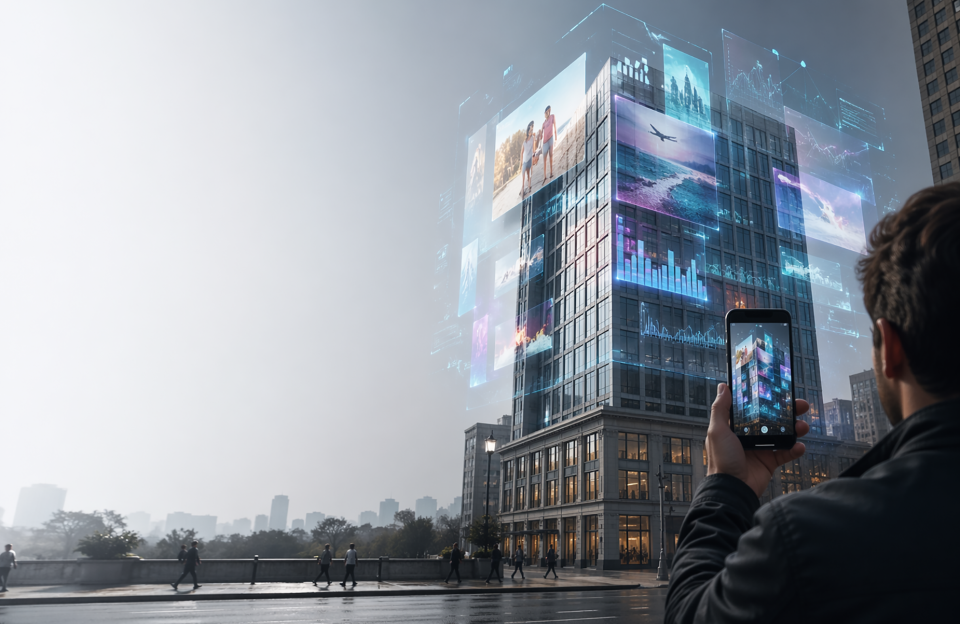
 That surface extends from the ground up through every floor, every facade, and into the airspace above — invisible, commercially exploited, and almost entirely ungoverned. It is the augmented reality layer: the digital space that maps directly onto the physical world.
Technology platforms currently occupy this space, placing content, advertising, and interactive experiences onto private property without permission, compensation, or any security accountability for what happens there.
In practice, this means someone can point a phone at your building and see digital content placed there — ads, experiences, or data collection — that you neither approved nor control.
Consent-free AR
This is not a hypothetical. It is happening right now, at scale, and the cybersecurity and property rights communities have not yet converged on what it means.
Augmented reality platforms operating through smartphones, headsets, and increasingly embedded urban infrastructure treat private real estate as a neutral substrate. A luxury hotel in Chicago, a stadium in Boston, a transit hub in San Francisco: each becomes, from a platform perspective, simply a location coordinate. Content gets placed there. Data gets harvested there. Revenue gets generated there. The property owner sees none of it, consents to none of it, and in most cases doesn’t know it’s happening — which means no one is monitoring it, logging it, or securing it.
The underlying legal gap is not ambiguous. Property rights in the United States extend to the air above a parcel. Courts have adjudicated this for over a century in the context of mineral extraction and aviation. Digital presence above a physical asset is a newer question, but the principle is settled: you cannot use someone’s property for commercial gain without their authorization. The AR industry has simply moved faster than enforcement, and faster than awareness.
Speculation vs reality
 Mandt
Mandt
What has filled that void is not governance — it is speculation. The crypto boom produced an entire genre of “virtual real estate” products that tokenized fictional coordinates, issued NFTs for imaginary spaces, and raised billions before collapsing under the weight of their own abstraction. That episode did serious damage to the broader conversation about digital property rights, because it conflated two entirely different things: speculative digital assets with no underlying claim, and actual legal rights to defined physical space.
The distinction matters enormously. A smart contract that encodes the rights to AR activity above a documented commercial property — with a legal deed and a recorded transaction — is not the same instrument as a token representing a coordinate in a fictional metaverse. One is infrastructure. The other was theater.
From a security standpoint, the difference is equally significant. Unregistered digital activity above physical infrastructure is, by definition, an unmonitored surface — the kind of gap that threat actors and bad-faith commercial actors exploit systematically. Building owners cannot secure what they cannot see.
Registry needed
They cannot detect unauthorized data harvesting, unauthorized content placement, or unauthorized commercial activity in space they legally own but have never formally claimed in the digital dimension. There is no chain of custody. There is no audit trail. There is no access control.
What the market needs — and what is beginning to emerge — is a property rights registry and transaction layer for the physical world’s digital dimension. Think of it as a title company for the AR era: a system that establishes who owns the digital rights above a given parcel, records those rights on an immutable ledger, enables licensed transactions between property owners and AR content developers, and creates an auditable chain of custody for commercial activity in physical space.
The smart contract architecture that makes this possible already exists. The legal framework, reviewed over more than a decade by real estate and intellectual property counsel, confirms that these rights can be established, transferred, and enforced.
Toward real ownership
The commercial precedents are beginning to accumulate — including the first recorded transfer of digital property rights bundled with a traditional commercial real estate transaction, which closed in Massachusetts and was covered in The Real Deal.
The AR industry will mature. The question is whether it matures into a system where property rights are respected, compensated, and secured — or into one where a handful of platform companies permanently occupy private space without legal consequence, accountability, or any obligation to the owners of the physical assets underneath.
The infrastructure to prevent the latter outcome is no longer theoretical. The more important question is whether the real estate, legal, cybersecurity, and technology communities will recognize this moment for what it is: not a speculative opportunity, but a structural one.
The physical internet needs an owner. That work has started.
About the essayist: Neil Mandt is a five-time Emmy Award-winning producer, director, and entrepreneur focused on digital rights for real estate. He founded Digital Rights Management (DRM), a platform enabling property owners to register, protect, and monetize digital airspace, and has helped define the category since 2015.


April 28th, 2026 | Essays | Top Stories
*** This is a Security Bloggers Network syndicated blog from The Last Watchdog authored by bacohido. Read the original post at: https://www.lastwatchdog.com/guest-essay-how-augmented-reality-ar-can-turn-building-images-into-ad-space-with-no-control/