好的,我现在需要帮用户总结一篇文章的内容,控制在100字以内。用户已经给出了文章的详细内容,我得先通读一遍,抓住主要观点。 文章主要讲的是如何向董事会汇报网络安全问题。关键点包括技术数据转化为业务影响的重要性,使用NIST框架,量化网络风险,以及如何用财务术语向董事会解释风险。还有提到要关注关键资产、真实暴露和决策。 接下来,我需要把这些要点浓缩成一段话,不超过100字。要确保涵盖主要方法和目标,比如沟通技巧、框架应用、量化风险等。同时,语言要简洁明了,避免使用复杂的术语。 最后检查一下字数是否符合要求,并确保信息准确无误。 </think> 文章探讨了如何有效向董事会汇报网络安全风险,强调将技术数据转化为业务影响的重要性。通过采用NIST网络安全框架和量化网络风险(CRQ),将风险转化为财务术语,帮助董事会理解潜在损失和投资回报。关键在于关注核心资产、实际暴露和决策支持。 2026-4-23 23:47:12 Author: securityboulevard.com(查看原文) 阅读量:9 收藏
Key Takeaways
- Reporting cybersecurity to the board fails when technical data isn’t translated into business impact
- Boards focus on revenue, resilience, and risk.
- The NIST Cybersecurity Framework provides a shared structure for clear, consistent reporting (with “Govern” reinforcing board-level oversight).
- Metrics only matter when they explain what’s at risk and what it could cost the business.
- Cyber Risk Quantification (CRQ) helps turn cyber risk into financial terms that the board can act on.
- Effective cybersecurity board reporting centers on critical assets, real exposure, and decisions.
Why Cyber Risk Gets Lost in Translation
Most CEOs can recite their quarterly benchmarks and revenue figures down to the decimal point. However, when asked to define their organization’s cyber risk exposure, the answers typically drift into the vague and anecdotal. This disconnect is occurs when security leaders assume that CEOs have an understanding of the risk they’re talking about, when in essence, they haven’t a clue!
According to research from Ivanti, nearly six in ten security professionals admit their teams are only moderately effective at communicating risk to leadership. The CISO speaks of vulnerabilities and patches, and the board members are trying to understand how this relates to the bottom line of revenue and reputation. In this article, we’ll attempt to provide a roadmap for closing that communication gap of board reporting cyber risk.
1. Be Like a Roman: Speak the Language of the Board
Effective communication with the board requires a fundamental shift toward a “board mindset.” Cybersecurity professionals are conditioned to focus on the technical side of execution, but boards operate in the realm of strategic and economic affairs. To be effective, a CISO must provide the “so what” behind the technical metrics.
“When in Rome, do as the Romans do. When presenting a complex risk assessment and its implications to a Board of Directors, one must use the language that board members use, that resonates at the level of organizational governance the boards provide.” — ISACA
Board members have no interest or time to understand how a technology works. They want to know how it protects the organization’s:
- ability to generate revenue
- maintain market trust
- meet rigorous regulatory expectations.
2. How Much is Too Much?
The frequency of cyber risk updates must be tailored to the organization’s specific risk profile and sector. Leading practices from Deloitte’s guide on this subject recommend that boards receive substantive updates at least quarterly, supplemented by at least one annual “deep dive” into the organization’s overall cyber risk board presentation posture.
To provide a standardized baseline for these discussions, CISOs would do well to leverage the National Institute of Standards and Technology Cybersecurity Framework (NIST CSF). As a matter of fact, one of the goals of the NIST CSF was to create a common language to communicate all things security effectively across and organization. To that end, the NIST CSF provides a comprehensive view of maturity by organizing activities into six core functions:
- Govern
- Identify
- Protect
- Detect
- Respond
- Recover
Today, the framework includes six core functions (with “Govern” added more recently in version 2.0 to reflect the growing importance of oversight at the leadership level),
3. Beyond MTTR: Metrics That Drive Business Decisions
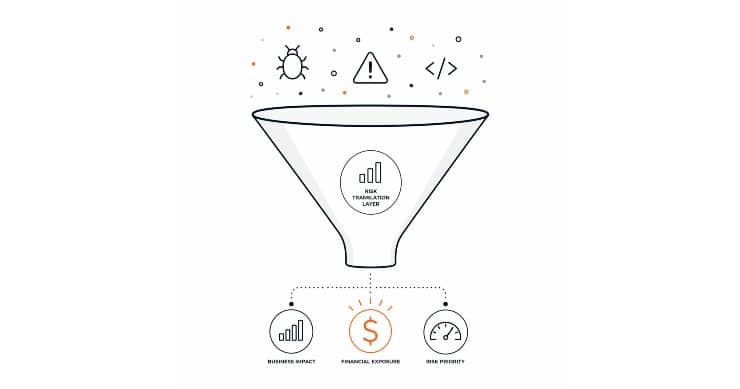
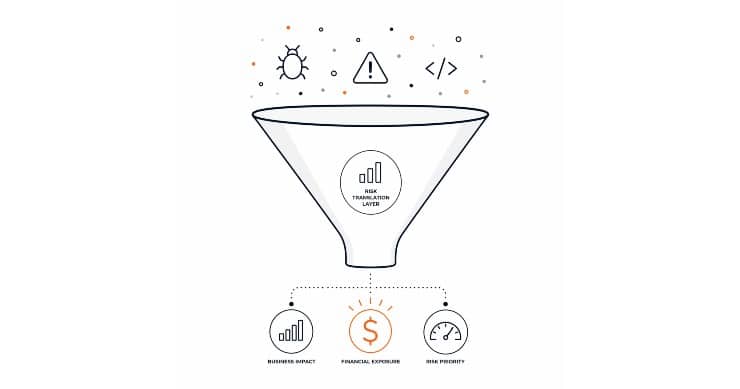
Many security teams rely on “process metrics” such as Mean Time to Remediate (MTTR) or patch velocity. While these measure the operational efficiency of the security team, they fail to communicate business exposure. Knowing how fast a patch is applied is irrelevant to a CEO unless they understand whether that patch protected a revenue-generating system or a critical data repository.
The following table demonstrates how to translate operational signals into the business impact narratives that leadership requires:
| What the CISO Says (Technical Metric) | What the CEO Needs to Know (Business Impact) |
| “We discovered 11,000 vulnerabilities this month.” | “We identified ten critical vulnerabilities that directly threaten our revenue-generating systems.” |
| “Our MTTR is down from 25 days to 15 days.” | “If attacked today, we can restore critical operations in six hours, compared to 48 hours last year.” |
| “We achieved an 88% remediation rate on critical CVEs.” | “Current protections enable us to pursue expansion into new markets (e.g., the EU) without additional compliance risk.” |
Instead of presenting scattered metrics, many organizations are moving toward a clear, structured executive risk dashboard: where the organization is exposed, how that exposure is changing over time, and what decisions are needed next.
4. Demystifying Cyber Risk Quantification (CRQ)
Cyber Risk Quantification (CRQ) is the primary tool for transforming abstract technical data into familiar financial terms. By using CRQ, a CISO can move from stating a risk is “High” to reporting that a specific scenario has a “15% likelihood of causing a $5M loss.” (Kovrr)
This quantification is essential for Materiality Analysis. CRQ also provides the ultimate justification for security budgets. For example, if a cloud security tool costs $500,000, CRQ can calculate whether that investment reduces the organization’s financial loss exposure by an amount that exceeds its cost. Finally, CRQ allows the use of Industry Cyber Risk Benchmarks, which Kovrr identifies as the only universal benchmark for comparing an organization’s risk posture and insurance terms against key industry peers.
5. Anticipating the Oversight Questions
To ensure a productive session, the CISO must be prepared for the board’s oversight-focused questions. Based on Deloitte’s framework for cyber risk governance, leadership should be prepared to address:
- Crown Jewels: What are our most critical assets and how are they protected?
- Third-Party and Supply Chain Risk: How are we monitoring the vulnerabilities introduced by our vendors and partners?
- Secure by Design: How is security integrated into the initial design phase of our technology products?
- Resilience and Operations: In the event of a significant incident, is the organization prepared to maintain operations and ensure business continuity?
6. Bridging the Gap: Risk Appetite vs. Risk Posture
A cornerstone of organizational resilience is the alignment between:
- Risk Appetite: the amount of risk the business is documented as willing to tolerate
And
- Risk Posture: the reality of the organization’s current exposure)
7. Incident Escalation and Disclosure Governance
Resilience depends on a documented plan for when the worst-case scenario occurs. Boards require a well-defined escalation process that delineates clear thresholds for their involvement. This ensures that the board can fulfill its fiduciary duties and meet strict regulatory obligations, such as the SEC’s requirements for disclosing material incidents.
Linking financial metrics to disclosure governance allows the board to understand “materiality” through a financial lens, ensuring that legal and regulatory triggers are based on objective business impact rather than technical guesswork.
From Reactive Defense to Strategic Growth
Closing the communication gap requires a fundamental shift in the security narrative. By breaking the “curse of knowledge” through quantified, business-focused metrics, cybersecurity moves from being a technical hurdle to a strategic enabler.
When security strength is translated into financial terms, it allows the board to move beyond reactive defense and toward calculated risk-taking. In this light, cybersecurity becomes a competitive advantage that protects business value while providing the confidence necessary for informed, strategic growth.
FAQs
1. How can CISOs align cyber risk updates with strategic objectives?
To move from technical data to a boardroom narrative, the CISO should utilize a Markdown-driven framework:
- Translate Signals to Strategic Objectives: Instead of reporting blocked attacks, explain how security measures ensure the availability of revenue-generating platforms.
- Contextualize via Risk Tolerance: Define the “Risk Appetite” (how much risk is tolerated in pursuit of goals) versus “Risk Posture” (the reality of current exposure).
- Utilize Standardized Frameworks: Adopt the NIST Cybersecurity Framework (CSF) to provide a consistent yardstick. This allows the board to monitor maturity and progress over time rather than viewing incidents in isolation.
2. How can a CISO demonstrate ROI for cybersecurity investments?
To demonstrate ROI, the CISO must contrast traditional operational efficiency with high-level outcome metrics:
- Traditional Process Metrics (Operational Efficiency):
- Mean Time to Remediate (MTTR).
- Patch Velocity.
- Number of vulnerabilities closed.
- Outcome Metrics (Business Value):
- Decreased Financial Loss Exposure: Demonstrating how a tool reduces the potential for a multi-million dollar data breach or ransomware extortion.
- Reduced Recovery Time: Expressing ROI as the ability to restore critical operations in 6 hours versus 48 hours, directly impacting revenue preservation.
- Cyber Insurance Optimization: Leveraging quantified data to negotiate customized deductibles, sub-limits, and lower premiums with insurers.
3. How does risk quantification help justify cybersecurity budgets to boards?
Quantification provides objective financial figures for capital reserve planning. By using concepts like Average Loss Expectancy and Likelihood of Occurrence, a CISO can show exactly what is at stake. Quantification reveals loss components that spreadsheets cannot:
- Extortion fees and ransomware-related costs.
- Compliance penalties and legal expenses (e.g., SEC or HIPAA violations).
- Revenue loss resulting from reputational harm and customer churn.
- Operational downtime costs per hour.
4. How can CISOs use “secure by design” as a strategic narrative?
The CISO must contrast the legacy reactive posture with a forward-looking proactive narrative:
- The Reactive Posture: A focus on “fixing vulnerabilities” and “patching holes.” This is often perceived by the board as a never-ending cycle of remedial costs that slow down innovation.
- The Proactive Narrative: A focus on “building resilient products.” This narrative highlights security as a commitment to quality, reducing the “friction for market entry” and future-proofing the product against emerging threats.
5. What are the criteria for identifying “crown jewels”?
- Revenue Impact: Systems essential for core transaction processing or service delivery.
- Sensitive Data: Databases containing protected intellectual property or sensitive customer identities (e.g., health or financial records).
- Regulated Environments: Assets subject to strict legal oversight, such as those governed by EU privacy laws or SEC disclosure requirements.
The post Communicating Cyber Risk to the Board: Executive Reporting Best Practices appeared first on Centraleyes.
*** This is a Security Bloggers Network syndicated blog from Centraleyes authored by Rebecca Kappel. Read the original post at: https://www.centraleyes.com/communicating-cyber-risk-to-the-board-executive-reporting/
如有侵权请联系:admin#unsafe.sh