Belgium’s NIS2 Audit Window Opens April 18, 2026. The Rest of the EU Is Right Behind.
好的,我现在需要帮用户总结这篇文章的内容,控制在100字以内,而且不需要用“文章内容总结”或“这篇文章”这样的开头。直接写描述即可。
首先,我快速浏览一下文章。文章主要讲的是欧盟的NIS2指令在2026年的实施情况,特别是比利时作为第一个成员国在2026年4月18日开始执行硬性合规评估截止日期。其他成员国也会陆续跟进。
接下来,文章详细说明了NIS2对关键行业如能源、健康、运输等的要求,包括事件报告的时间线、管理层责任以及罚款措施。还提到了德国的KRITIS Dachgesetz法规扩展了关键基础设施的范围。
最后,文章强调了合规的重要性,特别是文档记录和自动化安全运营中心(SOC)的作用。
现在,我需要将这些要点浓缩到100字以内。重点包括:NIS2指令在欧盟的实施时间表,比利时作为第一个国家的截止日期,涉及的关键行业和要求,以及合规措施的重要性。
可能的结构:时间点+主要国家+关键行业+核心要求+影响范围。
比如:“欧盟NIS2指令于2026年全面实施,比利时率先于4月18日执行合规评估。涵盖能源、健康等关键行业,要求快速事件报告、管理层问责及严格罚款。其他成员国将陆续跟进。”
检查一下字数是否在限制内,并确保信息准确无误。
</think>
欧盟NIS2指令于2026年全面实施,比利时率先于4月18日执行合规评估。涵盖能源、健康等关键行业,要求快速事件报告、管理层问责及严格罚款。其他成员国将陆续跟进。
2026-4-17 23:50:0
Author: securityboulevard.com(查看原文)
阅读量:2
收藏
On April 18, 2026, Belgium becomes the first EU member state to hit a hard NIS2 conformity assessment deadline. Essential entities operating in Belgium must have completed their first formal assessment by that date, conducted by a Conformity Assessment Body accredited by BELAC and authorized by the CCB.
Belgium is the leading edge. It is not the whole story. 2026 is the year active NIS2 enforcement moves from “transposed on paper” to “auditors at the door” across the bloc. The transposition deadline passed in October 2024. National authorities are now resourced, mandated, and ready to ask hard questions.
Those questions will land on your SOC. Documented risk assessments. Tested incident-response plans. Supply chain reviews. Training records. And proof that your management team oversaw all of it.
If your SOC generates alerts faster than it generates documentation, you have a problem, whether your deadline is April 18 or later in the year.
What NIS2 actually demands from your SOC
NIS2 classifies energy, health, transport, water, digital infrastructure, and public administration as essential services. Every organization in those sectors carries the directive’s full weight, including supply chain vendors above the 50-employee or €10 million threshold.
The obligations aren’t abstract. Three of them hit SOC operations directly.
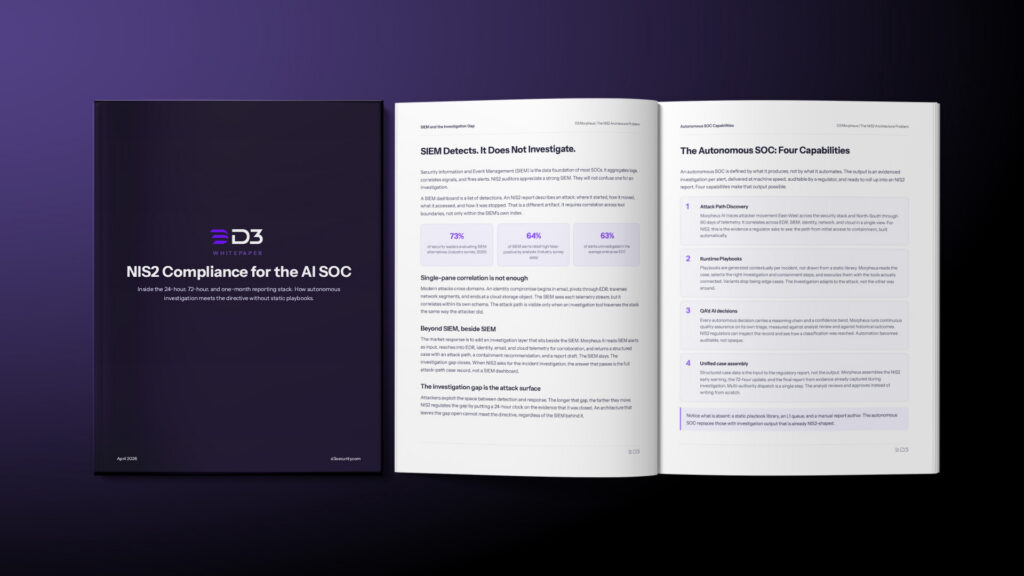
Incident reporting timelines. NIS2 requires a 24-hour early warning for significant incidents, a 72-hour formal notification, and a 1-month final report. Those deadlines assume your team can produce structured, regulator-ready documentation while simultaneously managing an active incident. That is not a realistic expectation for a manual SOC.
Management liability.Article 20 holds management bodies personally accountable for cybersecurity risk decisions. Board members and executives at essential entities face individual liability for failures their SOC can’t document. Undocumented investigations, missing audit trails, and informal response processes are personal legal exposure for leadership.
Fines with teeth. Essential entity violations carry fines up to €10 million or 2% of global annual turnover, whichever is higher.
Most NIS2 discussions focus on technical controls: network segmentation, access management, patch cadence. Those matter. The audit failure most organizations will face is operational.
Auditors will ask: show me what happened when you got an alert last Tuesday. Show me the investigation. Show me who made what decision, and when.
Manual SOC processes don’t produce that record. An analyst works through a queue, opens a ticket, runs some queries, escalates or closes. The investigation lives in their head and in scattered tool outputs. That won’t satisfy Article 20.
ENISA’s workforce analysis puts the EU shortfall at close to 300,000 unfilled cybersecurity roles. Two-thirds of organizations report understaffed security teams. Smaller utilities, healthcare operators, and infrastructure providers frequently have zero dedicated security staff, yet NIS2 applies to them from the moment they cross the employee or revenue threshold. There’s no carve-out for “we were planning to hire.”
An NIS2 audit comes down to documentation, not headcount. The real question is whether your SOC generates auditable evidence as a byproduct of normal operations.
That requires three things your current setup may not have.
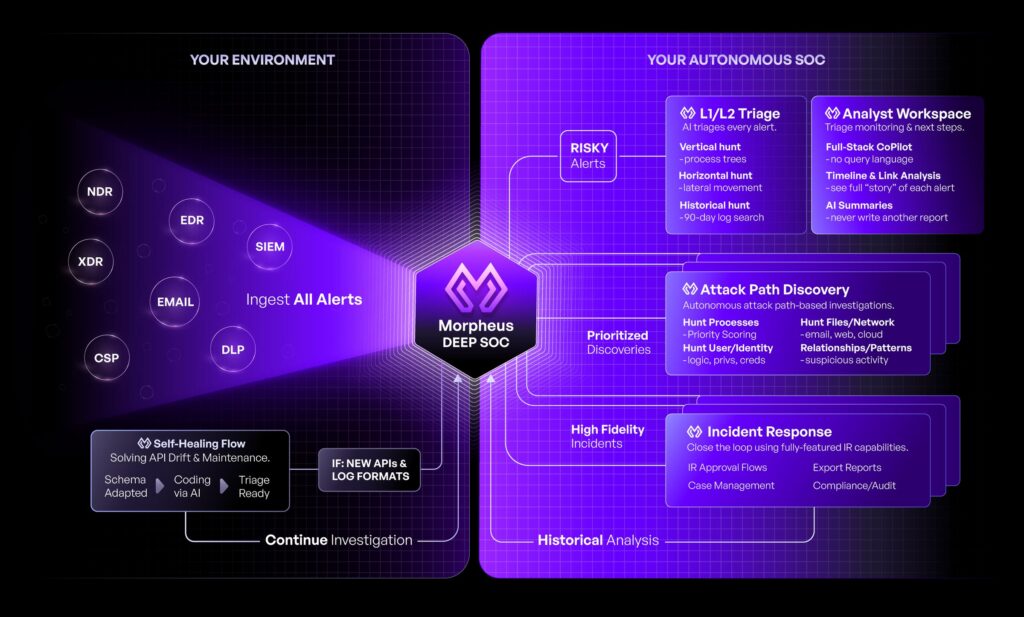
Investigation depth at alert speed. NIS2’s 24-hour early warning window gives you less than a day to determine whether an incident is significant enough to report. Manual triage at L2 depth takes hours per alert. Morpheus AI triages 95% of alerts in under two minutes at L2+ investigation depth, completing full investigations without human review. That speed is what creates room to meet reporting deadlines.
Automatic documentation. Every investigation Morpheus AI runs produces a structured, auditable record: timeline, evidence chain, actions taken, decision points. When a regulator asks to see your incident handling, you have a complete record rather than a reconstruction from memory. The same principle applies to DORA, which imposes nearly identical documentation obligations on EU financial entities. See our guide to automated compliance evidence under DORA.
Cross-stack visibility. NIS2 requires evidence that you understand your threat environment, including supply chain exposure. Morpheus AI’s Attack Path Discovery traces threats East-West across your stack and North-South through 90 days of telemetry. It maps how an attacker moved, what they touched, and where the exposure ends. That’s the kind of evidence that satisfies a thorough audit.
Why Belgium is first, and why other member states follow fast
Belgium’s April 18 conformity assessment deadline is a national implementation detail built into the Belgian transposition law. It uses an independent CAB certification model, which means essential entities can’t self-attest. An accredited third party has to verify compliance.
Most other member states are operating on different timelines, but the direction of travel is the same. Enforcement teams at BSI (Germany), ANSSI (France), ACN (Italy), NCSC-NL (Netherlands), and their counterparts across the bloc are already issuing guidance, running sector consultations, and preparing audit programs. 2026 is when notices start landing.
Expect the pattern Belgium is setting to repeat: formal assessment obligations, evidence requirements, and management-level sign-off, all backed by personal liability under Article 20.
Germany just raised the stakes
If you operate in Germany, the NIS2 picture has a new layer. KRITIS Dachgesetz entered into force on March 17, 2026. It expands Germany’s critical infrastructure scope from around 2,000 entities to over 30,000. Organizations that were outside the regulatory perimeter last year are now in it.
Registration requirements under KRITIS apply three months after the act’s entry into force. That timeline lands in June 2026. Germany’s BSI has been clear: it expects organizations to be well into their compliance journey before registration opens, not starting from zero.
2026 is the year to close the gap
Belgium’s April 18 deadline is the first audit checkpoint. It won’t be the last. Regulators across most member states are looking for evidence of intent and progress: a documented assessment, a response plan, proof that leadership is engaged.
What regulators won’t accept is nothing. No documentation. No visible process. No record of oversight.
The fastest path to compliance evidence is infrastructure that generates documentation automatically while closing alerts faster than your current team can open them. Morpheus AI was built for environments where regulatory pressure and threat volume arrive simultaneously. It handles the alert queue (95% triaged in under two minutes) and produces the audit trail that turns SOC operations into compliance evidence.
The question isn’t whether your deadline has hit yet. It’s whether you can prove you’re handling NIS2 when it does.
Morpheus AI is D3 Security’s AI-autonomous SOC platform. It triages alerts at L2+ depth in under two minutes, maps full attack paths across your environment, and generates auditable investigation records for regulatory compliance, including NIS2 incident reporting and Article 20 management documentation.
Frequently asked questions about NIS2 SOC compliance
What happens on April 18, 2026, for NIS2?
April 18, 2026 is the deadline by which essential entities operating in Belgium must complete their first NIS2 conformity assessment, conducted by a Conformity Assessment Body accredited by BELAC and authorized by the CCB. Belgium is the first EU member state to set a hard conformity assessment deadline. Other member states are running parallel enforcement ramp-ups on their own national timelines throughout 2026.
When does NIS2 enforcement begin across the EU?
The NIS2 Directive has been legally in force since October 18, 2024, when it repealed the original NIS directive. The transposition deadline for EU member states was October 17, 2024. 2026 is the year national authorities across the bloc move from transposition into active enforcement, with audit timelines varying by country.
What are the NIS2 incident reporting timelines?
NIS2 requires three reporting steps: a 24-hour early warning for significant incidents, a 72-hour formal notification to the relevant national authority, and a 1-month final incident report. All three require structured, documented evidence.
What is Article 20 NIS2?
Article 20 of the NIS2 Directive holds management bodies personally accountable for cybersecurity risk oversight. Board members and executives at essential entities can face individual liability if their organization cannot produce documented evidence of security governance decisions.
What is the NIS2 fine for non-compliance?
For essential entities, NIS2 fines can reach €10 million or 2% of global annual turnover, whichever is higher.
Which sectors does NIS2 cover?
NIS2 covers energy, health, transport, water, digital infrastructure, ICT service management, public administration, and space. It also extends to supply chain vendors above the 50-employee or €10 million annual revenue threshold that serve organizations in these sectors.
What is KRITIS Dachgesetz?
KRITIS Dachgesetz is Germany’s national critical infrastructure protection law, which entered into force on March 17, 2026. It expands Germany’s regulated critical infrastructure scope from approximately 2,000 entities to over 30,000 organizations. Registration obligations apply three months after entry into force, creating a June 2026 deadline.
What documentation does an NIS2 audit require from a SOC?
NIS2 auditors typically request documented risk assessments, tested incident-response plans, supply chain security reviews, staff training records, evidence of management oversight, and structured records of individual incident investigations including timeline, decisions made, and actions taken.
How can a SOC meet NIS2’s 24-hour early warning requirement?
Meeting the 24-hour window requires SOCs to triage, investigate, and assess the significance of incidents within hours of detection. Automated triage platforms like Morpheus AI complete L2+ investigations in under two minutes, creating the capacity to determine reportability well within the 24-hour window.