
This month’s patch Tuesday looks to remediate 167 security vulnerabilities including two zero-day vulnerabilities, one of which is known to be actively exploited in the wild.
This makes April one of those months where “Patch Tuesday” looks more like “patch the entire stack,” from servers and endpoints to network gear, browsers, and mobile devices. But the alternative is leaving a long list of well‑documented doors open for attackers to walk through.
Microsoft defines a zero-day as “a flaw in software for which no official patch or security update is available yet.” In this case, one being actively exploited and the other is publicly disclosed, which makes both high priorities on your to-do list.
So, let’s have a look at those two zero-days.
The vulnerability tracked as CVE-2026-32201 (CVSS score 6.5 out of 10) is an improper input validation issue in Microsoft Office SharePoint that allows an unauthorized attacker to perform spoofing over a network.
An attacker who successfully exploited this vulnerability could view some sensitive information, and make changes to disclosed information, but cannot limit access to the resource. In simple terms, it could be used to spread false information in a trusted SharePoint environment. This vulnerability is being exploited in the wild.
The second zero-day this month, tracked as CVE-2026-33825 with a CVSS score of 7.8 out of 10, is an elevation of privilege (EoP) vulnerability in Microsoft Defender’s anti-malware platform. It allows a local attacker to escalate their privileges to SYSTEM, effectively giving them the keys to the kingdom on the affected system. Once at that level, an attacker can disable security tools, install persistent malware, harvest credentials, and move laterally to other systems in the same network. This vulnerability is publicly disclosed, which often lowers the barrier for cybercriminals to start exploiting it.
In addition, BleepingComputer warns:
“Microsoft has also fixed multiple remote code execution bugs in Microsoft Office (Word and Excel) that can be executed via the preview pane or by opening malicious documents. Therefore, users should prioritize updating Microsoft Office as soon as possible, especially if they commonly receive attachments.”
How to apply fixes and check if you’re protected
These updates fix security problems and keep your Windows PC protected. Here’s how to make sure you’re up to date:
1. Open Settings
- Click the Start button (the Windows logo at the bottom left of your screen).
- Click on Settings (it looks like a little gear).
2. Go to Windows Update
- In the Settings window, select Windows Update (usually at the bottom of the menu on the left).
3. Check for updates
- Click the button that says Check for updates.
- Windows will search for the latest Patch Tuesday updates.
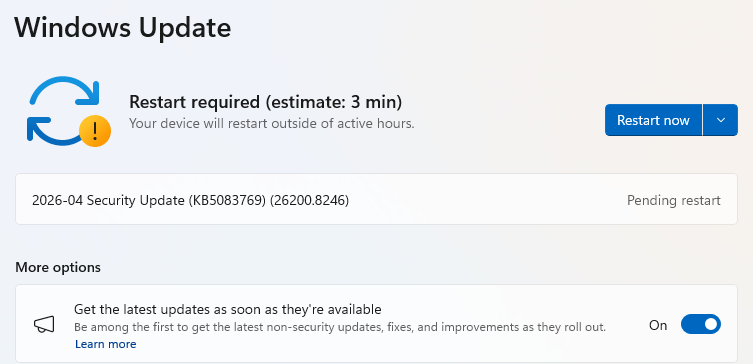
- If you have selected to get the latest updates as soon as they’re available, you may see this under More options.
- In which case you may see a Restart required message. Restart your system and the update will complete.
- If not, continue with the steps below.
4. Download and Install If updates are found, they’ll start downloading automatically. Once complete, you’ll see a button that says Install or Restart now.
- Click Install if needed and follow any prompts. Your computer will usually need a restart to finish the update. If it does, click Restart now.
5. Double-check you’re up to date
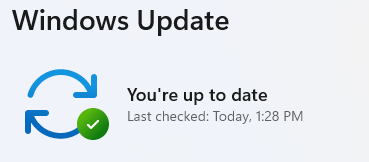
- After restarting, go back to Windows Update and check again. If it says You’re up to date, you’re all set!
We don’t just report on threats—we remove them
Cybersecurity risks should never spread beyond a headline. Keep threats off your devices by downloading Malwarebytes today.