嗯,用户让我帮忙总结一篇文章,控制在一百个字以内,而且不需要用“文章内容总结”这样的开头。首先,我得仔细阅读这篇文章,理解它的主要观点。 文章讲的是私人股本和风险投资在评估公司时,不再只是问“你们的人工智能策略是什么?”,而是更深入地询问“你们在围绕人工智能重建公司方面进展如何?”这说明投资者现在更关注AI是否已经融入公司的运营核心,而不仅仅是作为附加功能。 接下来,文章提到AI应该作为企业各个职能的基础层,而不仅仅是表面的应用。这意味着产品开发、客户服务、销售、市场营销等各个方面都需要重新设计,将AI嵌入其中。这种转变不仅仅是技术上的改变,更是整个公司运营模式的革新。 然后,作者指出大多数公司目前还只是将AI当作附加功能,而真正有竞争力的公司是将AI作为基础设施来构建整个业务流程。这种深度整合使得公司在效率、速度和竞争力上都有显著提升。 最后,文章强调了这种转变对资本的重要性。投资者现在更关注公司的运营模式是否真的发生了变化,而不仅仅是有没有使用AI技术。那些没有及时进行这种变革的公司可能会在竞争中处于劣势。 总结一下,这篇文章的核心观点是:AI已经从一个附加功能转变为企业的基础设施和核心运营层。投资者现在更看重的是公司是否真正将AI融入到各个业务流程中,并且这种转变对公司的竞争力和投资价值有着深远的影响。 现在我需要将这些要点浓缩到100字以内,并且直接描述文章内容。要确保涵盖主要观点:从策略到核心运营的转变、AI作为基础设施的重要性以及资本市场的关注点。 </think> 文章指出,在私人股本和风险投资的尽职调查中,问题已从“你们的人工智能策略是什么?”转变为“你们在围绕人工智能重建公司方面进展如何?”。这意味着企业需要将人工智能嵌入核心运营中,而非仅仅作为附加功能。真正的转变在于重新设计业务流程和组织结构,使人工智能成为基础设施层。 2026-4-6 13:18:0 Author: raffy.ch(查看原文) 阅读量:26 收藏

During my engagements with various Private Equity and Venture Capital outlets, I see a clear shift. The questions that is showing up more and more in due diligence is no longer, “What is your AI strategy?”
It is: “How far along are you in rebuilding the company around AI?”
That is a different question.
It applies to startups and incumbents alike. It applies to security companies, SaaS vendors, MSPs, and a lot of businesses outside those markets too. The point is no longer to add a few AI features, automate one workflow, or give employees access to a chatbot. The point is to rethink how the company actually operates.
AI Should Sit Under Every Corporate Function
The companies that will look strongest over the next few years are the ones treating AI as an operating system layer across the business.
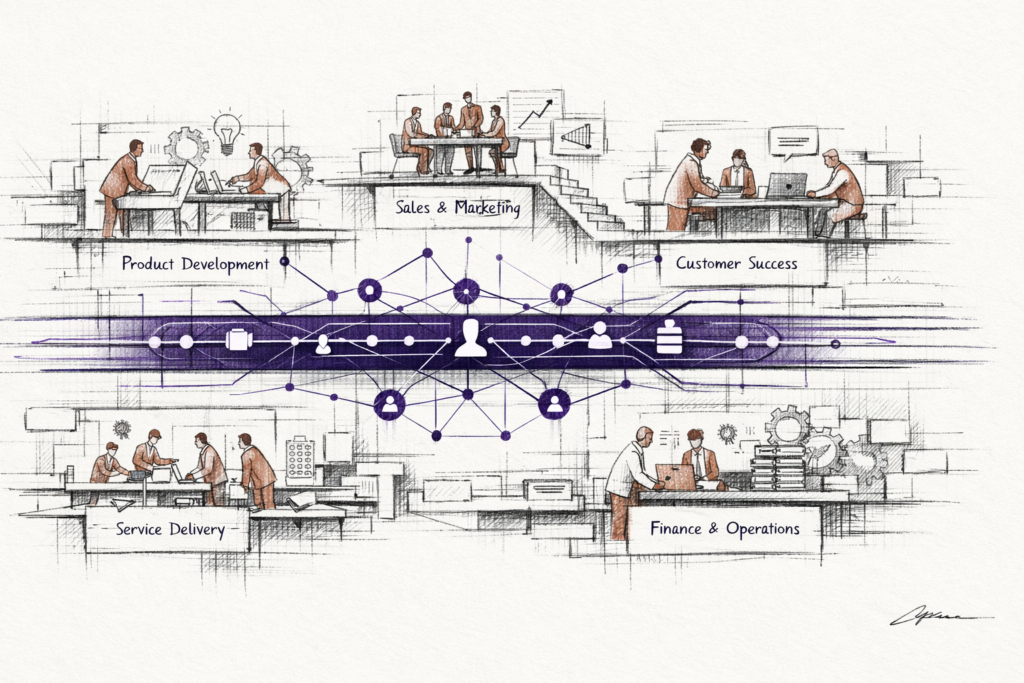
That means product development, service delivery, sales and marketing, customer success, and finance and operations are all being reworked with AI in mind. Not as separate experiments, but as connected systems.
The important shift is not “where can we use AI?” It is “how should this function work if AI is built into the process from the start?”
That usually leads to a broader redesign. Workflows get compressed. Handoffs change. Data gets linked across teams. Software that used to just record tasks between humans starts becoming an orchestration layer between people and AI agents.
AI on Top Is Not Enough
Most companies are still treating AI like a feature layer. They add a copilot. They automate a few tasks. They run a few pilots in sales or support. Then they talk as if they have become an AI company. They have not.
If AI is going to matter as much as people claim, then it cannot live in isolated tools and side projects. It has to sit underneath the company as an operating layer. Product, service delivery, sales, marketing, customer success, finance, and operations all need to be rethought with AI built in from the start.
That is the real shift. Not AI as garnish. AI as infrastructure.
In practice, this means a company’s core operating logic can no longer live in forgotten decks, static docs, and tribal memory. Vision, mission, strategic priorities, ICP, and go-to-market motions need to be embedded into the AI layer itself so teams can interact with them in daily work (literally let them chat with these pieces of information via Slack!). The system should be able to explain the strategy, test whether execution matches it, and keep the company aligned as it changes. If that layer does not exist, most companies are still operating on fragments.
This Is Now a Capital Question
This is also why the conversation is changing in private equity and VC diligence.
We are not just looking for AI messaging anymore. We are looking for evidence that the operating model is changing. Is the company shipping faster? Is service delivery getting more leverage? Are teams linked better? Is software being used to orchestrate work between humans and AI agents rather than just record tasks? Is management actually rebuilding the business, or are they still presenting AI as an add-on?
Those questions now matter directly to competitiveness.
A company that keeps the old operating model and bolts AI on top will lose to one that rebuilds around it properly. The latter will move faster, learn faster, and eventually operate at a different level of efficiency.
The Companies That Wait Will Pay For It
I think this is becoming a funding imperative.
Before raising capital, before pursuing a sale, and before the board forces the discussion, management teams need to be doing the hard work of redesigning the company around AI.
Because the market is not going to wait for slow adopters to get comfortable. The companies that embrace AI as a true operating layer will look more scalable, more durable, and more investable. The ones that do not will increasingly look like they are running yesterday’s model in a market that has already moved on.
No comments yet.
如有侵权请联系:admin#unsafe.sh