好的,我现在需要帮用户总结一篇文章的内容,控制在100字以内。首先,我得仔细阅读这篇文章,理解它的主要观点。 文章主要讲的是政府机构在处理《信息自由法案》(FOIA)请求时面临的双重任务:既要快速响应,又要保护敏感个人信息。同时,FOIA请求激增,手动处理已经力不从心,容易出错。文章还介绍了现代文档红action软件如何通过自动化检测和批量处理来解决这些问题,提高效率并确保合规。 接下来,我需要提取关键点:FOIA请求激增、手动处理的瓶颈、自动红action软件的优势、分类信息的保护以及合规性。然后将这些要点浓缩成100字以内的总结。 要注意用词简洁明了,避免复杂的句子结构。确保涵盖所有重要方面:问题(请求激增和手动处理的问题)、解决方案(软件)、保护的信息类型以及结果(提高效率和合规性)。 最后检查字数是否符合要求,并确保内容连贯、准确。 </think> 政府机构在处理《信息自由法案》(FOIA)请求时面临双重挑战:快速响应的同时保护敏感信息。随着FOIA请求激增,手动红action流程效率低下且易出错。现代文档红action软件通过自动化检测和批量处理提高效率,确保合规性并保护个人信息。 2026-3-26 17:53:54 Author: securityboulevard.com(查看原文) 阅读量:1 收藏
Government agencies face a dual mandate: respond to Freedom of Information Act (FOIA) requests swiftly while protecting sensitive personal information. Citizens expect transparency, but federal privacy laws require agencies to prevent unauthorized disclosure of classified information. Failing either obligation risks legal penalties and potential erosion of public trust.
At the same time, FOIA requests are surging. In fiscal 2024, agencies received a record 1.5 million Freedom of Information Act requests. This increased the government backlog by 267,000 cases, in kind. Manual redaction workflows simply can’t keep pace.
Software for government document redaction is an excellent way to balance these competing demands efficiently. It automates sensitive data detection and redaction, supports defensible audit trails, and frees skilled staff to focus on analysis rather than letter-by-letter edits.
The growing burden of FOIA requests and manual redaction
Handling FOIA requests manually creates a major bottleneck and introduces a high risk of human error: analysts might overlook sensitive details or inconsistently redact similar data across pages.
When redacted material slips through, agencies risk missing statutory deadlines. The result? Lawsuits, fines, or court orders to re-process requests—all of which damage credibility and strain legal budgets.
Meanwhile, analysts and investigators spend hours on repetitive editing rather than higher-value work like policy analysis or threat assessment. As request volumes rise, manual processes become unsustainable.
Types of classified documents and protected information
Beyond routine correspondence, FOIA requires agencies to go beyond just protecting names—they must safeguard everything from foreign policy assessments to internal personnel memos. Classified information could include national security details, military plans, and intelligence-gathering methods that cannot be exposed.
The most common categories included in government document redaction include:
- National security information: Material related to foreign policy, defense strategy, or intelligence sources and methods that an executive order classifies.
- Personally identifiable information (PII): Beyond names and Social Security numbers, this covers biometric records, medical histories, and financial account details.
- Law enforcement records: Data that could interfere with active proceedings, reveal confidential informants, or pose a risk to individual safety.
- Internal personnel rules: Guidance, drafts, or procedures that have no public-interest value and govern internal agency operations.
How modern redaction software streamlines FOIA workflows
Automated solutions like Tonic Textual transform government document redaction from a resource-heavy burden into a scalable, defensible process. You maintain control and visibility while dramatically reducing manual effort.
AI-powered PII detection with human refinement
Automated detection cuts review time and reduces misses, while human checks keep decisions defensible. Tonic Textual bulk detects sensitive entities in unstructured text (e.g., names, emails, IDs) and lets you redact or replace them with realistic values to preserve utility.
Bulk redaction and batch processing
Consistent, batched redaction prevents backlog and uneven standards across large releases. You can run Tonic Textual at scale to apply your redaction policies across document sets and export cleaned outputs for FOIA release.
Applying FOIA exemption codes
Clear mappings to exemption categories make withholdings transparent and easier to defend on appeal. Pair consistent internal guidelines with structured notes so reviewers can document the reason for each redaction and produce reliable release logs.
Collaboration features
Coordinated review shortens turnaround and reduces duplicate effort. Use role-based workflows and a shared queue so attorneys and analysts can assign documents, track status, and capture rationale in one place.
Comprehensive audit trails
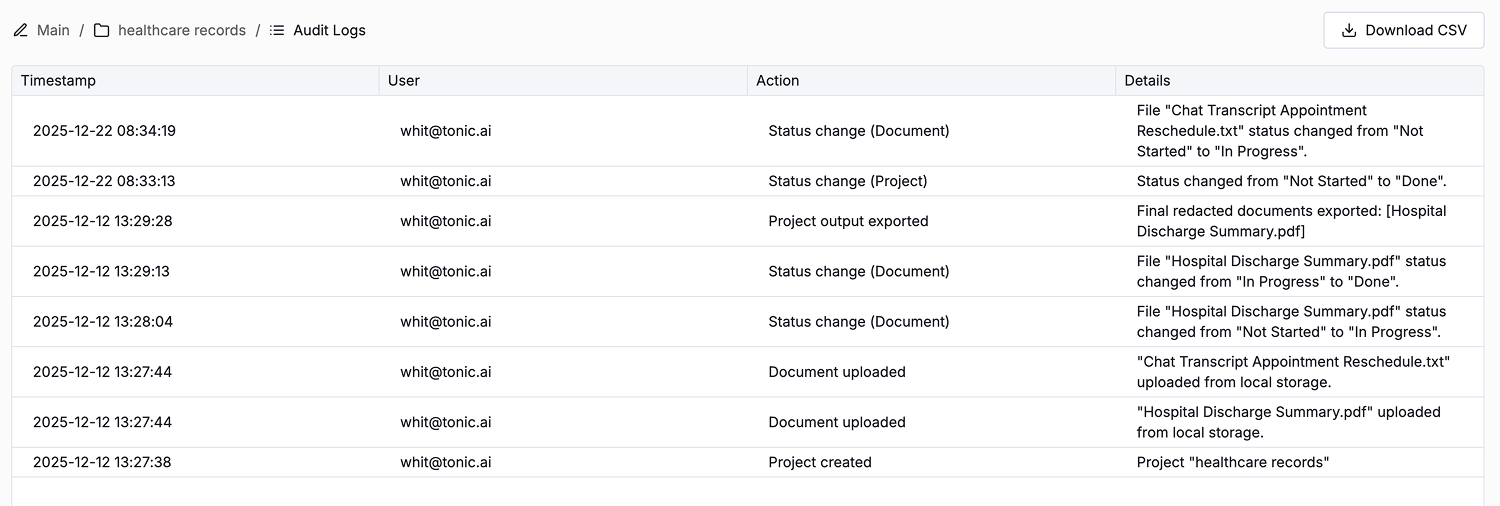
Verifiable activity history strengthens your posture in audits and litigation. Maintain exportable records of detection/redaction runs and keep accompanying access and review logs in your existing systems to document what was redacted, when, and under which policy.
Ensuring compliance with federal privacy requirements
Government document redaction platforms like Tonic Textual support compliance-aligned workflows for FOIA privacy mandates. Here’s a typical process agencies can adopt:
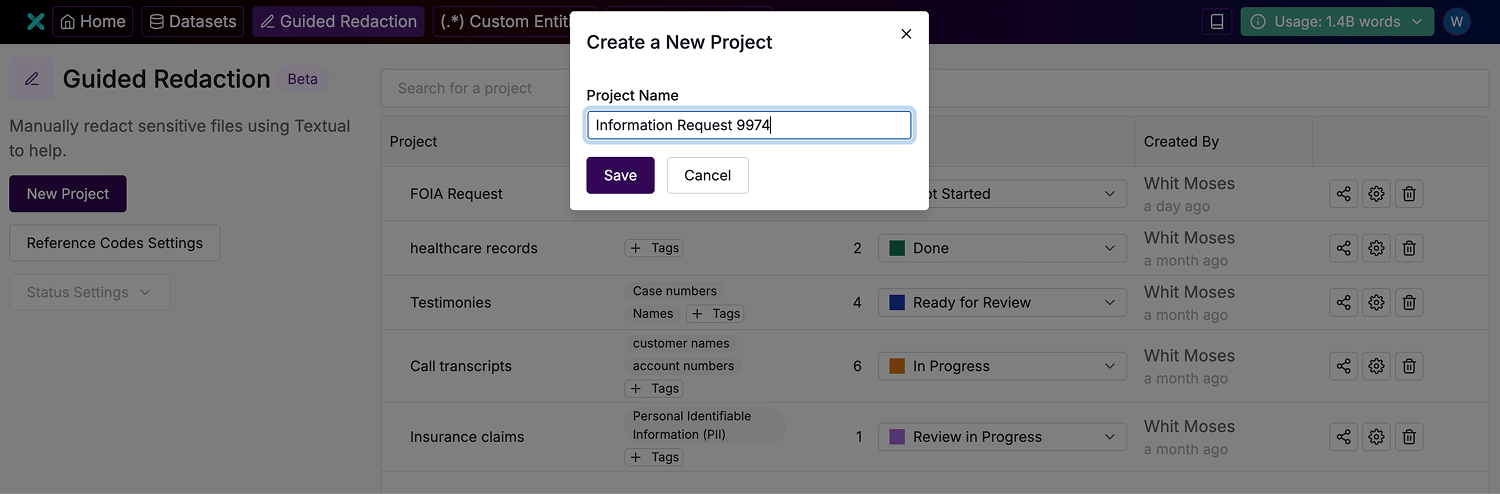
Create a unique project for each FOIA request
Keep scope, permissions, and review notes separated per request so decisions are traceable and easier to audit later.
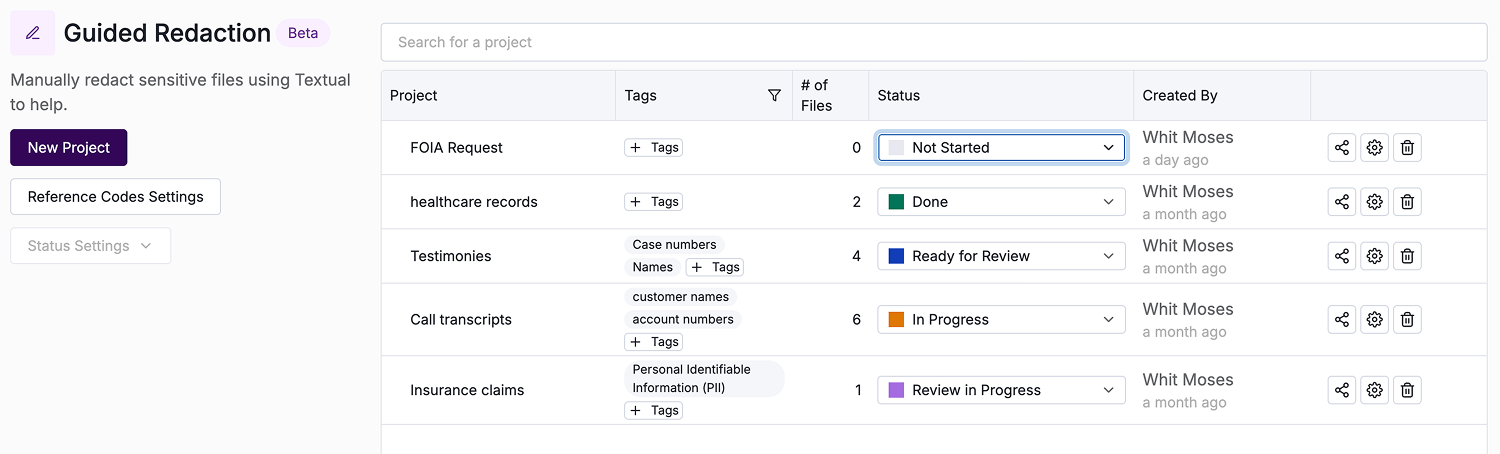
Organize workstreams by status and ownership
A simple “in queue → in review → approved → released” flow reduces bottlenecks and clarifies who does what, when.
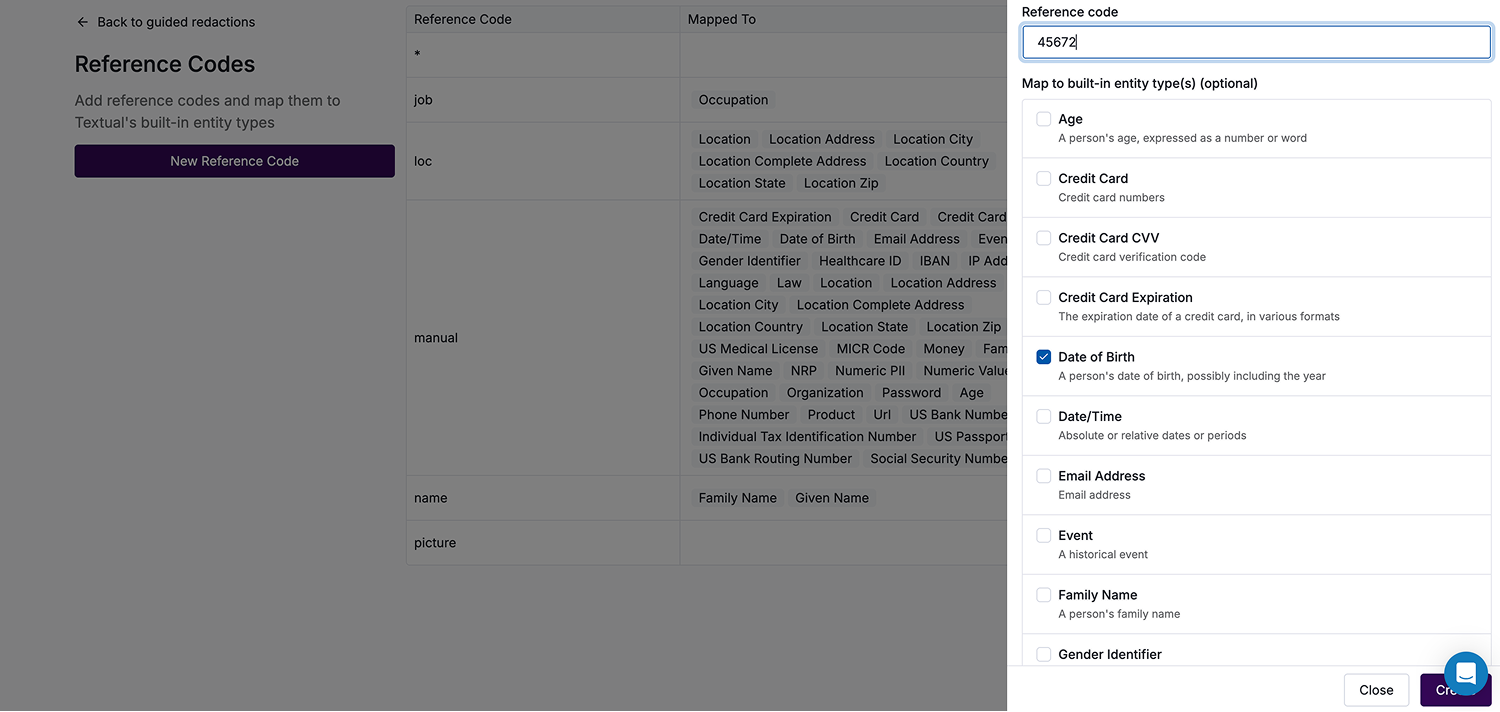
Assign reference codes to entities or exemption categories
Consistent codes (e.g., PII types or FOIA exemptions) make rationale transparent and speed second-level review.
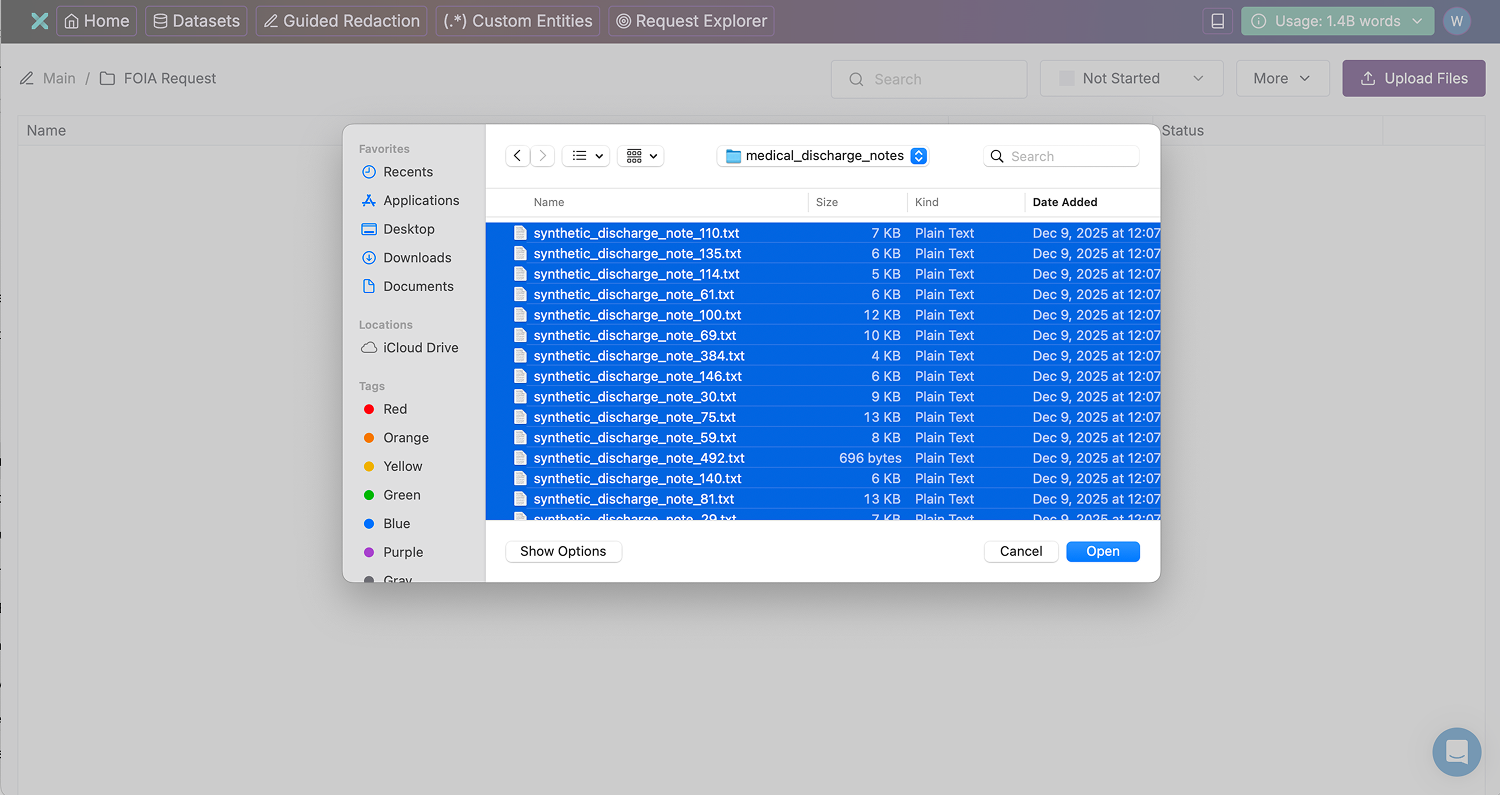
Upload related files in bulk or individually
Group documents for the same request to apply the same policies and speed batched review.
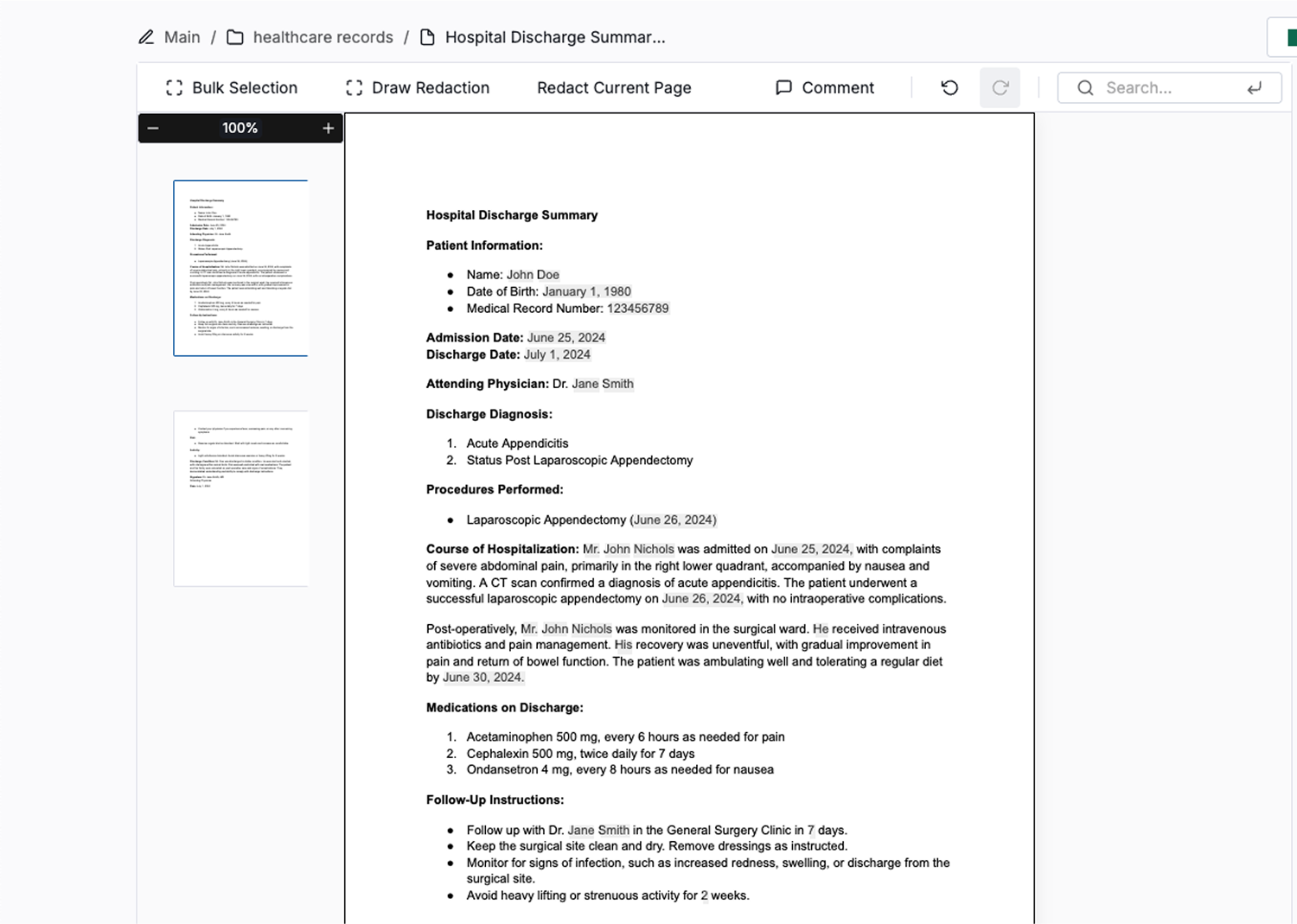
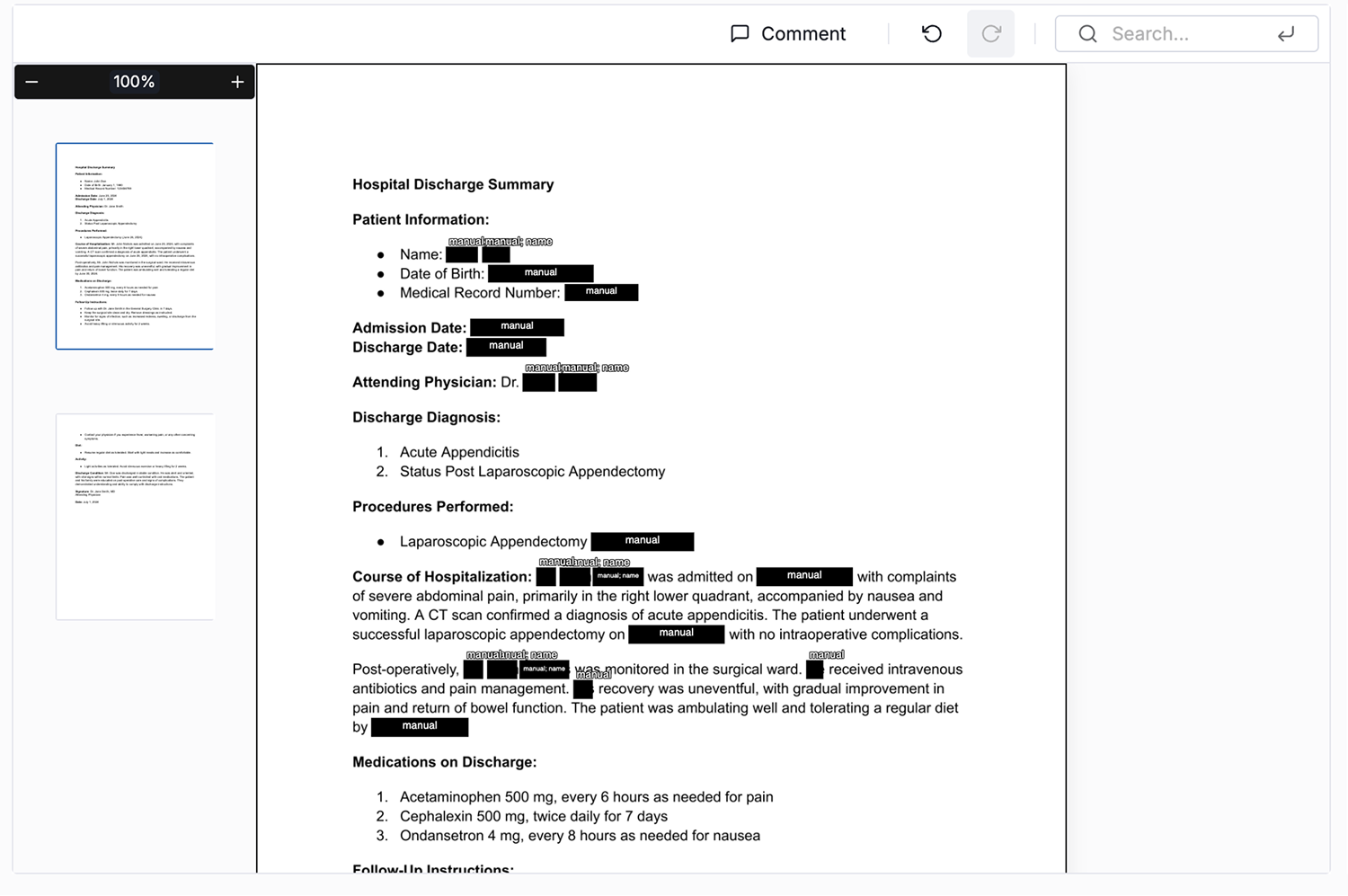
Run automatic detection to highlight sensitive information
Tonic Textual automatically detects sensitive entities across document types (e.g. PDFs, docx, audio files, etc., giving reviewers a first pass they can confirm or adjust.
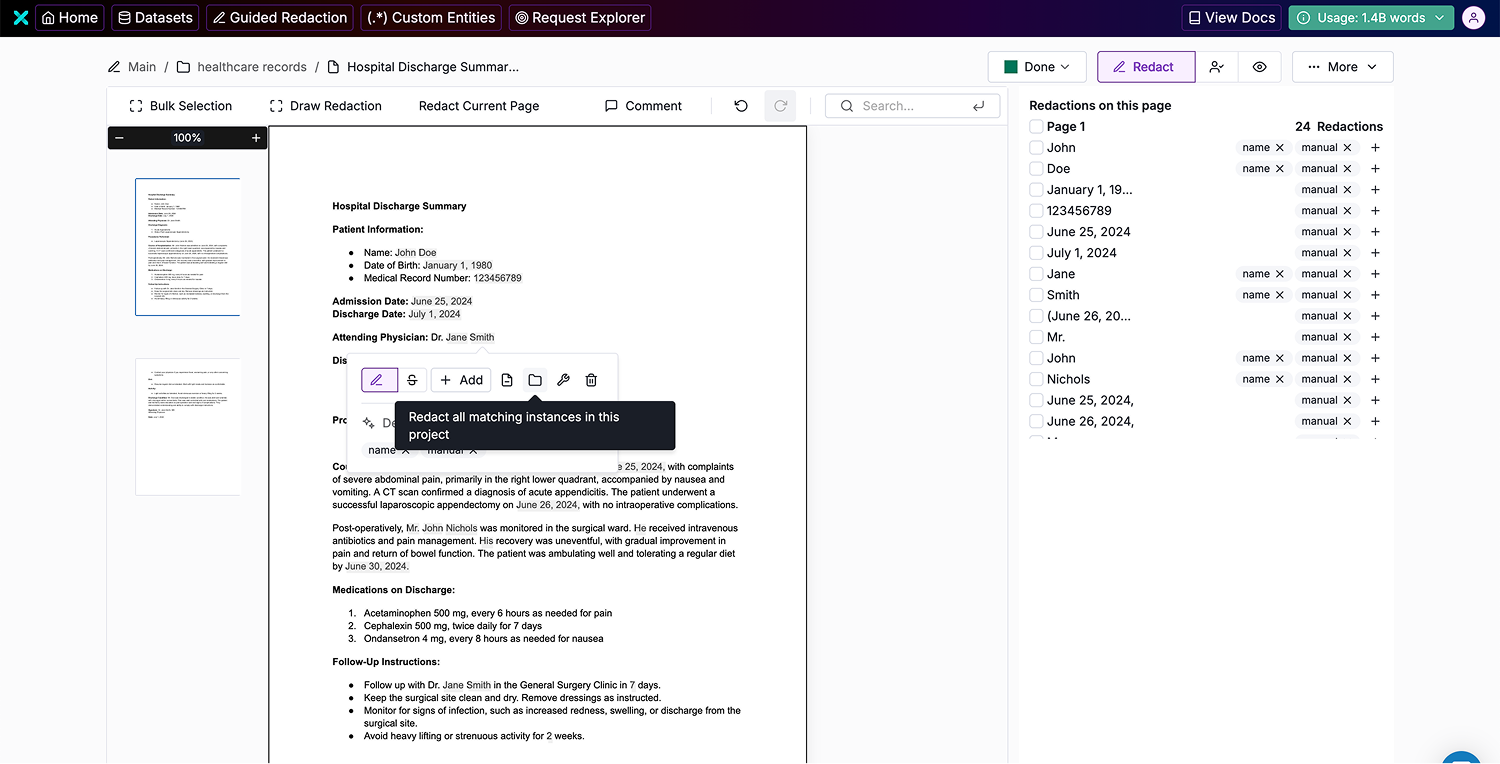
Apply redaction rules consistently
Use “redact all matching instances” for recurring entities to keep treatment uniform across pages and files; reviewers still make final calls on edge cases.
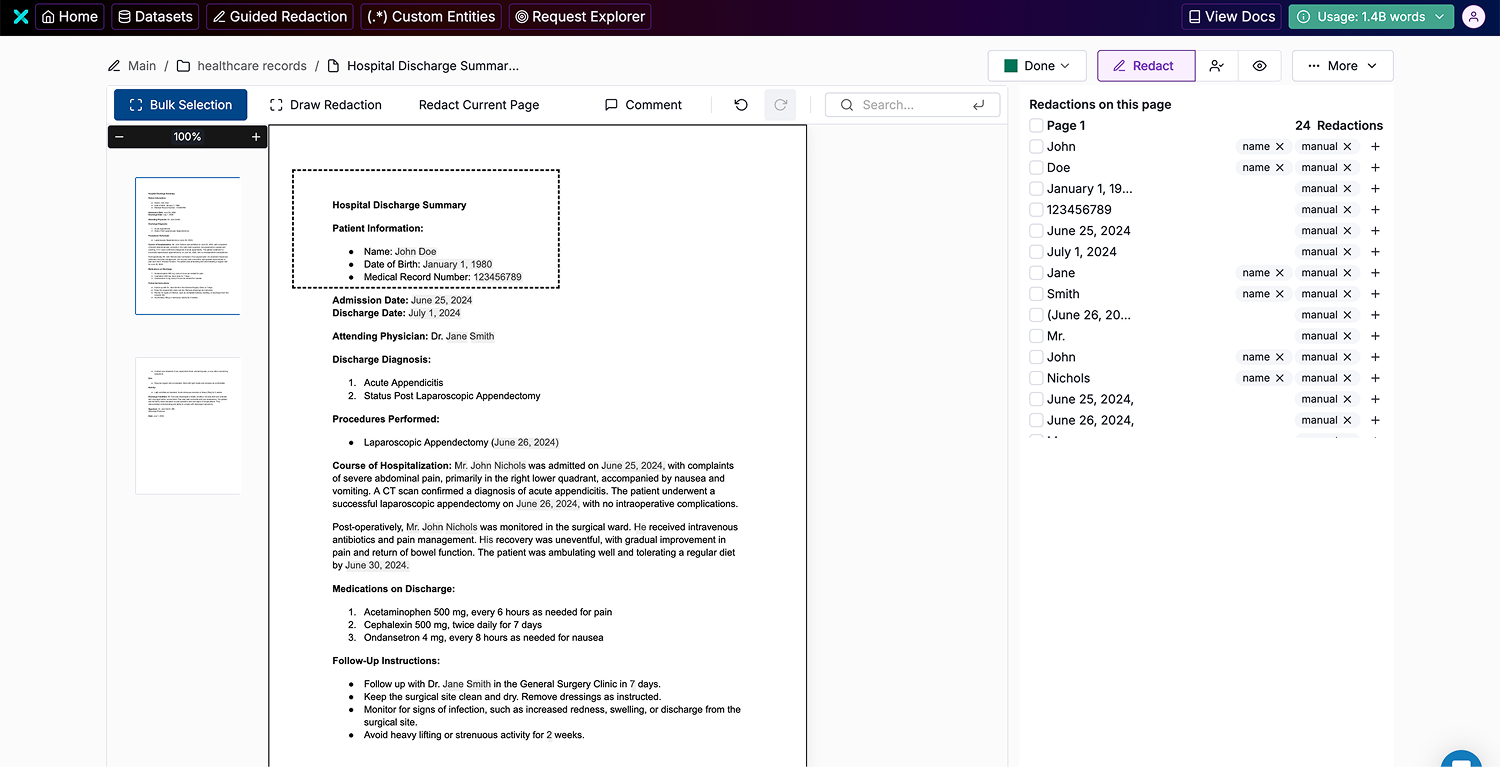
Use section-level redaction where appropriate
For clearly non-releasable blocks (e.g., financial tables or internal memos), apply section redaction to save time and avoid inconsistencies.
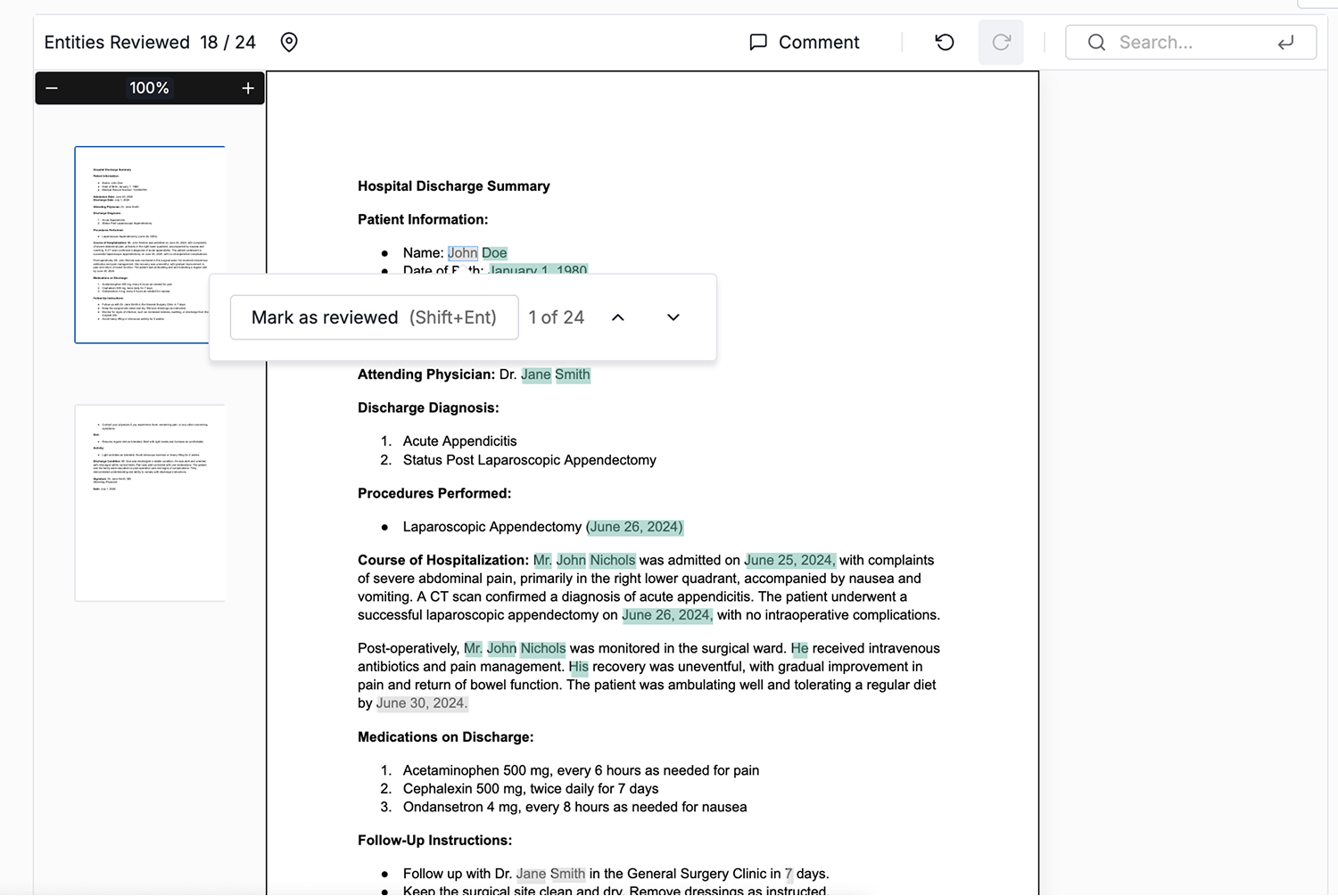
Route documents through defined review stages
Require a final sign-off before release; this preserves quality control and a defensible record of decision-making.
Export the final redacted set
Produce the approved, redacted documents in the required format for disclosure or inter-agency sharing.
Extract audit logs for compliance
For highly sensitive workflows, keep export details, reviewer sign-offs, and exemption rationale in your existing tracking system so you can demonstrate how decisions were made.
Why government agencies trust Tonic Textual
Agencies choose Tonic Textual for their government document redaction needs because it excels at detecting and redacting information within unstructured text. Its proprietary NER models cover over 50 entity types out of the box—names, IDs, locations, and more—and you can extend detection with custom entities tailored to your mission.
It also integrates directly into your existing workflows, supporting batch uploads, collaborative review, and automated audit trails. This makes it practical for agencies of any size to adopt modern redaction practices without overhauling their entire infrastructure. The result is faster FOIA processing without sacrificing compliance or quality.
Try Tonic Textual today
Balancing the Freedom of Information Act with privacy requirements no longer has to slow your agency. Modern redaction software reduces manual effort, cuts backlogs, and supports compliance-aligned workflows while protecting personally identifiable information at scale.
Ready to see Tonic Textual in action? Book a demo and discover how we can help your agency meet transparency mandates.
如有侵权请联系:admin#unsafe.sh