GlassWorm hides inside developer tools. Once it’s in, it steals data, installs remote access malware, and even a fake browser extension to monitor activity. While it starts with developers, the impact can quickly spread. With stolen credentials, access tokens, and compromised tools, attackers can launch wider supply chain attacks, putting companies and everyday users at risk.
How the infection starts
GlassWorm is usually distributed through developer channels. That means that programmers get their systems compromised by downloading malicious packages from code repositories like npm, GitHub, PyPI, and so on. These can be new malicious packages or altered packages from once-trusted, but now compromised, accounts.
The developer installs or updates a trusted or popular npm/PyPI package or VS Code extension, but the maintainer’s account or supply chain has been compromised.
What happens after installation
Once the package is pulled, a preinstall script or invisible Unicode loader runs and fingerprints the machine. If it finds a Russian locale, execution stops. If not, the script waits a few hours and then quietly contacts the Solana blockchain to discover where to fetch stage two of the infection. Rather than hardcoding a link that could be taken down, the attacker stores this information in the memo field of a Solana transaction.
Stage two: Data theft
The stage two payload is an infostealer that targets browser extension profiles, standalone wallet apps, and .txt/image files likely holding seeds or keys, along with npm tokens, git credentials, VS Code secrets, and cloud provider credentials. After gathering this information, it sends it to a remote server via a POST request.
Stage three: Full system compromise
After that, it’s on to stage three. The malware fetches two main components: the Ledger/Trezor phishing binary aimed at users with a Ledger or Trezor device plugged in, and a Node.js Remote Access Trojan (RAT) with several modules, including browser credential stealers and a Chrome‑extension installer. It gains persistence by setting up scheduled tasks and Run registry keys so that the RAT comes back on every reboot.
The RAT does not hardcode its main command and control (C2) address. Instead, it performs a distributed hash table (DHT) lookup for the pinned public key. DHT is a distributed system that provides a lookup service similar to a hash table. Key–value pairs are stored in a DHT and can be used to retrieve the value associated with a given key. If this method fails, the RAT goes back to the Solana blockchain to fetch a new IP address.
Browser surveillance and tracking
The RAT also force-installs a Chrome extension (in the example described by Aikido, it pretends to be “Google Docs Offline”), which acts as an onboard session surveillance. Besides stealing cookies, localStorage, the full Document Object Model (DOM) tree of the active tab, bookmarks, screenshots, keystrokes, clipboard content, up to 5,000 browser history entries, and the installed extensions list, it can also be used to take screenshots and act as a keylogger.
What this looks like to the victim
From the victim’s point of view, all this happens very stealthily. If they’re paying close attention, they may see a few suspicious outgoing connections, the startup entries, and the new browser extension.
Who’s at risk, and how this could spread
The current setup appears to focus on developers who may have cryptocurrency assets, but many of these components and the stolen information can be used to initiate supply chain attacks or target other groups of users.
How to stay safe
Because of the stealthy nature of this infection chain, there are two main strategies to stay safe:
- Prefer known‑good, pinned versions, and treat sudden ownership changes, new maintainers, or big code rewrites in minor releases as review triggers.
- Regularly audit browser extensions, remove anything you don’t recognize, and be suspicious of “Google Docs Offline”‑style clones or duplicates.
- Check your scheduled tasks and registry startup locations for unexpected entries.
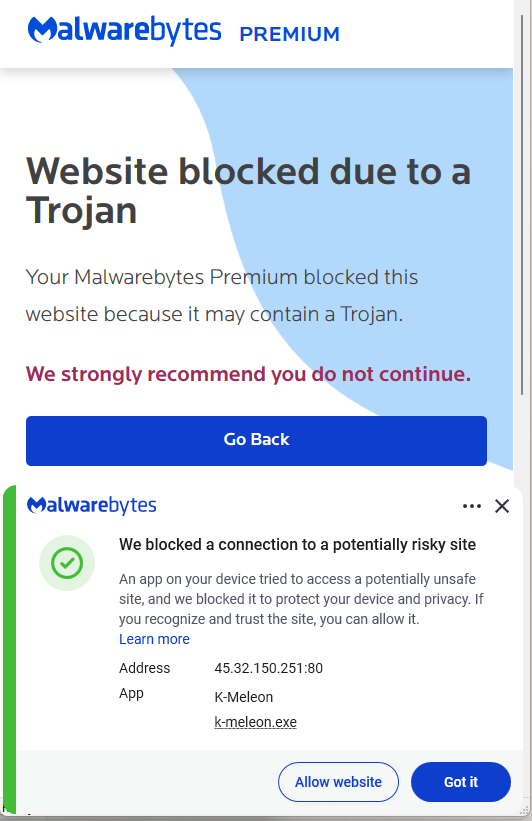
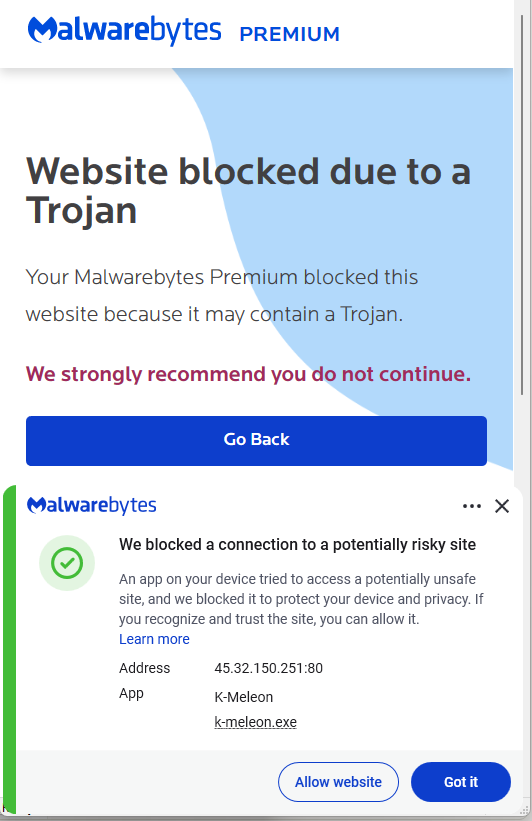
- Use an up-to-date, real-time anti-malware solution to detect and block malicious connections and the downloaded malware.
IOCs (Indicators of Compromise)
IP addresses:
45.32.150[.]251
217.69.3[.]152
217.69.0[.]159
45.150.34[.]158
Registry keys:
HKEY_CURRENT_USER\Software\Microsoft\Windows\CurrentVersion\Run\UpdateApp
HKEY_CURRENT_USER\Software\Microsoft\Windows\CurrentVersion\Run\UpdateLedger
Scheduled Task:
Name: UpdateApp which runs: AghzgY.ps1
Browser extension:
Display name: Google Docs Offline (version 1.95.1)
Windows extension directory name :jucku
macOS extension directory name: myextension
We don’t just report on threats—we remove them
Cybersecurity risks should never spread beyond a headline. Keep threats off your devices by downloading Malwarebytes today.