嗯,用户让我总结一下这篇文章的内容,控制在一百个字以内,而且不需要用“文章内容总结”之类的开头。首先,我需要通读整篇文章,抓住主要信息。 文章主要讲的是两个新的RFC标准,RFC 9848和RFC 9849,它们关于TLS加密客户端Hello消息。Cloudflare已经实现了这些功能。当前隐私保护意识增强,所以这些新标准是为了进一步保护网络流量的隐私。 在TLS连接建立时,客户端会发送Client Hello消息,里面包含敏感信息如目标服务器的主机名。早期的解决方案只是加密了这部分信息,但后来发现这样还不够,因为还有指纹攻击的可能。于是他们扩展了加密范围,几乎加密了整个Client Hello消息。 实现这个加密需要用到HTTPS DNS记录来交换密钥材料。Cloudflare用户只需要简单设置就能启用这个功能,但免费计划可能不支持。 测试是否支持ECH的话,可以用dig工具查询HTTPS记录中的ech字段。如果没有ech字段,则不支持。 最后提到网络分析人员可能会阻止HTTPS记录以防止QUIC的使用,但这取决于网络策略是否合适。 总结下来,文章主要介绍了这两个RFC标准的目的、实现方式以及如何测试支持情况。我需要把这些信息浓缩到100字以内。 </think> 文章介绍了两个新的RFC标准(RFC 9848和RFC 9849),旨在通过加密TLS客户端Hello消息(包括服务器名称指示)来增强网络隐私保护。这些标准利用HTTPS DNS记录交换密钥材料,并由Cloudflare等早期采用者实施。用户可通过简单设置启用该功能,并使用工具测试支持情况。 2026-3-9 14:46:18 Author: isc.sans.edu(查看原文) 阅读量:55 收藏
Last week, two related RFCs were published:
RFC 9848: Bootstrapping TLS Encrypted ClientHello with DNS Service Bindings
RFC 9849: TLS Encrypted Client Hello
These TLS extensions have been discussed quite a bit already, and Cloudflare, one of the early implementers and proponents, has been in use for a while.
Amidst an increased concern about threats to privacy from government and commercial interests, the "encrypt everything " movement has been on the rise for a while. The community made several improvements to TLS, such as TLS 1.3, the QUIC protocol, the deprecation of OCSP, and encrypted DNS modes, to better protect the privacy of network traffic.
There was one data leak left: For a client to establish a TLS connection, it needs to send a "TLS Client Hello" message. This message contains several sensitive items, most notably the hostname of the site the client attempts to connect to ("Server Name Indication"). One of the early proposals was just to encrypt the Server Name Indication extension. But this does not solve the entire problem, allowing for fingerprinting and other attacks. The same basic principles proposed for encrypting the server name extension can also be applied to encrypt most of the client hello message, resulting in a more complete solution.
One of the basic problems is exchanging key material. The client hello message is the first message sent during the TLS handshake. There is no opportunity for the server and client to negotiate an encryption key, and doing so would require a second handshake. Instead, encrypted client hellos leverage the HTTPS DNS record. The HTTPS record is already used to negotiate HTTP3/QUIC. It is now also used to transmit the keys required for Encrypted Client Hello (ECH).
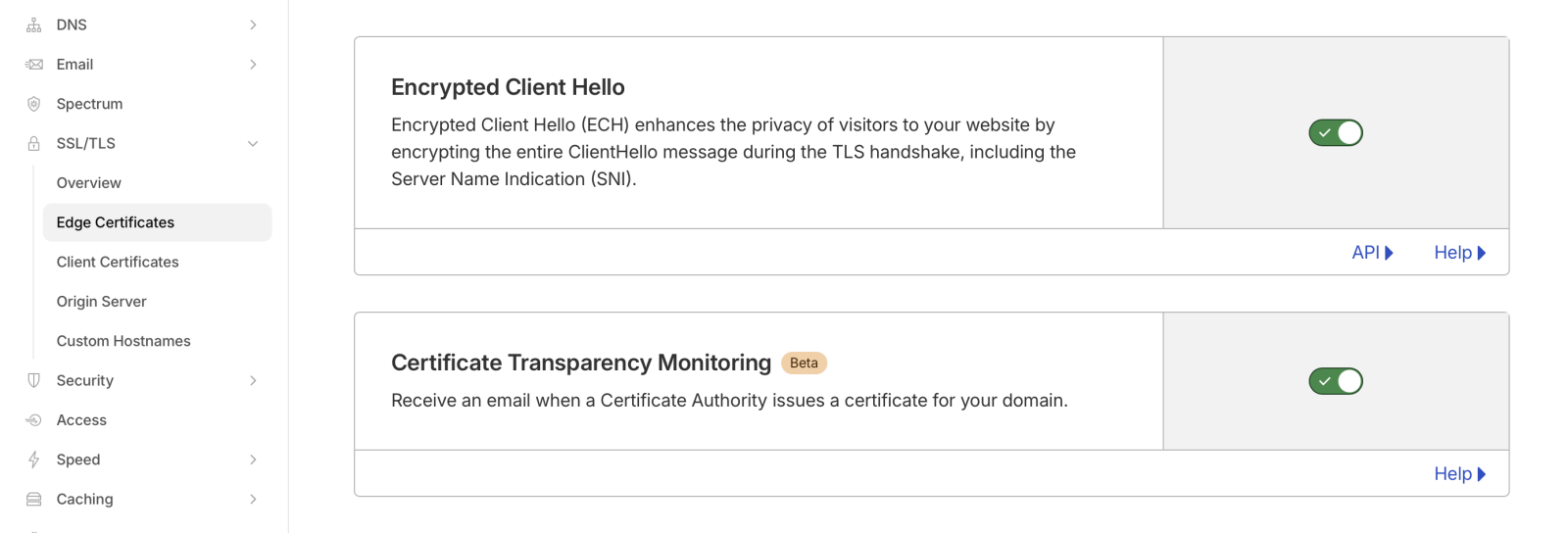
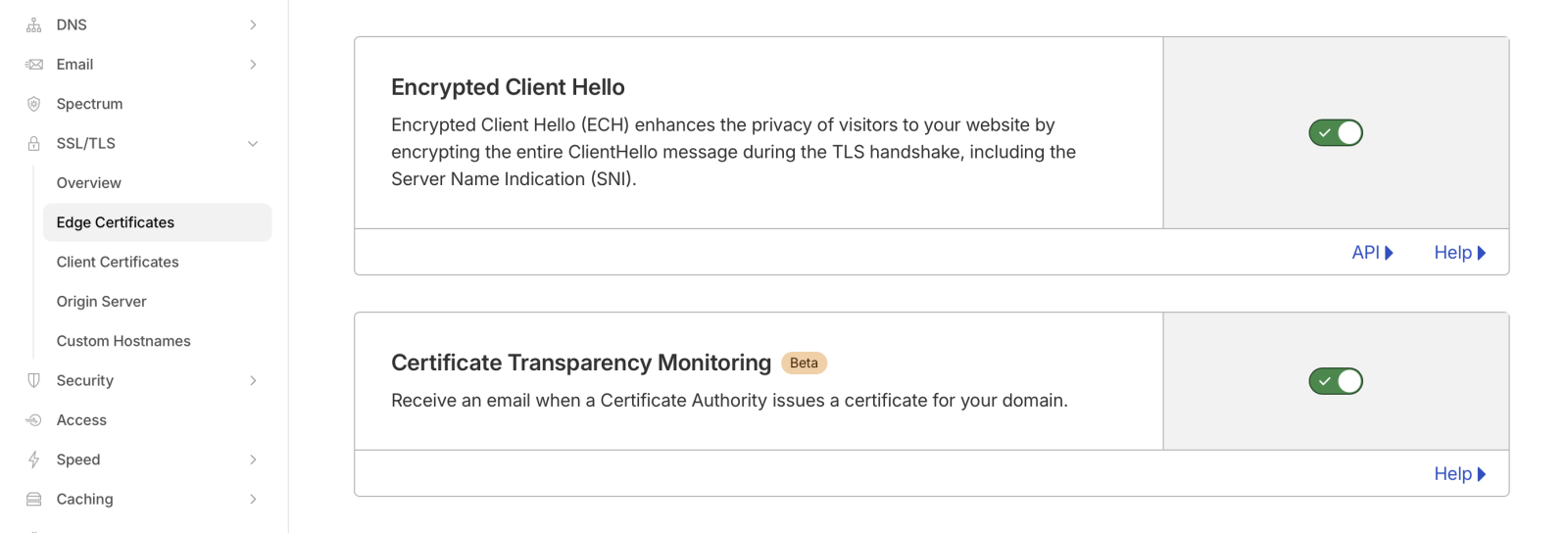
Enabling ECH is trivial if you are using Cloudflare. Just "flip the switch" in Cloudflare's edge certificate settings. However, I do not believe this is available on the free plan.
To test if a domain supports ECH, use a tool like "dig" to retrieve the HTTP record:
# dig -t HTTPS dshield.org +short

1 . alpn="h2" ipv4hint=104.26.2.15,104.26.3.15,172.67.70.195 ech=AEX+DQBBawAgACBRVO1kCb5b2znHUOTe+L42PHgEjBSNt4LD/qDNxffkAgAEAAEAAQASY2xvdWRmbGFyZS1lY2guY29tAAA= ipv6hint=2606:4700:20::681a:20f,2606:4700:20::681a:30f,2606:4700:20::ac43:46c3
Note the "ech=" part. Without ECH support, you may still see an HTTPS record, but it will not contain the "ech=" part. The base64 encoded string following "ech=" contains the public encryption key used to encrypt the client hello.
When using "dig", make sure you are using a version that supports HTTPS records. Older versions may not, and even the latest version of dig for macOS does not support HTTPS records. You will see a warning (which, as I found out, is easily missed), and you may still get "A" record responses:
% dig -t HTTPS dshield.org +short
;; Warning, ignoring invalid type HTTPS
For all the network traffic analysts grinding their teeth: You could block HTTPS records. This will also prevent QUIC from being used, which may be in your favor. But whether this is appropriate or not for your network is a question you must answer based on your business.
--
Johannes B. Ullrich, Ph.D. , Dean of Research, SANS.edu
Twitter|
如有侵权请联系:admin#unsafe.sh