嗯,用户让我总结一下这篇文章的内容,控制在100字以内,而且不需要特定的开头。首先,我需要通读文章,抓住主要观点。 文章主要讲的是电子商务平台,特别是WooCommerce商店,如何通过无密码认证和自适应多因素认证来提高安全性。作者提到传统密码容易被攻击,所以转向无密码方法,比如一次性密码、魔法链接和Passkeys。同时,自适应MFA在检测到可疑活动时会增加额外的验证步骤。 接下来,用户可能需要一个简洁的总结,用于快速了解文章内容。他们可能是在寻找解决方案或者做研究。因此,我需要确保总结涵盖关键点:无密码认证、自适应MFA、安全威胁以及解决方案的好处。 最后,我要确保语言简洁明了,不超过100字,并且直接描述内容,不使用“文章总结”之类的开头。 </think> 文章探讨了电子商务平台如何通过无密码认证和自适应多因素认证(MFA)提升安全性。针对WooCommerce商店,文章介绍了如何实施无密码登录(如OTP、魔法链接、Passkeys)和基于风险的自适应MFA来防范 credential stuffing、账户接管和自动化 bot 攻击。 MojoAuth 等平台提供了相关 API 和 SDK,帮助开发者快速集成安全登录系统。 2026-3-5 16:55:49 Author: securityboulevard.com(查看原文) 阅读量:3 收藏
Ecommerce platforms handle sensitive customer data, payments, and personal information. As online stores grow, authentication security becomes one of the most important components of protecting user accounts.
Many ecommerce developers are now moving toward passwordless authentication combined with adaptive multi-factor authentication (MFA) to improve login security and reduce fraud.
This guide explains how developers can implement passwordless authentication for WooCommerce stores, while also supporting adaptive MFA and modern authentication infrastructure.
Why WooCommerce Stores Need Strong Authentication
Ecommerce platforms are frequent targets for identity attacks. Weak login systems can expose both merchants and customers to security risks.
Credential Stuffing Attacks
Attackers often use stolen username-password combinations from data breaches to attempt logins on ecommerce websites.
Account Takeover
If attackers gain access to a customer account, they can place fraudulent orders, redeem loyalty points, or access saved payment information.
Automated Bot Attacks
Bots frequently attempt large numbers of login requests in a short period, trying to compromise user accounts.
Implementing modern authentication methods helps WooCommerce stores prevent these threats.
What Is Passwordless Authentication?
Passwordless authentication removes traditional passwords and instead verifies users using alternative login methods.
Common passwordless login options include:
-
Email OTP (one-time password)
-
Magic login links
-
Passkeys (WebAuthn)
-
Phone-based OTP
Instead of remembering passwords, users verify their identity using secure one-time authentication methods.
This approach improves both security and user experience.
Platforms like MojoAuth provide APIs that allow developers to implement passwordless login for WooCommerce stores.
Authentication Challenges in WooCommerce Applications
WooCommerce stores often operate at large scale and face several authentication challenges.
High Login Traffic
Popular ecommerce stores may receive thousands of login requests daily, requiring scalable authentication infrastructure.
User Experience Expectations
Customers expect fast and seamless login experiences across devices.
Fraud Prevention
Authentication systems must detect suspicious login attempts and prevent account compromise.
Passwordless login combined with adaptive MFA helps address these challenges.
Adaptive MFA for WooCommerce Security
Adaptive MFA adds additional authentication steps only when a login attempt appears risky.
Instead of forcing MFA for every login, the system evaluates signals such as:
-
Device Type
-
IP address reputation
-
User Location
-
Login Behavior Patterns
If a login attempt appears suspicious, the system can require additional verification such as:
-
OTP Confirmation
-
Email Verification
-
Passkey Authentication
This approach protects accounts while maintaining a smooth login experience for legitimate users.
Passwordless Authentication Architecture for WooCommerce
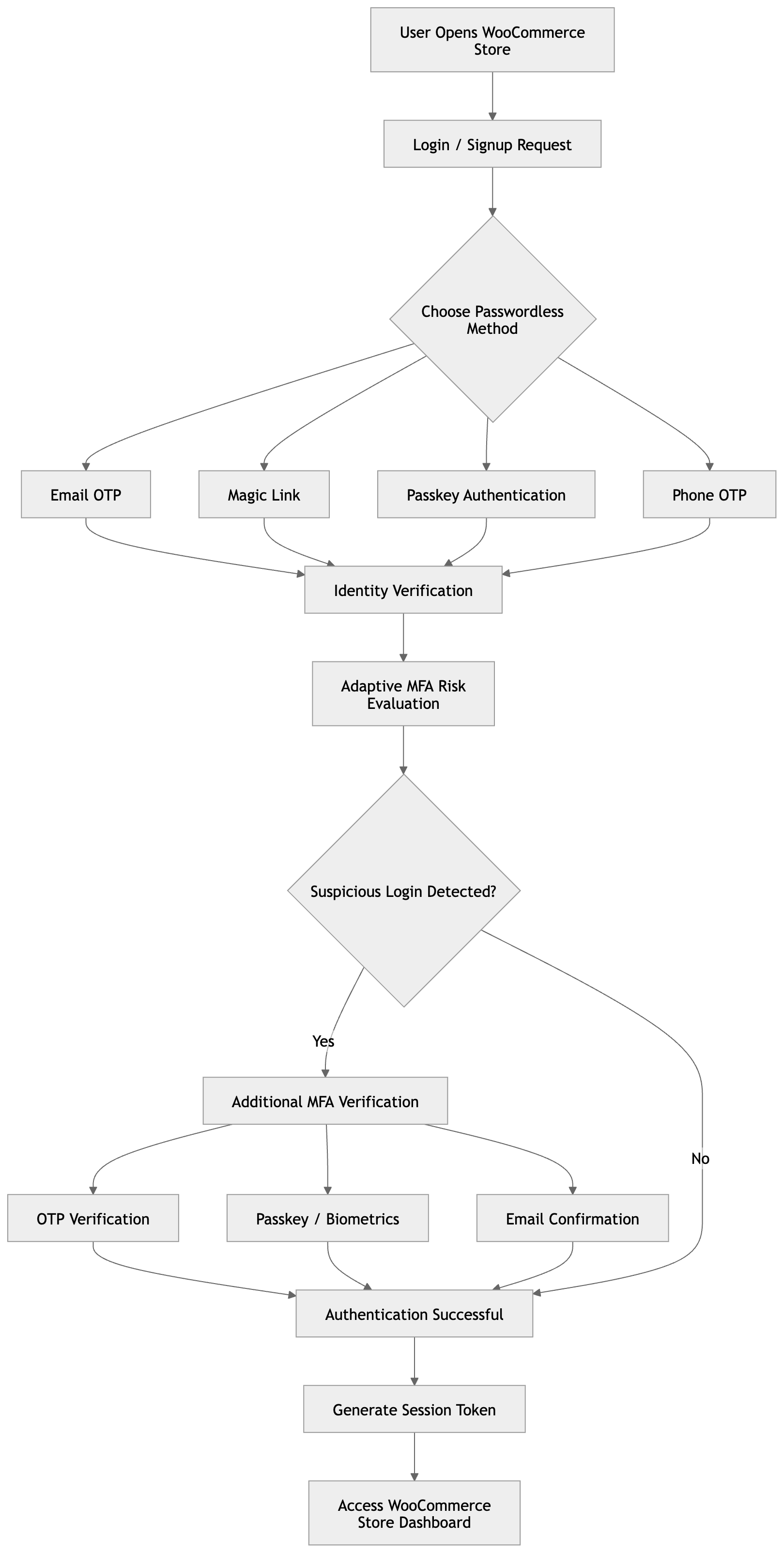
A typical passwordless authentication flow for WooCommerce stores looks like this:
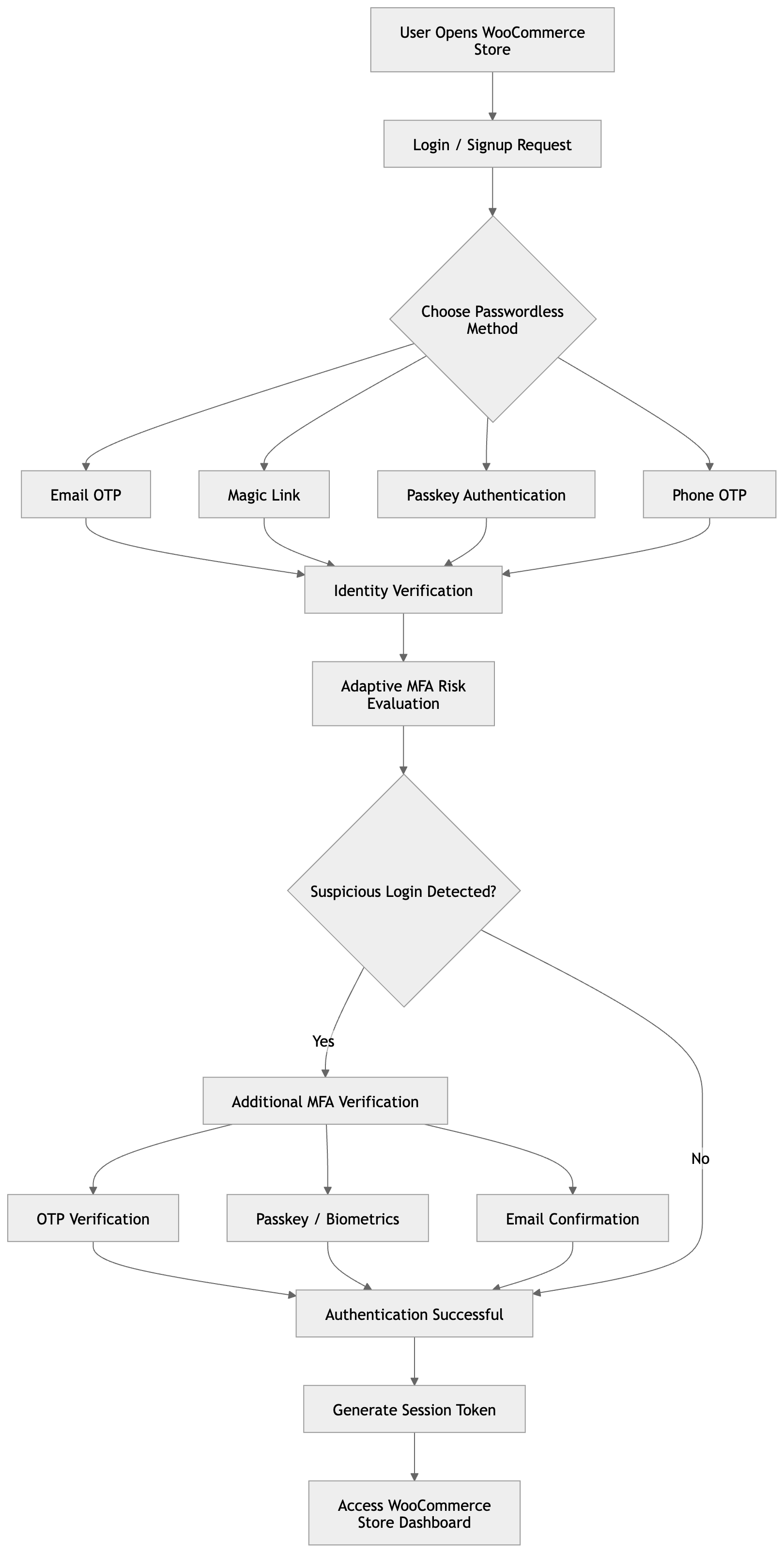
This architecture ensures both secure authentication and scalable login infrastructure.
Private Authentication Infrastructure for Enterprise WooCommerce Stores
Large ecommerce organizations often require additional control over authentication infrastructure.
Private authentication instances provide:
-
Dedicated Authentication Environments
-
Improved Compliance and Security Controls
-
Infrastructure Isolation
Enterprise ecommerce platforms may deploy authentication infrastructure in private environments to meet regulatory or security requirements.
Authentication platforms such as MojoAuth support deployment models that allow authentication services to operate in controlled environments.
How MojoAuth Simplifies WooCommerce Authentication
Building authentication infrastructure from scratch requires significant development effort.
Developer-focused authentication platforms simplify this process by providing APIs and SDKs.
MojoAuth enables WooCommerce developers to implement:
-
Passwordless Authentication
-
Adaptive MFA
-
Passkey Login Support
-
Scalable Authentication Infrastructure
Using authentication APIs, developers can integrate secure login systems into WooCommerce applications without building complex identity systems internally.
Benefits for WooCommerce Developers
Implementing passwordless authentication with adaptive MFA offers several advantages.
Better User Experience
Customers can log in quickly without remembering passwords.
Stronger Security
Adaptive MFA protects accounts from suspicious login attempts.
Faster Integration
Authentication APIs reduce development time for implementing login systems.
Enterprise-Level Infrastructure
Private authentication deployments support enterprise security requirements.
Frequently Asked Questions
Does WooCommerce support passwordless authentication?
WooCommerce stores can implement passwordless authentication using external authentication APIs that support OTP login, magic links, or passkeys.
What authentication methods are best for WooCommerce?
Passwordless login methods such as OTP authentication, magic links, and passkeys provide strong security and better user experience.
What is adaptive MFA?
Adaptive MFA is a risk-based authentication approach that triggers additional verification only when login activity appears suspicious.
Can WooCommerce stores integrate enterprise authentication systems?
Yes. WooCommerce applications can integrate modern authentication infrastructure that supports enterprise identity systems and advanced login security.
Final Thoughts
Ecommerce platforms face increasing threats from credential stuffing, account takeover attacks, and automated bot activity.
Implementing modern authentication methods such as passwordless login and adaptive MFA helps WooCommerce stores protect user accounts and improve login experiences.
Platforms like MojoAuth allow developers to integrate secure authentication infrastructure quickly, enabling WooCommerce applications to provide stronger login security without complex implementation.
*** This is a Security Bloggers Network syndicated blog from MojoAuth - Advanced Authentication & Identity Solutions authored by MojoAuth - Advanced Authentication & Identity Solutions. Read the original post at: https://mojoauth.com/blog/passwordless-authentication-woocommerce
如有侵权请联系:admin#unsafe.sh