好的,我现在需要帮用户总结一篇文章的内容,控制在100字以内。用户的要求是直接写描述,不需要特定的开头。 首先,我仔细阅读了文章。文章主要讲述了CVE-2009-0556漏洞,这是一个存在于某些版本Windows PowerPoint中的代码注入漏洞。2009年被发现后,微软发布了补丁和公告。然而,2026年该漏洞又被加入CISA的已知被利用漏洞目录,引起关注。 接下来,我需要提取关键信息:漏洞名称、影响范围、发现时间、补丁情况、重新出现的时间和原因。还要注意不要超过字数限制。 然后,我组织语言,确保信息准确且简洁。比如,“代码注入漏洞”、“旧版PowerPoint”、“2009年被发现”、“2026年重新出现”、“企业安全问题”等关键词。 最后,检查是否符合用户的所有要求:中文、100字以内、直接描述内容。确保没有遗漏重要信息,并且表达清晰。 </think> 该文章描述了CVE-2009-0556漏洞,一种存在于旧版Windows PowerPoint中的代码注入漏洞。该漏洞于2009年被发现并修复,但在2026年因被加入CISA已知被利用漏洞目录而重新引起关注。文章指出旧漏洞在遗留系统中仍具威胁,并强调企业需加强安全防护和补丁管理以应对此类风险。 2026-1-23 19:54:39 Author: levelblue.com(查看原文) 阅读量:0 收藏
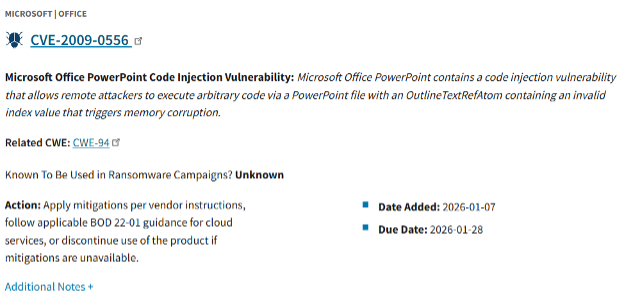
In 2009, LevelBlue Vice President of Security Research Ziv Mador and Cristian Craioveanu worked at the Microsoft Malware Team and documented a notable code injection vulnerability on certain versions of Windows PowerPoint (Windows PowerPoint 2000 SP3, 2002 SP3, and 2003 SP3, and PowerPoint in Microsoft Office 2004 for Mac.) The bug, CVE-2009-0556, enables remote attackers to execute arbitrary code by using a PowerPoint file with an OutlineTextRefAtom that contains an invalid index value that triggers memory corruption. So, let’s revisit CVE-2009-0556 from its original disclosure examines why it has become relevant again nearly two decades later, and analyzes what its KEV designation tells us about the current state of enterprise security, patch hygiene and adversary tradecraft. This vulnerability was one of many issues disclosed during an era when legacy Windows components, permissive default configurations, and limited exploit mitigations were common across enterprise environments. The vulnerability was addressed; advisories were published, and guidance on how to avoid it was provided. The industry then moved on. Figure 1. Wayback Machine Screenshot of Microsoft Malware Protection Center Or so it seemed. Figure 2. CISA-KEV CVE-2009-0556 Source: https://www.cisa.gov/known-exploited-vulnerabilities-catalog Fast forward to 2026, and CVE-2009-0556 has resurfaced with heightened attention after being added to the CISA Known Exploited Vulnerabilities (KEV) Catalog on January 7, 2026. Its inclusion signals a critical reality that defenders cannot ignore. Vulnerabilities do not cease to be relevant simply because they are old. When legacy systems, misconfigurations, or backward-compatible components persist, old attacks persist as well. When legacy systems cannot be decommissioned, the associated risk must be managed through strict isolation. These systems should be segmented from the enterprise network and never exposed to the public Internet, with compensating controls in place to reduce exploitability when patching is no longer feasible.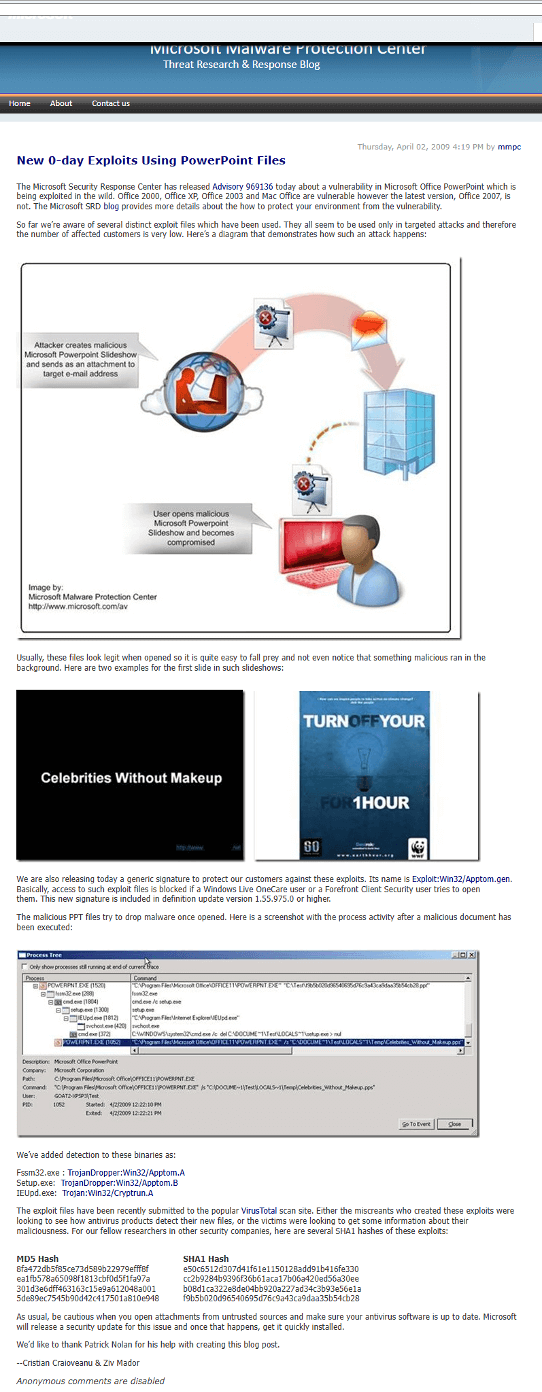
如有侵权请联系:admin#unsafe.sh