好的,我现在需要帮用户总结这篇文章的内容,控制在100字以内。首先,我得仔细阅读文章,理解其主要观点。 文章主要讲的是AI生成代码(Vibe coding)在开发中的应用及其带来的安全风险。Intruder团队在使用AI生成代码时遇到了安全漏洞,比如处理IP地址不当导致的注入攻击。他们还提到静态分析工具未能检测到这个漏洞,以及过度依赖AI生成代码可能带来的问题。 接下来,我需要提炼这些关键点:AI生成代码节省时间但引入安全漏洞;Intruder的案例说明了问题所在;静态分析工具的局限性;以及对团队使用AI的建议。 然后,我要把这些内容浓缩成100字以内的中文总结,确保涵盖主要观点:AI生成代码的优势和风险、案例说明、工具局限性、以及建议措施。 最后,检查字数是否符合要求,并确保语言简洁明了。 </think> 文章讨论了AI生成代码(Vibe coding)在开发中的广泛应用及其潜在安全风险。通过Intruder团队的真实案例,揭示了AI生成代码可能引入的安全漏洞,如未验证用户输入导致的IP地址 spoofing 和payload注入。文章指出静态分析工具难以检测此类问题,并强调过度依赖AI生成代码可能导致安全疏忽。建议团队加强代码审查和CI/CD检测能力以应对这一新挑战。 2026-1-23 15:0:27 Author: www.bleepingcomputer.com(查看原文) 阅读量:2 收藏
“Vibe coding” — using AI models to help write code — has become part of everyday development for a lot of teams. It can be a huge time-saver, but it can also lead to over-trusting AI-generated code, which creates room for security vulnerabilities to be introduced.
Intruder’s experience serves as a real-world case study in how AI-generated code can impact security. Here’s what happened and what other organizations should watch for.
When We Let AI Help Build a Honeypot
To deliver our Rapid Response service, we set up honeypots designed to collect early-stage exploitation attempts. For one of them, we couldn’t find an open-source option that did exactly what we wanted, so we did what plenty of teams do these days: we used AI to help draft a proof-of-concept.
It was deployed as intentionally vulnerable infrastructure in an isolated environment, but we still gave the code a quick sanity check before rolling it out.
A few weeks later, something odd started showing up in the logs. Files that should have been stored under attacker IP addresses were appearing with payload strings instead, which made it clear that user input was ending up somewhere we didn’t intend.

The Vulnerability We Didn’t See Coming
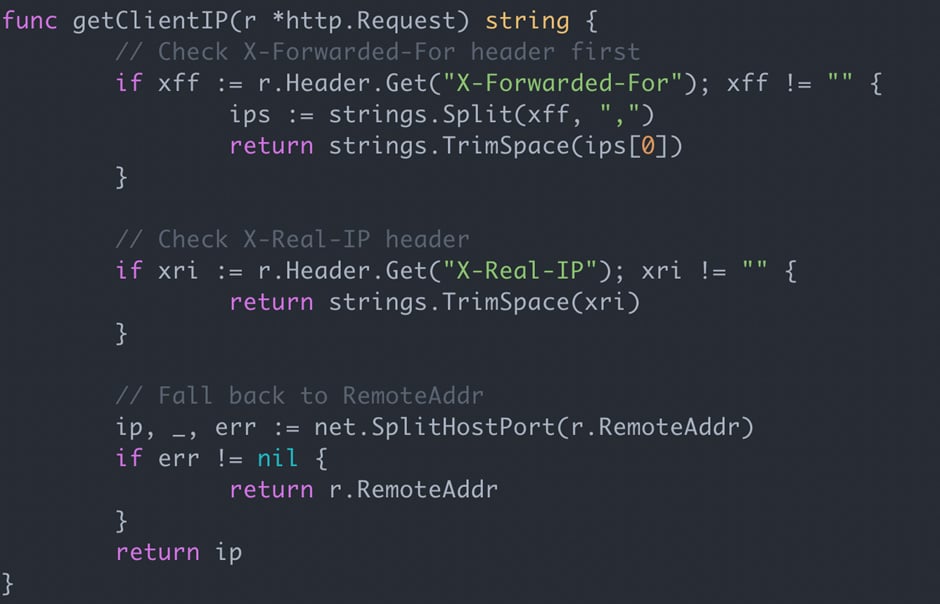
A closer inspection of the code showed what was going on: the AI had added logic to pull client-supplied IP headers and treat them as the visitor’s IP.
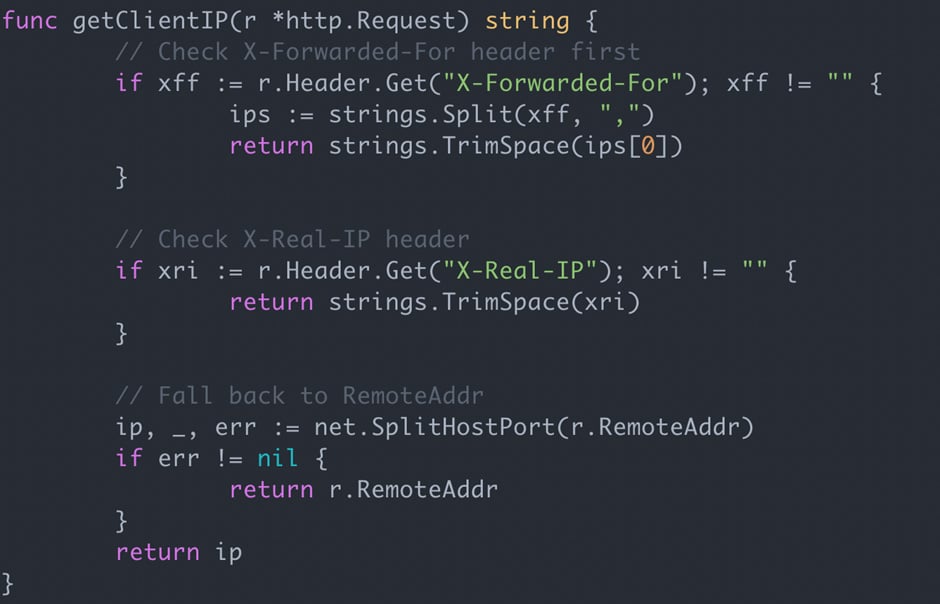
This would only be safe if the headers come from a proxy you control; otherwise they’re effectively under the client’s control.
This means the site visitor can easily spoof their IP address or use the header to inject payloads, which is a vulnerability we often find in penetration tests.
In our case, the attacker had simply placed their payload into the header, which explained the unusual directory names. The impact here was low and there was no sign of a full exploit chain, but it did give the attacker some influence over how the program behaved.
It could have been much worse: if we had been using the IP address in another manner, the same mistake could have easily led to Local File Disclosure or Server-Side Request Forgery.
Why SAST Missed It
We ran Semgrep OSS and Gosec on the code. Neither flagged the vulnerability, although Semgrep did report a few unrelated improvements. That’s not a failure of those tools — it’s a limitation of static analysis.
Detecting this particular flaw requires contextual understanding that the client-supplied IP headers were being used without validation, and that no trust boundary was enforced.
It’s the kind of nuance that’s obvious to a human pentester, but easily missed when reviewers place a little too much confidence in AI-generated code.
AI Automation Complacency
There’s a well-documented idea from aviation that supervising automation takes more cognitive effort than performing the task manually. The same effect seemed to show up here.
Because the code wasn’t ours in the strict sense — we didn’t write the lines ourselves — the mental model of how it worked wasn’t as strong, and review suffered.
The comparison to aviation ends there, though. Autopilot systems have decades of safety engineering behind them, whereas AI-generated code does not. There isn’t yet an established safety margin to fall back on.
This Wasn’t an Isolated Case
This wasn’t the only case where AI confidently produced insecure results. We used the Gemini reasoning model to help generate custom IAM roles for AWS, which turned out to be vulnerable to privilege escalation. Even after we pointed out the issue, the model politely agreed and then produced another vulnerable role.
It took four rounds of iteration to arrive at a safe configuration. At no point did the model independently recognize the security problem – it required human steering the entire way.
Experienced engineers will usually catch these issues. But AI-assisted development tools are making it easier for people without security backgrounds to produce code, and recent research has already found thousands of vulnerabilities introduced by such platforms.
But as we’ve shown, even experienced developers and security professionals can overlook flaws when the code comes from an AI model that looks confident and behaves correctly at first glance. And for end-users, there’s no way to tell whether the software they rely on contains AI-generated code, which puts the responsibility firmly on the organizations shipping the code.
Takeaways for Teams Using AI
At a minimum, we don’t recommend letting non-developers or non-security staff rely on AI to write code.
And if your organization does allow experts to use these tools, it’s worth revisiting your code review process and CI/CD detection capabilities to make sure this new class of issues doesn’t slip through.
We expect AI-introduced vulnerabilities to become more common over time.
Few organizations will openly admit when an issue came from their use of AI, so the scale of the problem is probably larger than what’s reported. This won’t be the last example — and we doubt it’s an isolated one.
Book a demo to see how Intruder uncovers exposures before they become breaches.
Author
Sam Pizzey is a Security Engineer at Intruder. Previously a pentester a little too obsessed with reverse engineering, currently focused on ways to detect application vulnerabilities remotely at scale.
Sponsored and written by Intruder.
如有侵权请联系:admin#unsafe.sh