嗯,用户让我帮忙总结一篇文章的内容,控制在100字以内,而且不需要用“文章内容总结”之类的开头。好的,首先我需要仔细阅读这篇文章,理解它的主要信息。 文章讲的是一个新的Android点击欺诈木马家族,利用TensorFlow机器学习模型来自动检测和点击广告元素。这跟传统的点击欺诈不同,传统的是用预定义的JavaScript脚本,而这个是基于视觉分析的机器学习。他们用的是TensorFlow.js,可以在浏览器或Node.js上运行AI模型。 接着,文章提到这些木马通过小米的应用商店GetApps分发,并且伪装成正常的游戏应用。比如Theft Auto Mafia下载量有6万多。此外,这些恶意软件还有两种模式:“幻影”模式和“信号”模式,“幻影”模式用隐藏的WebView加载页面并截图分析,“信号”模式则通过WebRTC实时传输屏幕画面供攻击者操作。 这些恶意应用不仅在小米商店出现,还在第三方APK网站和Telegram频道传播。用户下载后不会察觉异常,因为活动是在隐藏的虚拟屏幕上进行的。虽然这对用户隐私威胁不大,但会导致电池消耗和数据费用增加。 最后,建议用户避免从Google Play以外的地方下载应用,尤其是那些提供额外功能或免费访问的应用。 现在我要把这些信息浓缩到100字以内。重点包括:新的Android木马家族、利用TensorFlow检测广告、通过隐藏WebView操作、伪装成游戏应用、分发渠道包括小米商店和第三方网站、导致电池消耗和数据费用增加。 确保语言简洁明了,不使用复杂术语。检查字数是否在限制内。 </think> 新的Android点击欺诈木马家族利用TensorFlow机器学习模型自动检测并点击广告元素。这些恶意软件通过隐藏的WebView加载页面,并使用JavaScript脚本自动化操作。它们伪装成正常游戏应用,在小米GetApps等官方及第三方平台分发。攻击者通过“幻影”模式在虚拟屏幕上截图分析广告元素,并通过“信号”模式实时操作虚拟浏览器屏幕。这些恶意软件导致电池消耗和数据费用增加。 2026-1-21 22:15:20 Author: www.bleepingcomputer.com(查看原文) 阅读量:0 收藏
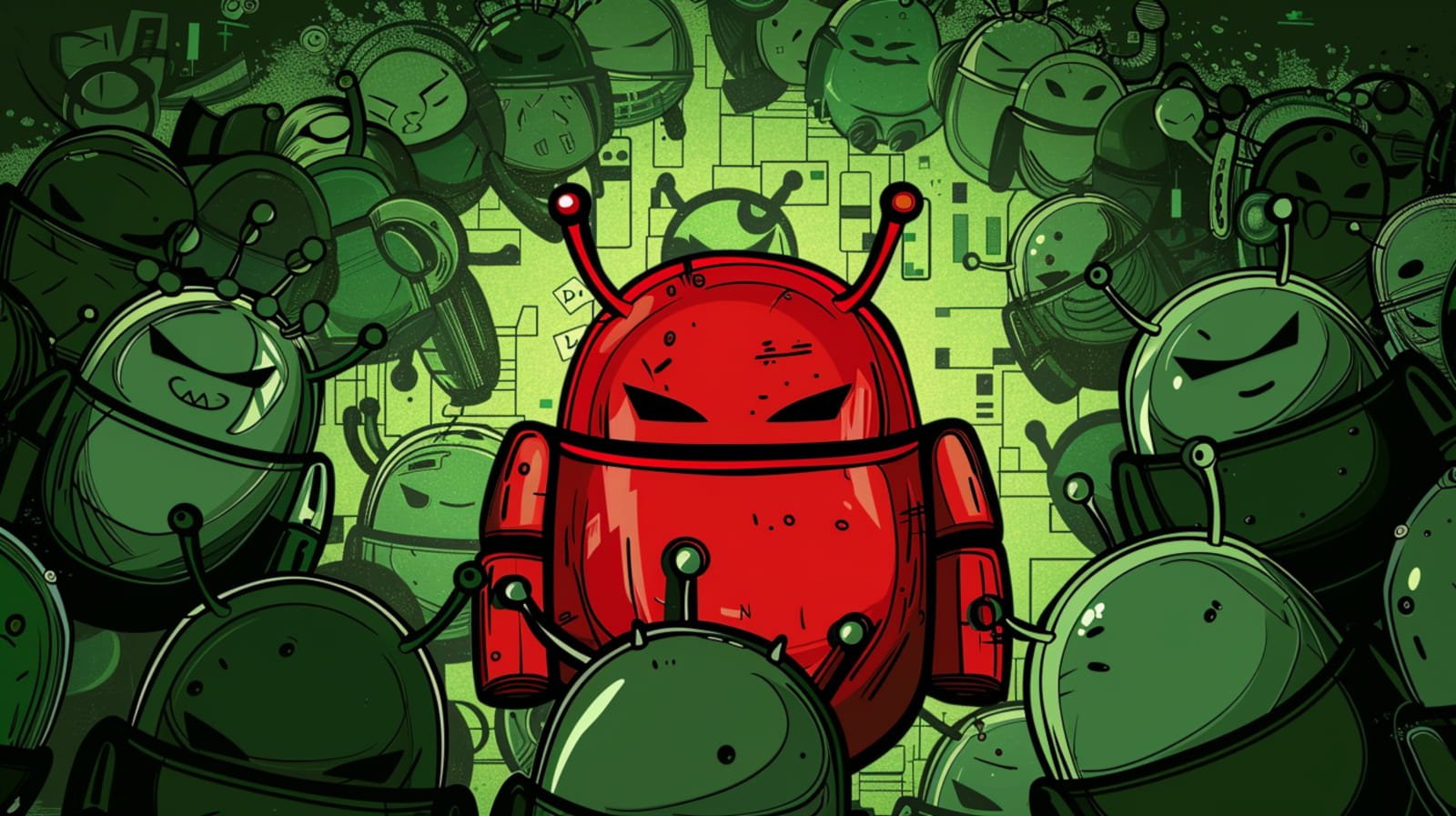
A new family of Android click-fraud trojans leverages TensorFlow machine learning models to automatically detect and interact with specific advertisement elements.
The mechanism relies on visual analysis based on machine learning instead of predefined JavaScript click routines, and does not involve script-based DOM-level interaction like classic click-fraud trojans.
The threat actor is using TensorFlow.js, an open-source library developed by Google for training and deploying machine learning models in JavaScript. It permits running AI models in browsers or on servers using Node.js.
Researchers at mobile security company Dr.Web found that the new family of Android trojans is distributed through GetApps, the official app store for Xiaomi devices.
They discovered that the malware can operate in a mode called 'phantom', which uses a hidden WebView-based embedded browser to load a target page for click-fraud and a JavaScript file. The script's purpose is to automate actions on the ads shown on the loaded site.
After loading the trained model from a remote server, the hidden browser is placed on a virtual screen, and screenshots are taken for TensorFlow.js to analyze and identify relevant elements.
By tapping on the correct UI element, the malware reproduces normal activity from a user. This method is more effective and resilient against modern ad variability, as most of these ads are dynamic, frequently change structure, and often use iframes or video.
A second mode, called 'signalling', uses WebRTC to stream a live video feed of the virtual browser screen to the attackers, allowing them to perform real-time actions like tapping, scrolling, and entering text.
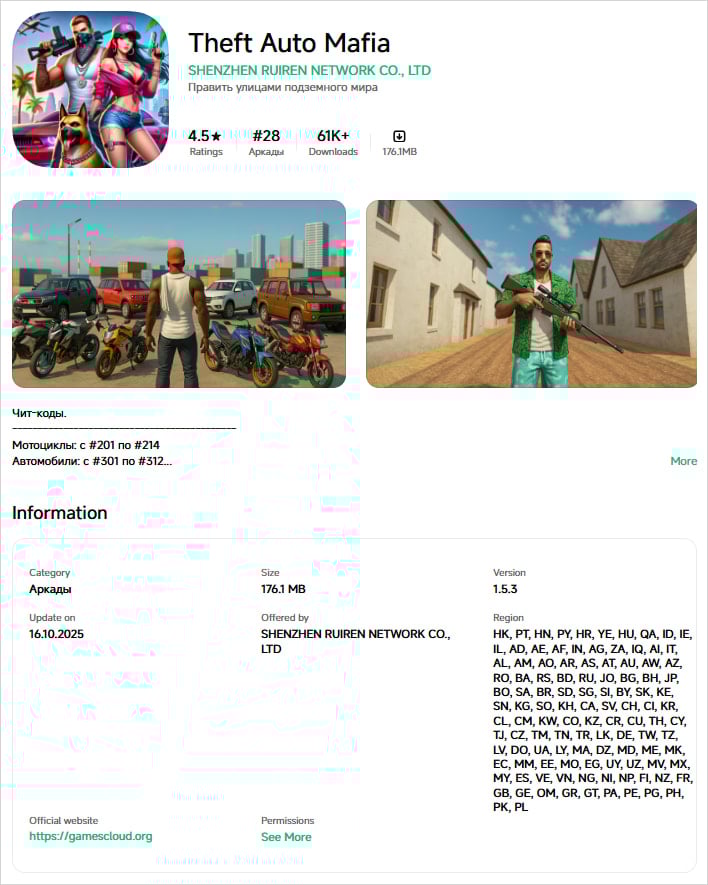
The threat actor distributes the malware in games on Xiaomi’s GetApps software catalogue. Initially, the apps are submitted without malicious functionality and receive the malicious components in subsequent updates.
Some of the infected games identified by Doctor Web are:
- Theft Auto Mafia — 61,000 downloads
- Cute Pet House — 34,000 downloads
- Creation Magic World — 32,000 downloads
- Amazing Unicorn Party — 13,000 downloads
- Open World Gangsters — 11,000 downloads
- Sakura Dream Academy — 4,000 downloads
Source: Doctor Web
In addition to the Xiaomi-hosted apps, the trojans are distributed via third-party APK sites (e.g., Apkmody and Moddroid, altered versions, the so-called mods, of the original Spotify, YouTube, Deezer, and Netflix apps.
The researchers say that most apps on Moddroid’s “Editor’s Choice” page are infected.
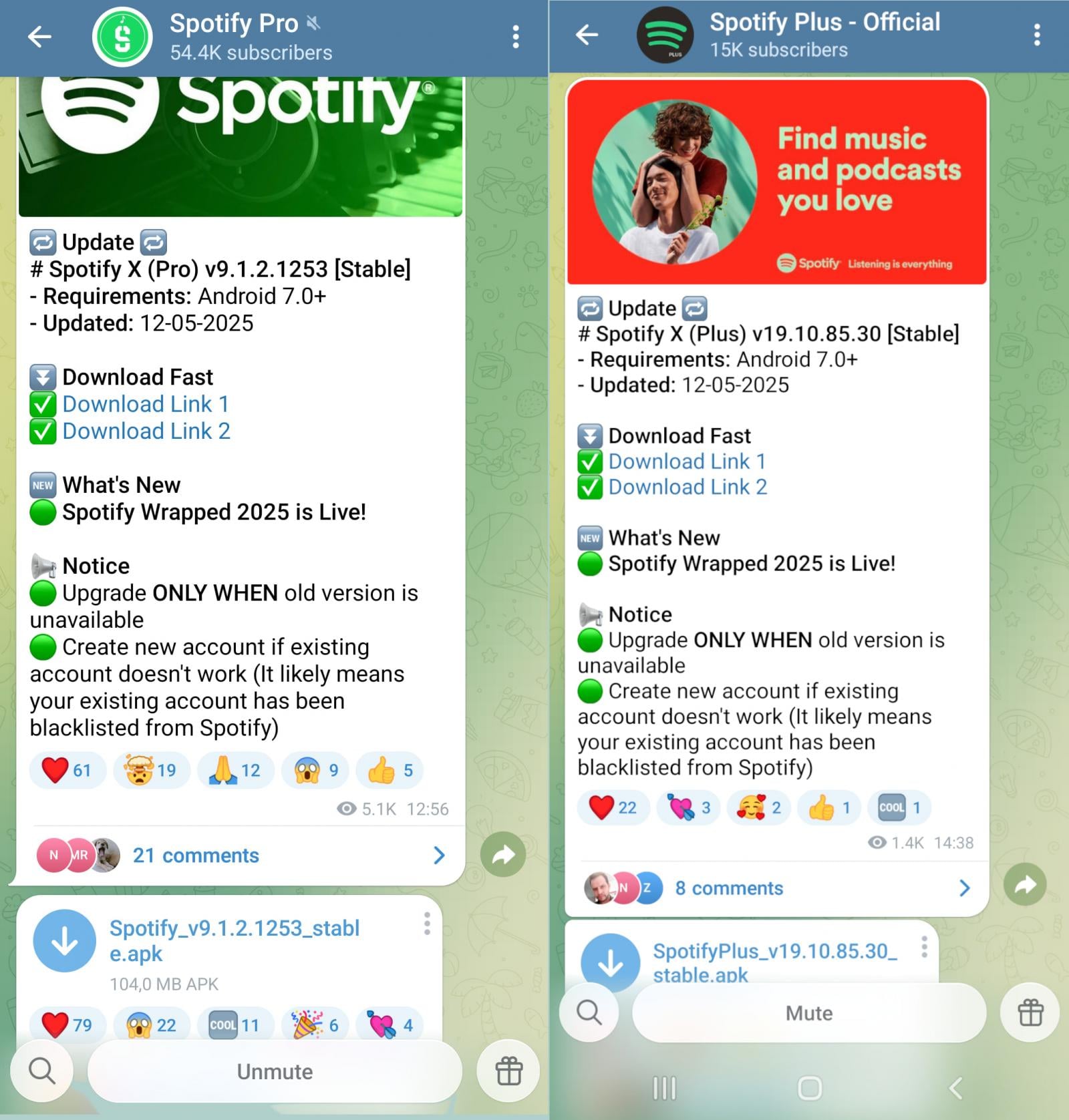
Infected APK files are also distributed through Telegram channels, some app examples including Spotify Pro, Spotify Plus – Official, Moddroid.com, and Apkmody Chat.
Source: Doctor Web
Dr.Web also found a Discord server with 24,000 subscribers pushing an infected app called Spotify X.
The researchers note that at least some of these apps "actually work," which reduces users’ suspicion. Combined with the fact that click fraud is executed covertly in a hidden WebView rendering content on a virtual screen, this means that the victims will see no indication of the malicious activity.
Although clickjacking and ad fraud aren’t immediate threats to the user’s privacy and data, they are a lucrative cybercriminal activity. The direct impact on the user is battery drainage and premature degradation, and increased mobile data charges.
Android users are advised to avoid installing apps outside Google Play, especially alternative versions for popular apps that promise extra features or free access to premium subscriptions.
The 2026 CISO Budget Benchmark
It's budget season! Over 300 CISOs and security leaders have shared how they're planning, spending, and prioritizing for the year ahead. This report compiles their insights, allowing readers to benchmark strategies, identify emerging trends, and compare their priorities as they head into 2026.
Learn how top leaders are turning investment into measurable impact.
如有侵权请联系:admin#unsafe.sh