好的,我现在需要帮用户总结这篇文章的内容,控制在100字以内,而且不需要用“文章内容总结”或“这篇文章”这样的开头。直接写文章的描述即可。 首先,我仔细阅读了用户提供的文章。这篇文章主要讨论了HIPAA合规软件的发展趋势、重要性以及推荐的解决方案。文章提到,合规软件已经从定期准备转变为持续运营,大型组织更注重维护而不是证明合规。风险、证据、培训和供应商监督现在被视为一个整体工作流程。工具选择反映了组织复杂性,而不仅仅是监管要求。 接下来,文章提到了医疗数据泄露的成本高昂,监管机构加强了要求,如多因素认证、加密和年度审计。小型诊所可能只需要基本工具,但大型组织需要更强大的系统。最佳的HIPAA解决方案包括自动化证据收集、风险管理、员工培训跟踪、供应商协议管理以及与EHR或HR软件集成。 然后,文章列出了10个推荐的平台,并简要介绍了每个平台的特点和优缺点。最后,文章讨论了未来的趋势,如AI在合规中的应用、安全飞地和零信任访问控制、供应商风险管理以及统一审计。 总结时,我需要抓住几个关键点:HIPAA合规软件的重要性及其发展变化;医疗数据泄露的成本;推荐的解决方案及其功能;未来的趋势。同时要确保语言简洁明了,控制在100字以内。 现在开始组织语言: 首先提到HIPAA合规软件的发展变化:从定期准备到持续运营。 然后提到医疗数据泄露的成本高昂。 接着说明解决方案的功能:自动化证据收集、风险管理等。 最后提到未来的趋势:AI应用和零信任访问等。 组合起来: “本文探讨了HIPAA合规软件的发展趋势及其重要性。随着医疗数据泄露成本上升至742万美元/次,合规需求日益迫切。推荐解决方案包括自动化证据收集、风险与事件管理、员工培训追踪及供应商协议管理等功能。未来趋势将涉及AI驱动的政策制定与异常检测,以及零信任访问控制。” 检查字数是否在100字以内,并确保没有使用禁止的开头语句。 </think> 本文探讨了HIPAA合规软件的发展趋势及其重要性。随着医疗数据泄露成本上升至742万美元/次,合规需求日益迫切。推荐解决方案包括自动化证据收集、风险与事件管理、员工培训追踪及供应商协议管理等功能。未来趋势将涉及AI驱动的政策制定与异常检测,以及零信任访问控制。 2026-1-19 22:45:10 Author: securityboulevard.com(查看原文) 阅读量:0 收藏
Key Takeaways
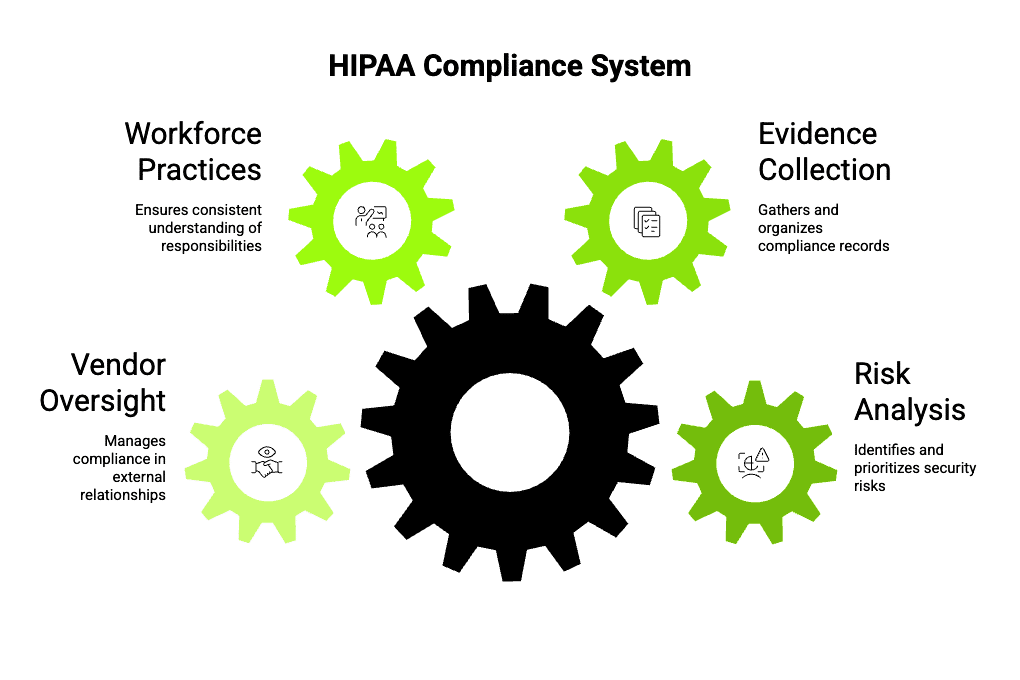
- HIPAA compliance software has moved from periodic preparation to continuous operation.
- Larger organizations are spending less time proving compliance and more time maintaining it.
- Risk, evidence, training, and vendor oversight are increasingly treated as a single workflow.
- Tooling choices now reflect organizational complexity, not just regulatory requirements.
Healthcare breaches have cost an eye‑watering $7.42 million per incident in 2025, and it’s not surprising that regulators are dialing up new requirements like multi‑factor authentication, encryption for all ePHI, and yearly audits.
Small practices may be able to get by with basic tools, but larger organizations need more robust systems. The best HIPAA compliance solutions automate evidence collection, streamline risk and incident management, track employee training, manage vendor agreements, and integrate with your electronic health record (EHR) or HR software. Some platforms also support additional frameworks like SOC 2 or ISO 27001 for organizations that need to comply with several regulatory frameworks.
What makes a great HIPAA compliance platform?
In curating this list, we looked for platforms that do more than ship a binder of policies and fillable checklists. We looked for HIPAA-compliant software development tools that:
- Automate risk and incident management: Ongoing risk analysis and real‑time alerts help you respond to issues before they become fines.
- Streamline evidence collection and reporting: Dashboards and immutable audit trails take the pain out of documenting compliance.
- Support employee training and policy management: Good platforms include training modules, policy templates, and mechanisms to track completion.
- Manage vendors and BAAs: Business associate agreements and third‑party oversight are critical parts of HIPAA; integrated vendor management reduces blind spots.
With that in mind, here are ten platforms worth considering.
1. Centraleyes
Centraleyes feels like a Swiss Army knife for governance, risk, and compliance (GRC). Its risk register automatically tags risks and links them to specific controls across your organization; if you need to manage other frameworks beyond HIPAA, the tool can map those controls too. Rather than juggling multiple spreadsheets, you get a single dashboard that shows which controls are working and where the gaps are. Users love the no‑code deployment and quick onboarding
What you’ll like: Integrated risk register with financial impact calculations; automated remediation workflows; and a long list of highly useful integrations.
2. Hyperproof
Hyperproof offers an out‑of‑the‑box HIPAA template with recommended controls and security actions. Its Jumpstart feature is a time saver: map your existing HIPAA controls to other frameworks (ISO 27001, NIST CSF, SOC 2) instead of reinventing the wheel. The platform also automates evidence collection, centralizes risk and vendor management and keeps tasks on track. Customers credit Hyperproof with making multi‑framework programs feel manageable.
What you may like: Easy mapping of controls; one place to manage risks, vendors and tasks; robust integrations.
Heads‑up: It’s built for enterprise scale, so smaller clinics may find it more than they need.
3. Vanta
Vanta brings compliance automation down to earth. It supplies a pre‑built HIPAA framework (with optional support for standards like SOC 2 and ISO 27001) and automates about 85 % of evidence collection. With integrations for cloud services and HR systems, Vanta continuously monitors your controls. Its dashboards show at a glance where you stand, and policy builders help you craft HIPAA‑compliant software rules without starting from scratch.
What you’ll like: A deep integration library; significant automation; simple dashboards and policy templates.
Heads‑up: Vanta isn’t exclusively healthcare‑focused, so some HIPAA details may require extra customization.
4. Scytale
Scytale is all about minimizing the drudge work. It automates evidence collection, continuous control monitoring and real‑time alerts for HIPAA and, if you need them, other standards. Customers report it can cut the time to become audit‑ready by 90 %. For organizations juggling more than HIPAA, the platform can map controls to other standards; reviewers give it high marks for scaling with startups and mid‑market firms.
What you’ll like: Massive time savings; control mapping across standards (for those who need it); real‑time alerts.
Heads‑up: Large enterprises with complex legacy systems may need something more robust.
5. Drata
Drata stands out for continuous monitoring of your entire tech stack. It integrates with over 200 systems, giving real‑time insights into compliance status. Drata also automates evidence collection, offers built‑in HIPAA training modules and generates real‑time security reports. The platform is widely praised for its intuitive interface; just remember it was built on a SOC 2 foundation, so double‑check that HIPAA‑specific safeguards are configured correctly.
What you’ll like: Huge integration library; continuous monitoring; automated training and evidence collection.
Heads‑up: Plan extra time to tweak HIPAA settings so they align with your workflow.
6. Scrut Automation
Scrut Automation provides a single control library that covers HIPAA requirements and can extend to other standards if needed. It automatically gathers evidence from over 70 cloud services, monitors your security posture in real time, and includes vendor risk management and policy automation tools. The dashboard shows at a glance which controls are passing or failing, and its real‑time alerts keep you ahead of auditors. Fast‑growing healthcare SaaS firms and mid‑sized providers rave about the platform’s scalability.
What you’ll like: A single control library that can cover multiple compliance areas; built‑in vendor and policy management; strong automation.
Heads‑up: The pricing and feature set are geared toward mid‑sized or rapidly scaling teams; very small organizations may find it excessive.
7. ComplyAssistant
ComplyAssistant is built specifically for healthcare providers and managed service providers. It wraps policy management, risk analysis, incident tracking, vendor management, task/project management and dashboards into one package. The software automatically collects evidence and offers step‑by‑step guides for compliance tasks. Cape Regional Medical Center credited the platform’s centralized documentation and dashboards with making its compliance process efficient.
What you’ll like: A healthcare‑tailored, all‑in‑one platform; strong risk and incident management; clear dashboards and reports.
Heads‑up: Expect a learning curve.
8. Medcurity
Medcurity brings collaboration to risk analysis. Its enterprise‑grade platform supports role‑based views, so executives, IT and compliance officers can work off the same data. Risk calculations align with NIST standards and generate reports that satisfy OCR audits. Asset inventories, policy management and training modules round out the toolset.
What you’ll like: NIST‑aligned risk assessments; collaborative dashboards; OCR‑ready reports.
Heads‑up: Priced and designed for mid‑ to large‑sized organizations, so small clinics might find it too complex.
9. Healthicity Compliance Manager
Healthicity’s Compliance Manager unifies incident management, risk assessment, policy templates, employee training and vendor oversight. It integrates with your EHR and HR systems so you can log and monitor compliance tasks in one place. Training modules are trackable, and the platform keeps a detailed audit trail.
What you’ll like: Consolidated compliance functions; integration with existing systems; built‑in training.
Heads‑up: Setup and ongoing costs can be a hurdle for small teams.
10. Secureframe
Secureframe offers pre‑built policy templates, automated evidence collection, and training modules that make it approachable for smaller teams. While HIPAA is its primary focus, the platform can also support SOC 2, ISO 27001, and other frameworks as your organization grows. Integrations with cloud services, HR systems, and identity providers provide continuous monitoring, and the user‑friendly design makes becoming audit‑ready far less daunting.
What you’ll like: Easy‑to‑use templates; automation that frees up your team; optional support for additional frameworks at sensible pricing.
Heads‑up: If you have lots of legacy systems or need heavy customization, you may eventually outgrow Secureframe.
Emerging trends to watch in 2026
- AI on the compliance team: Vendors are increasingly integrating AI to draft policies, surface anomalies, and suggest remediations. Treat these helpers as interns rather than sages: they save time but need human oversight.
- Secure enclaves and zero‑trust: Regulators are pushing beyond encryption to encourage secure enclave technology and zero‑trust access controls. This means isolating sensitive workloads from personal apps and verifying users continuously.
- Vendor risk on steroids: Business Associate Agreements are still the weakest link. Automating vendor questionnaires, monitoring third‑party controls and tracking renewals can save you from nasty surprises.
- Unified audits: As HIPAA rules converge with other standards, expect auditors to test multiple compliance requirements at once. Platforms with dashboards that support different frameworks can make these unified audits far less stressful.
FAQs
What triggers organizations to re-evaluate their HIPAA tooling?
It’s rarely regulation alone. Re-evaluation usually happens after growth, a near-miss incident, a difficult audit, or increased vendor exposure. These moments tend to surface how fragmented existing processes have become.
How often should HIPAA risk analysis be updated?
There’s no fixed cadence in the regulation, but in practice, meaningful updates usually follow material changes: new systems, new vendors, organizational restructuring, or security events. Annual updates without context often fall short of expectations.
Where do HIPAA programs most often break down at scale?
Breakdowns tend to occur at handoffs: between IT and compliance, between internal teams and vendors, or between documentation and actual practice. These gaps often stay hidden until an audit or incident brings them into focus.
How do audits differ for larger organizations compared to smaller ones?
Larger organizations are more likely to be evaluated on consistency across departments, vendor governance, and evidence traceability. Audits become less about individual controls and more about whether the program functions as a system.
The post Top 10 HIPAA Compliance Software Solutions appeared first on Centraleyes.
*** This is a Security Bloggers Network syndicated blog from Centraleyes authored by Rebecca Kappel. Read the original post at: https://www.centraleyes.com/top-10-hipaa-compliance-software-solutions/
如有侵权请联系:admin#unsafe.sh