嗯,用户让我用中文帮他总结一下这篇文章的内容,控制在一百个字以内,而且不需要以“文章内容总结”或“这篇文章”这样的开头,直接写描述即可。好的,首先我得仔细阅读这篇文章,理解它的主要观点。 文章主要讲的是2026年电子邮件自动化如何重塑客户的购买旅程。里面提到了AI驱动的个性化、自动化线索培育、优化发送时间、可扩展的个性化以及频率控制这几个关键点。还有客户旅程的五个阶段:意识、考虑、决策、保留和拥护。 接下来,我需要把这些信息浓缩到100字以内。首先确定主题:电子邮件自动化重塑客户旅程。然后列出关键点:AI驱动的个性化、自动化线索培育、优化发送时间、可扩展性、频率控制。最后提到未来趋势,比如互动式邮件格式和AI算法的提升。 现在把这些点连贯地组织起来,确保不超过字数限制。可能需要简化一些术语,比如“自动化线索培育”可以简称为“自动化的线索培养”。同时要确保逻辑清晰,让读者一目了然。 最后检查一下是否符合用户的要求:中文总结,100字以内,没有特定的开头。确认无误后就可以提交了。 </think> 文章探讨了2026年电子邮件自动化如何通过AI驱动的个性化、自动化的线索培养、优化发送时间及可扩展性重塑客户旅程,并减少过度发送邮件的问题。未来趋势包括更多互动式邮件格式和更智能的AI算法预测用户行为。 2026-1-19 08:27:1 Author: securityboulevard.com(查看原文) 阅读量:0 收藏
Key Takeaways
- AI-driven personalization will replace generic campaigns, using real customer behaviors to tailor messaging across the journey.
- Automated lead nurturing will push prospects faster from awareness to purchase while strengthening retention and advocacy.
- Optimized send-times powered by analytics will improve open rates and conversions by delivering emails when users are most active.
- Scalable personalization will enable businesses to deliver relevant experiences to large audiences without growing team size.
- Frequency control through automation will reduce unsubscribes by adapting email volume to subscriber preferences.
In 2026, businesses that want to succeed can no longer send ‘one-size-fits-all’ email campaigns to their entire contact list or segment consumers by simple demographics such as gender, age, or location. In fact, data shows that 71% of consumers expect businesses to deliver personalized interactions.
Innovative email automation tools, driven by artificial intelligence (AI), can segment consumers based on their actions and inactions, such as clicking a link, searching for a product, leaving a website, or walking into a store. This ensures that your prospects receive personalized email campaigns that align with their interests, buyer behaviours, and preferences.
Common automated email campaigns include personalized welcome emails that greet new subscribers by name, order confirmations, shipping notifications that keep customers updated, abandoned cart reminders that drive sales recovery, and re-engagement emails to reconnect with inactive subscribers.
Not only does email automation free up time for more valuable business tasks, like customer service, but it’s also a strategy that can reshape a customer’s buying journey.
This article will dive into customer journeys and how they are being reshaped by email automation.
What Is The Customer Journey And Why Is It Important?
All the experiences a person has with a business, from the initial awareness stage to post-purchase advocacy, are part of the customer journey. Not every customer journey is linear or follows the same order, but there are five generic stages to the customer journey, including:
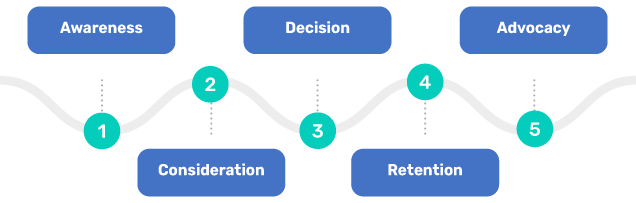
- Awareness: This is the initial stage when a prospect becomes passively or proactively aware of your business. Customers become passively aware by seeing an advertisement or sponsored social media post, or become proactively aware by conducting a search that brings your website to the top of their search engine results pages (SERPs).
- Consideration: During this stage, the prospect would consider why they should buy your products or services rather than your competitors’. This may involve checking online reviews, browsing your social media, or asking trusted friends or colleagues what they know about your business.
- Decision: In this stage, the individual goes from being a potential customer to a customer. They decided to make a purchase based on the information they have and deemed your business to meet their needs. Depending on the perceived importance and value of the purchase, it can take a long time to reach this phase.
- Retention: The retention stage focuses on keeping your customers happy and engaged after they receive their purchase, through excellent customer service and relevant email campaigns. Your interactions in this stage will convince customers to make repeat purchases, increasing loyalty.
- Advocacy: In the final stage, you want your customers to become advocates for your business (and free marketing material). If you have exceeded their expectations in the early stages of their customer journey, they will voluntarily talk about your business to their colleagues, family, and friends. Not all customers will reach this stage, but loyalty programs and referral schemes can ensure many of them become loyal advocates for your business.
Mapping a customer’s journey is important because it helps businesses understand where a customer is in their buying journey and target them accordingly. For example, when a prospect is in the consideration stage, you should send them email campaigns that show why they should choose your products or services over competitors’.
Email campaigns that appeal to the current interests and needs of prospects or customers are more likely to keep them engaged, which in turn drives conversions and fosters loyalty.
4 Ways Email Automation Will Reshape The Customer Journey In 2026

1. Automated lead nurturing
Nurturing your leads is a great way to reshape the customer journey, shooting a prospect straight from the awareness stage (after signing up for your newsletter) to the retention stage (buying from you time and time again).
However, depending on the industry you are in, there are many different ways to nurture your leads. For example, eCommerce and retail businesses may send automated emails to promote their products, offer discounts, or remind customers about abandoned carts. This can take a prospect from the awareness stage of their journey straight to the decision stage. In addition, continued post-purchase nurturing can increase loyalty and advocacy.
Meanwhile, Business-to-Business (B2B) and Software as a Service (SaaS) providers can use automation to send a welcome email to any new clients or leads who have filled in the contact form on their website. This welcome email might ask them if they want to schedule a follow-up call or watch a video explaining how to use the service, which will nurture the relationship from the get-go and later boost brand loyalty and advocacy.
A good example of an email marketing platform that can help you segment and nurture your leads in Hostinger Reach. Its AI-powered engine helps you segment your contacts, build emails in seconds, and set up effective automations.
2. Emails received at the right time
Sending an email at the right time is critical for reshaping a customer’s journey with your business. Luckily, email automation tools take responsibility for analyzing your email metrics, such as open rate, click-through rate (CTR), conversion rate, bounce rate, and unsubscribe rate, and scheduling your campaigns.
For example, if metrics show your open rate is at its highest between 10 am and 11 am, then your chosen email automation tool can schedule your personalized campaigns to send during this time. You don’t need to be near your computer or even at work.
3. Scalable and adaptable
As technology advances and email inboxes become more competitive, businesses must be able to offer all prospects (leads) and customers a personalized experience, regardless of how large their email list grows. You can’t help customers take the next step in their buying journey if you have forgotten about them.
With smart email automation tools, businesses can send personalized emails to millions of customers without needing a large marketing department. This makes it easy to scale and adapt your email marketing campaign as the business expands and your customer base grows.
4. No-over sending
One of the main reasons people unsubscribe from an email list is that they receive emails too frequently. Even subscribers who express a genuine interest in your business will unsubscribe if they perceive your email frequency is overwhelming or annoying.
Consider using the welcome email to thank the subscriber for joining and let them know how often they’ll hear from you via email. In addition, focus on the quality and personalization of your email campaigns rather than the quantity.
Smart email automation tools use data and analytics to understand how much is too much for each subscriber. Sending each subscriber a set of emails at their preferred frequency ensures they can continue their customer journey without becoming annoyed by your campaigns and unsubscribing.
The Future Of Email Automation
Research shows that over 80% of businesses now rely on email marketing automation. We can expect this number to grow as new technologies, changing customer habits, and stricter privacy rules shape email automation. Here are some key points to consider about the future of email automation:
- The most successful email campaigns aren’t text-heavy, and we are likely to see more interactive email formats emerge, allowing consumers to play short games, complete surveys or quizzes, and shop for products without leaving their inbox.
- AI algorithms are likely to get faster and smarter at predicting user behaviours and optimizing send times.
- As third-party cookies phase out, email automation tools will leverage zero-party data (information users willingly share) and first-party data (behavioral data from owned platforms) to gain consumer information.
For many years, email marketing has helped businesses engage their prospects and customers. With the rise of AI and automation, it’s a no-brainer that businesses will welcome an email automation strategy that maintains consistent and personalized communication, reduces manual work, and reshapes the customer journey.
*** This is a Security Bloggers Network syndicated blog from PowerDMARC authored by Milena Baghdasaryan. Read the original post at: https://powerdmarc.com/email-automation-customer-journey/
如有侵权请联系:admin#unsafe.sh