
好的,我现在需要帮用户总结一篇文章的内容,控制在100个字以内。首先,我得仔细阅读用户提供的文章内容,理解其主要观点和关键信息。 文章主要讨论了AI在网络安全中的应用变化。过去,网络安全专业人士对AI持怀疑态度,但现在他们已经成为AI的积极使用者。超过90%的专业人士正在测试或计划使用AI来应对网络威胁。此外,文章还提到数据安全需要进行AI方面的改革,以应对新的风险如提示注入、模型反转和多模态数据泄露。PwC预测2026年企业将更认真地对待负责任的AI使用,而NCSC则指出提示注入与SQL注入不同,需要持续的风险管理。 接下来,我需要将这些要点浓缩成100字以内的总结。要确保涵盖主要变化、数据安全的挑战、未来的趋势以及提示注入的问题。 可能会这样组织:网络安全专家转向AI应用,数据安全需改革应对新风险如提示注入;2026年企业将更重视负责任的AI使用;提示注入不同于SQL注入,需持续管理。 现在检查字数是否在限制内,并确保信息准确无误。 </think> 网络安全专家转向AI应用以应对威胁,数据安全需改革应对新风险;2026年企业将更重视负责任的AI使用;提示注入不同于SQL注入,需持续管理。 2025-12-19 14:0:0 Author: www.tenable.com(查看原文) 阅读量:32 收藏
Formerly “AI shy” cyber pros have done a 180 and become AI power users, as AI forces data security changes, the CSA says. Plus, PwC predicts orgs will get serious about responsible AI usage in 2026, while the NCSC states that, no, prompt injection isn’t the new SQL injection. And much more!
Key takeaways
- Cyber pros have pivoted to AI: Formerly AI-reluctant, cybersecurity teams have rapidly become enthusiastic power users, with over 90% of surveyed professionals now testing or planning to use AI to combat cyber threats.
- Data security requires an AI overhaul: The Cloud Security Alliance warns that traditional data security pillars require a "refresh" to address unique AI risks such as prompt injection, model inversion, and multi-modal data leakage.
- Prompt injection isn't a quick fix: Unlike SQL injection, which can be solved with secure coding, prompt injection exploits the fundamental "confusability" of LLMs and requires ongoing risk management rather than a simple patch.
Here are five things you need to know for the week ending December 19.
1 - CSA-Google study: Cyber teams heart AI security tools
Who woulda thunk it?
Once seen as artificial intelligence (AI) laggards, cybersecurity teams have become their organizations’ most enthusiastic AI users.
That’s one of the key findings from “The State of AI Security and Governance Survey Report” from the Cloud Security Alliance (CSA) and Google Cloud, published this week.
“AI in security has reached an inflection point. After years of being cautious followers, security teams are now among the earliest adopters of AI, demonstrating both curiosity and confidence,” the report reads.
Specifically, more than 90% of respondents are assessing how AI can enhance detection, investigation, or response processes by either already testing AI security capabilities (48%), or planning to do so within the next year (44%).
“This proactive posture not only improves defensive capabilities but also reshapes the role of security — from a function that reacts to new technologies, to one that helps lead and shape how they are safely deployed,” the report adds.

(Source: “The State of AI Security and Governance Survey Report” from the Cloud Security Alliance (CSA) and Google Cloud, December 2025)
Here are more findings from the report, which is based on a global survey of 300 IT and security professionals:
- Governance maturity begets AI readiness and innovation: Organizations with comprehensive policies are nearly twice as likely to adopt agentic AI (46%) than those with partial guidelines or in-development policies.
- The "Big Four" dominate: The AI landscape is consolidated around a few major players: OpenAI’s GPT (70%), Google’s Gemini (48%), Anthropic’s Claude (29%) and Meta’s LLaMa (20%).
- There’s a confidence gap: While 70% of executives say they are aware of AI security implications, 73% remain neutral or lack confidence in their organization's ability to execute a security strategy.
- Organizations’ AI security priorities are misplaced: Respondents cite data exposure (52%) as their top concern, often overlooking AI-specific threats like model integrity (12%) and data poisoning (10%).
“This year’s survey confirms that organizations are shifting from experimentation to meaningful operational use. What’s most notable throughout this process is the heightened awareness that now accompanies the pace of [AI] deployment,” Hillary Baron, the CSA’s Senior Technical Research Director, said in a statement.
Recommendations from the report include:
- Expand your AI governance using AI-specific industry frameworks, and complement these efforts with independent assessments and advisory services.
- Boost your AI cybersecurity skills through training, upskilling, and cross-team collaboration.
- Adopt secure-by-design principles when developing AI systems.
- Track key AI metrics for things such as AI incidents, training completion rates, AI systems under governance, and AI projects reviewed for risk and threats.
“Strong governance is how you create stability in the face of rapid change. It’s how you ensure AI accelerates the business rather than putting it at risk,” reads a CSA blog.
For more information about using AI for cybersecurity:
- “How AI is becoming a powerful tool for offensive cybersecurity practitioners” (CSO)
- “How has generative AI affected cybersecurity?” (TechTarget)
- “GenAI use cases rising rapidly for cybersecurity — but concerns remain” (CSO)
- “How AI Can Boost Your Cybersecurity Program” (Tenable)
- “How AI threat detection is transforming enterprise cybersecurity” (TechTarget)
2 - CSA: You need new data security controls in AI environments
Do the classic pillars of data security – confidentiality, integrity and availability – still hold up in the age of generative AI? According to a new white paper from the Cloud Security Alliance (CSA), they remain essential, but they require a significant overhaul to survive the unique pressures of modern AI.
The paper, titled “Data Security within AI Environments,” maps existing security controls to the AI data lifecycle and identifies critical gaps where current safeguards fall short. It argues that the rise of agentic AI and multi-modal systems creates attack vectors that traditional perimeter security simply cannot address.
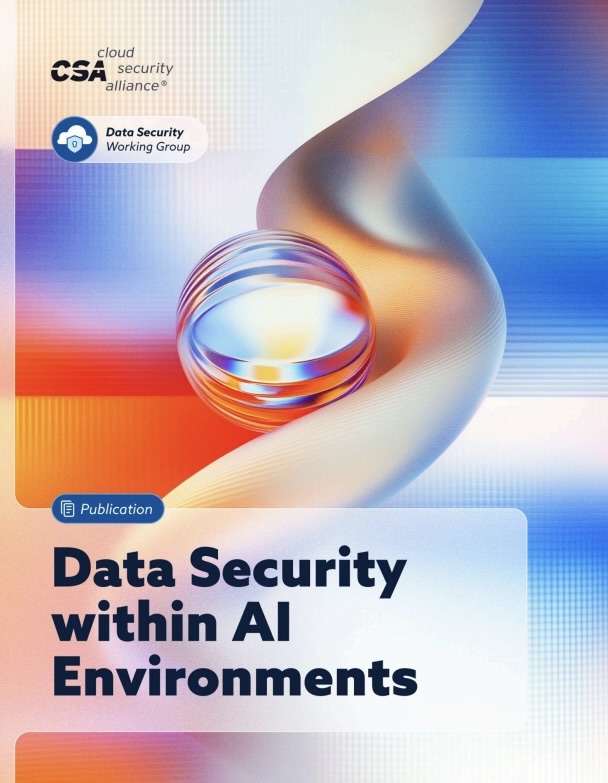
Here are a few key takeaways and recommendations from the report:
- New controls proposed: The CSA suggests adding four new controls to its AI Controls Matrix (AICM) to specifically address prompt injection defense; model inversion and membership inference protection; federated learning governance; and shadow AI detection.
- Multi-modal risks: Systems that process text, images and audio simultaneously introduce "unprecedented cross-modal data leakage risks," where information from one modality can inadvertently expose sensitive data from another. The CSA suggests enforcing clear standards and isolation controls to prevent such cross-modal leaks.
- Third-party guardrails: As regulatory scrutiny increases, organizations must adopt enforceable policies, such as data tagging and contractual safeguards, to ensure proprietary client data is not used to train third-party models.
- Dynamic defense: Because AI threats evolve rapidly, static measures are insufficient. The report recommends establishing a peer review cycle every 6 to 12 months to reassess safeguards.
"The foundational principles of data security—confidentiality, integrity, and availability—remain essential, but they must be applied differently in modern AI systems," reads the report.
For more information about securing data in AI systems:
- “Best Practices for Securing Data Used to Train & Operate AI Systems” (CISA)
- “Harden Your Cloud Security Posture by Protecting Your Cloud Data and AI Resources” (Tenable)
- “Data security is critical for professional-grade AI” (Thomson Reuters)
- “AI agents expose data, security & skills bottlenecks” (IT Brief)
- “Know Your Exposure: Is Your Cloud Data Secure in the Age of AI?” (Tenable)
3 - PwC: Responsible AI will gain traction in 2026
Is your organization still treating responsible AI usage as a compliance checkbox, or are you leveraging it to drive growth?
A new prediction from PwC suggests that 2026 will be the year companies finally stop just talking about responsible AI and start making it work for their bottom line.
In its “2026 AI Business Predictions,” PwC forecasts that responsible AI is moving "from talk to traction." This shift is being driven not just by regulatory pressure, but by the realization that governance delivers tangible business value. In fact, almost 60% of executives in PwC's “2025 Responsible AI Survey” reported that their investments in this area are already boosting return on investment (ROI).

To capitalize on this trend, PwC advises organizations to stop treating AI governance as a siloed function, and to instead take steps including:
- Integrate early: Bring IT, risk and AI specialists together from the start of the project lifecycle.
- Automate oversight: Explore new technical capabilities that can operationalize testing and monitoring.
- Add assurance: For high-risk or high-value systems, independent assessments may be critical for managing performance and risk.
“2026 could be the year when companies overcome this challenge and roll out repeatable, rigorous responsible AI practices,” the report states.
For more information about secure and responsible AI use, check out these Tenable resources:
- “Security for AI: How Shadow AI, Platform Risks, and Data Leakage Leave Your Organization Exposed” (blog)
- “Securing the Future of AI in Your Enterprise” (on-demand webinar)
- “How Rapid AI Adoption Is Creating an Exposure Gap” (blog)
- “Security for AI: A Practical Guide to Enforcing Your AI Acceptable Use Policy” (blog)
- “The State of Cloud and AI Security 2025” (research report)
4 - Report: Ransomware victims paid $2.1B from 2022 to 2024
If you thought ransomware activity felt explosive in recent years, the U.S. Treasury Department has the receipts to prove you right.
Ransomware skyrocketed between 2022 and 2024, a three-year period in which incidents and ransom payments grew exponentially compared with the previous nine years.
The finding comes from the U.S. Financial Crimes Enforcement Network (FinCEN) report titled “Ransomware Trends in Bank Secrecy Act Data Between 2022 and 2024.”
Between January 2022 and December 2024, FinCEN received almost 7,400 reports tied to almost 4,200 ransomware incidents totaling more than $2.1 billion in ransomware payments.
By contrast, during the previous nine-year period – 2013 through 2021 – FinCEN received 3,075 reports totaling approximately $2.4 billion in ransomware payments.
The report is based on Bank Secrecy Act (BSA) data submitted by financial institutions to FinCEN, which is part of the U.S. Treasury Department.

(Source: U.S. Financial Crimes Enforcement Network (FinCEN) report titled “Ransomware Trends in Bank Secrecy Act Data Between 2022 and 2024,” December 2025)
Here are a few key findings from the report:
- Record-breaking 2023: Ransomware incidents and payments peaked in 2023, with 1,512 incidents and about $1.1 billion, a dollar amount increase of 77% from 2022.
- Slight dip, still high: While 2024 saw a slight decrease to 1,476 incidents and $734 million in payments, it remained the third-highest yearly total on record.
- Median payment amounts: The median amount of a ransom payment was about $124,000 in 2022; $175,000 in 2023; and $155,250 in 2024.
- Most targeted sectors: The financial services, manufacturing and healthcare industries reported the highest number of incidents and payment amounts.
- Top variants: FinCEN identified 267 unique ransomware variants, with Akira, ALPHV/BlackCat, LockBit, Phobos and Black Basta being the most frequently reported.
- Crypto choice: Bitcoin remains the primary payment method, accounting for 97% of reported transactions, followed distantly by Monero (XMR).
How can organizations better align their financial compliance and cybersecurity operations to combat ransomware? The report emphasizes the importance of integrating financial intelligence with technical defense mechanisms.
FinCEN recommends the following actions for organizations:
- Leverage threat data: Incorporate indicators of compromise (IOCs) from threat data sources into intrusion detection and security alert systems to enable active blocking or reporting.
- Engage law enforcement: Contact federal agencies immediately regarding activity and consult the U.S. Office of Foreign Assets Control (OFAC) to check for sanction nexuses.
- Enhance reporting: When reporting suspicious activity to FinCEN, include specific IOCs such as file hashes, domains and convertible virtual currency (CVC) addresses.
- Update compliance programs: Review anti-money laundering (AML) programs to incorporate red flag indicators associated with ransomware payments.
For more information about current ransomware trends:
- “Ransomware trends targeting storage systems in 2026” (TechTarget)
- “Ransomware keeps widening its reach” (Help Net Security)
- “Ransomware 2025: Lessons from the Past Year and What Lies Ahead” (GovTech)
- “Understanding the Ransomware Ecosystem: From Screen Lockers to Multimillion-Dollar Criminal Enterprise” (Tenable)
- “StopRansomware” (CISA)
5 - NCSC: Don’t conflate SQL injection and prompt injection
SQL injection and prompt injection aren’t interchangeable terms, the U.K.’s cybersecurity agency wants you to know.
In the blog post “Prompt injection is not SQL injection (it may be worse),” the National Cyber Security Centre unpacks the key differences between these two types of cyber attacks, saying that knowing the differences is critical.
“On the face of it, prompt injection can initially feel similar to that well known class of application vulnerability, SQL injection. However, there are crucial differences that if not considered can severely undermine mitigations,” the blog reads.
While both issues involve an attacker mixing malicious "data" with system "instructions," the fundamental architecture of large language models (LLMs) makes prompt injection significantly harder to fix.

The reason is that SQL databases operate on rigid logic where data and commands can be clearly separated via, for example, parameterization. Meanwhile, LLMs operate probabilistically, predicting the "next token" without inherently understanding the difference between a user's input and a developer's instruction.
“Current large language models (LLMs) simply do not enforce a security boundary between instructions and data inside a prompt,” the blog reads.
So how can you mitigate the prompt injection risk? Here are some of the NCSC’s recommendations:
- Developer and organization awareness: Since prompt injection is a relatively new and often misunderstood vulnerability, organizations must ensure developers receive specific training. Security teams should treat it as a residual risk that requires ongoing management through design and operation, rather than relying on a single product to fix it.
- Secure design: Because LLMs are “inherently confusable,” designers should implement deterministic, non-LLM safeguards to constrain system actions. A key principle is to limit the LLM's privileges to match the trust level of the user providing the input.
- Make it harder: While no technique can stop prompt injection entirely, methods such as marking data sections or using XML tags can reduce the likelihood of success. The NCSC warns against relying on “deny-listing” specific phrases, as attackers can easily rephrase inputs to bypass filters.
- Monitor: Organizations should log LLM inputs, outputs and API calls to detect suspicious activity. Monitoring for failed tool calls can help identify attackers who are honing their techniques against the system.
For more information about AI prompt injection attacks:
- “OWASP Top 10 for Large Language Model Applications” (OWASP)
- “Microsoft Copilot Studio Security Risk: How Simple Prompt Injection Leaked Credit Cards and Booked a $0 Trip” (Tenable)
- “Mitigating the risk of prompt injections in browser use” (Anthropic)
- “Detecting AI Security Risks Requires Specialized Tools: Time to Move Beyond DLP and CASB” (Tenable)
- “AI prompt injection gets real — with macros the latest hidden threat” (CSO)

Juan Perez
Senior Content Marketing Manager
Juan has been writing about IT since the mid-1990s, first as a reporter and editor, and now as a content marketer. He spent the bulk of his journalism career at International Data Group’s IDG News Service, a tech news wire service where he held various positions over the years, including Senior Editor and News Editor. His content marketing journey began at Qualys, with stops at Moogsoft and JFrog. As a content marketer, he's helped plan, write and edit the whole gamut of content assets, including blog posts, case studies, e-books, product briefs and white papers, while supporting a wide variety of teams, including product marketing, demand generation, corporate communications, and events.
如有侵权请联系:admin#unsafe.sh