Two weeks ago, I did something brave and slightly foolish: I announced my iOS app, Dogear, on Twitt 2026-9-8 21:26:22 Author: hackernoon.com(查看原文) 阅读量:20 收藏
Two weeks ago, I did something brave and slightly foolish: I announced my iOS app, Dogear, on Twitter/X.
I hit “post” with all the confidence of someone who’d just shipped a product into the world. Then I watched the replies roll in.
The response? Let’s call it… brutally honest.
People weren’t mean; they were just unimpressed. The vibe was less “This is amazing!” and more “Cool idea, but… why would I use this?”
Meanwhile, the app was already under review with Apple. I had a choice:
- Wait for approval, launch something I wasn’t proud of, and hope it magically finds an audience.
- Or pull it, go back to the drawing board, and try to build something people actually want.
I chose option two.
The uncomfortable truth
Here’s what I learned the hard way:
- Announcing early is great.
- Announcing the wrong thing is just expensive.
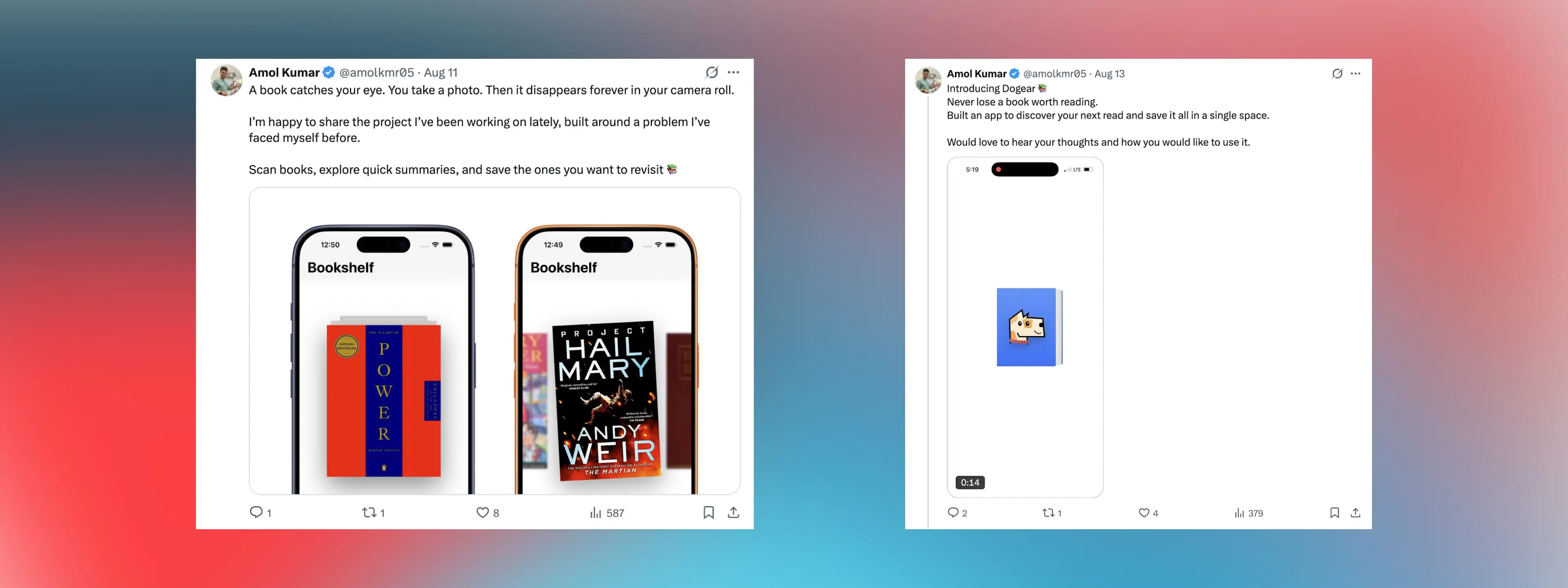 Twitter/X announcement posts
My initial version of Dogear tried to be a book discovery and summarization app. On paper, it sounded smart. In reality, it solved a problem that didn’t feel urgent and one that free AI tools could mostly cover.
I’d jumped straight into building because it felt productive. But what I really needed was to slow down, talk to people, and figure out what problem was worth solving in the first place.
If you’re building something right now, here’s my painful-but-honest advice:
- It’s tempting to start coding or “solving the problem” immediately.
- Trust me: slow down. Do the research. It will save you a ton of time in the long run.
That’s exactly what I did next.
Pulling the app and pivoting
While Dogear was stuck in Apple’s review queue, I did something less glamorous than coding: I talked.
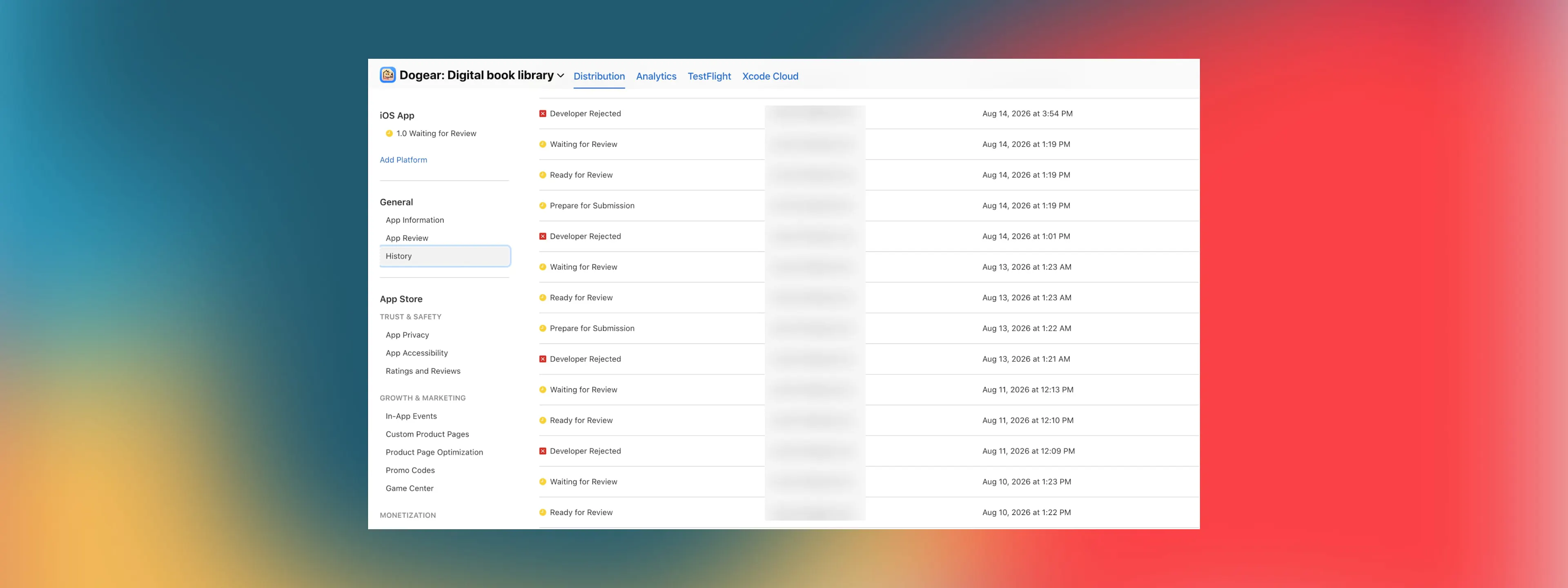 My personal record
I chatted with friends, fellow readers, and people who use productivity apps daily. I asked:
- What do you struggle with when you read?
- What do you wish you could do with your books?
- What would make an app like this indispensable to you?
The pattern was clear:
- People forget most of what they read.
- They don’t have a simple system to capture ideas while reading.
- They want their notes and quotes to actually resurface, not disappear into a graveyard of apps.
So I made a call: I pulled Dogear from review, pivoted the concept, and started rebuilding from scratch.
Now, the new version is resubmitted to the App Store and waiting for approval.
What Dogear is now
Dogear is no longer trying to be a generic book discovery tool.
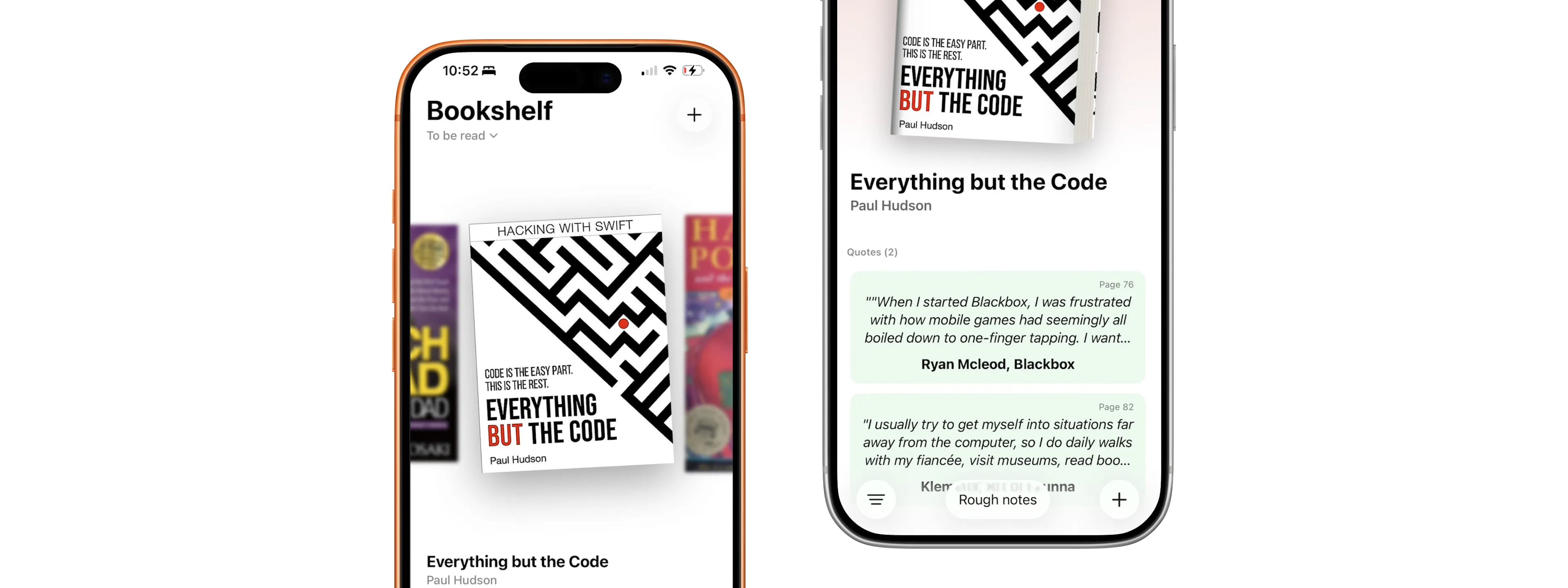 The app that remembers for you
It’s now a personal digital library that helps you:
- Scan and maintain your own collection of books: Whether you’ve finished them, want to read them, or are in the middle of them.
- Capture ideas while you read: Save important passages, quotes, and thoughts that feel meaningful.
- Remember what matters: Dogear resurfaces those saved ideas on your bookshelf and via widgets, so they stay top of mind instead of fading away.
From my own experience, I realized I’d forgotten most of the books I read last year. Dogear is built to prevent exactly that.
In short: Dogear is the app that remembers for you and helps you save the ideas worth remembering.
Why this version feels different
This pivot came from listening, not guessing.
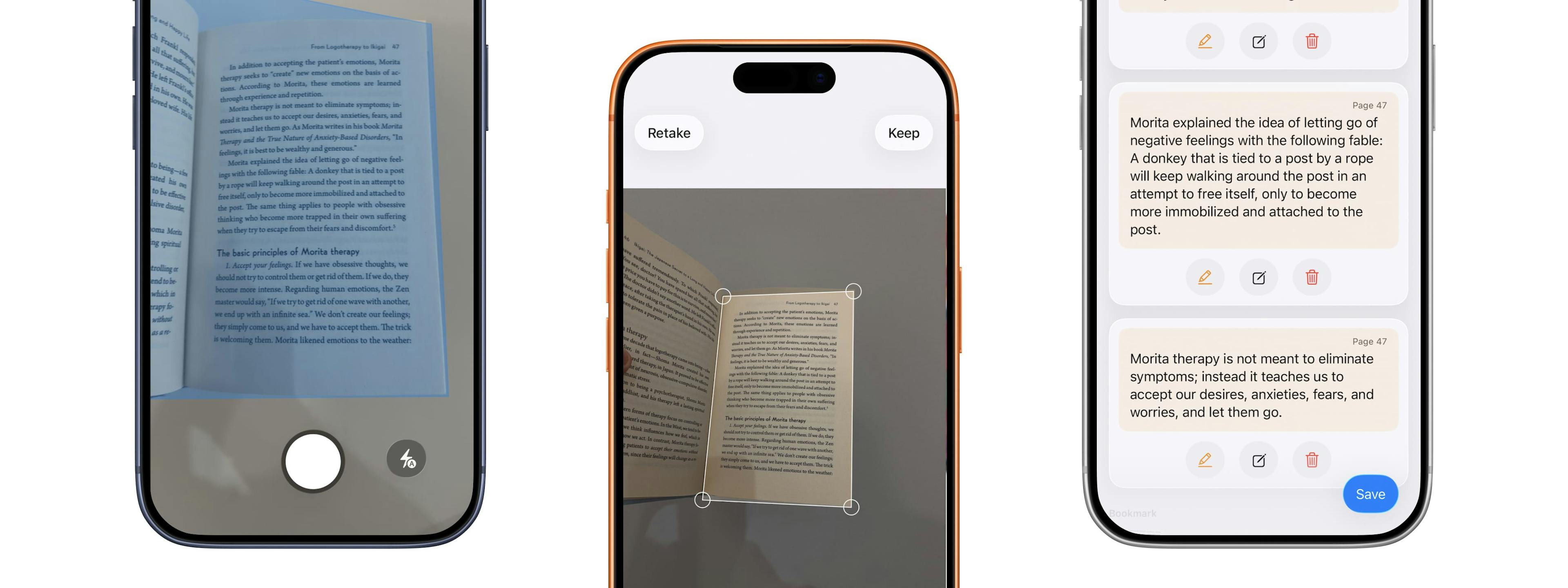
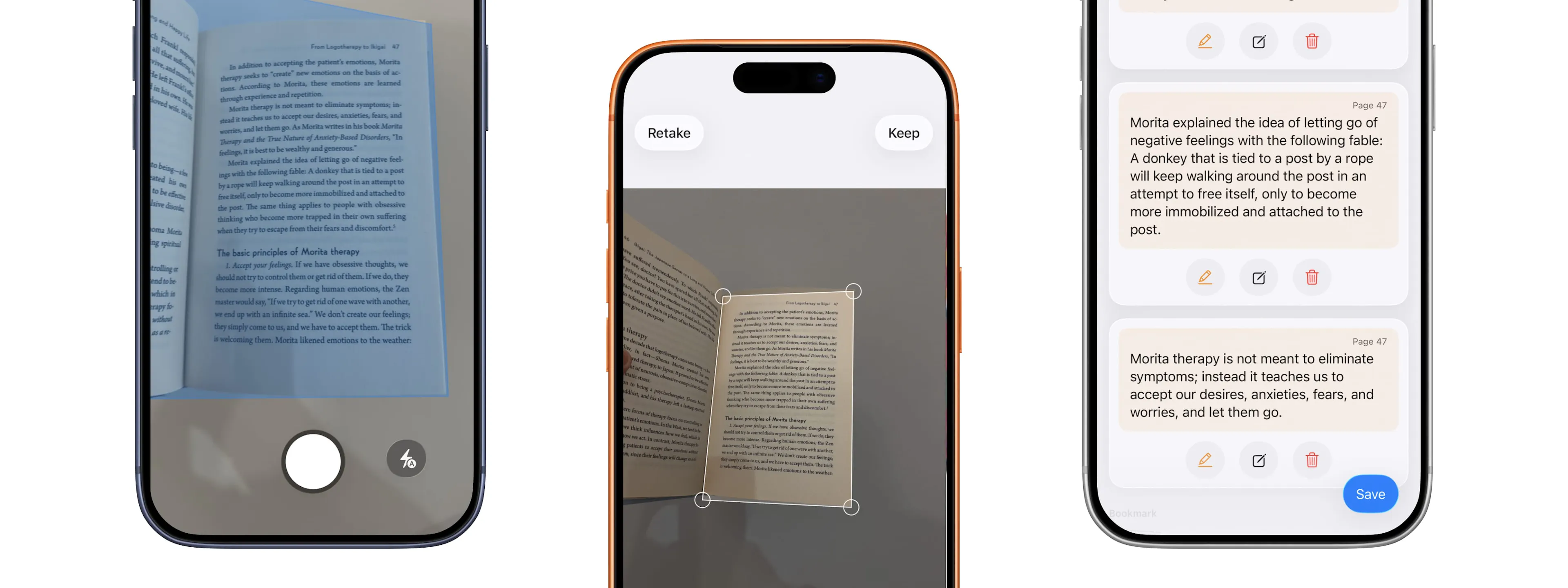 New passage capture flow
Instead of asking “What cool features can I add?” I asked:
- “What behavior do I actually want to change?”
- “What would make someone open this app every time they read?”
- “What can this do that a generic AI chat can’t replace?”
The answer was: a tight, personal system for capturing and revisiting ideas from the books you already own and read.
That’s a much clearer, more defensible problem to solve.
What I wish I knew before writing the first line of code
If I could go back and tell my past self one thing before starting Dogear, it would be this:
- Don’t fall in love with your first idea.
- Do fall in love with the problem you’re solving.
- Spend real time talking to users before you over-invest in a solution.
Yes, it feels slower at first. You’re not shipping features every day. But that upfront work saves you from:
- Building the wrong thing
- Wasting months on a pivot you could have avoided
- Launching something polite-but-forgettable instead of something people actually need
In my case, those few days of stepping back and rethinking Dogear saved me months of building in the wrong direction and one very awkward Twitter/X thread.
Where things stand now
The new Dogear is in TestFlight while the App Store version sits in review.
If you’re into reading, note-taking, or just curious about how this pivot turned into an actual product, I’d love for you to try it and tell me what you think.
TestFlight link: https://testflight.apple.com/join/rXS6ZWBh
I’m especially interested in:
- Does the “personal digital library + idea capture” concept make sense?
- What’s missing that would make you use this regularly?
- What feels confusing, unnecessary, or “meh”?
Ask me anything in the comments: about the pivot, the tech stack, the lessons, or what’s next for Dogear. I’m happy to go deep.
And yes, there’s a competition involved: Shipaton 2026
Full transparency: Dogear is also my entry for Shipaton 2026.
I’m about halfway through the competition, and I’m aiming for the design category. “Aiming” is the key word; nothing is concrete yet. I know the competition is already halfway through, and I’m still not 100% sure which category I’ll officially compete in.
But if the past couple of weeks have taught me anything, it’s this: nothing in this journey is certain. If you think you have a concrete plan, my friend, you’re in for a big surprise.
At the end of the day, my goal is simple: ship this app and get it into the hands of users and readers who find it useful. However, as this plays out with Shipaton, I see it as a win–win. Either I learn even more about building the right product, or I end up with something real in people’s pockets or ideally, both.
如有侵权请联系:admin#unsafe.sh