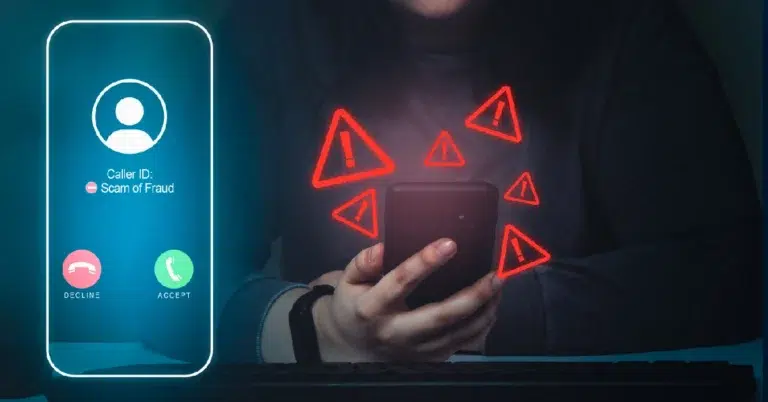
文章介绍了语音钓鱼(Vishing)作为一种社会工程学诈骗手段,通过电话或语音信息诱骗受害者泄露敏感信息。攻击者利用伪造来电显示、AI语音工具等技术制造信任感和紧迫感,常见形式包括银行诈骗、政府 impersonation 和技术支持骗局等。识别 Vishing 的关键在于警惕要求提供敏感信息或施加压力的来电,并采取防范措施如避免泄露信息、核实身份及启用防骚扰功能。 2025-12-31 07:37:43 Author: securityboulevard.com(查看原文) 阅读量:3 收藏
Vishing, short for voice phishing, is a type of social engineering scam in which attackers use phone calls or voice messages to trick individuals into revealing sensitive personal or financial information such as passwords, bank details, and credit card numbers.
Unlike traditional phishing that targets victims through emails or malicious links, Vishing relies on real-time voice communication to create a sense of urgency and trust, making people more likely to comply without thinking through the consequences.
A typical Vishing attack follows a structured pattern designed to appear legitimate:
- Research: Attackers collect basic details about the target, sometimes pairing email phishing with follow-up phone calls to increase credibility.
- Spoofed Caller ID: Technology is used to make calls appear as though they originate from banks, government agencies, or known businesses.
- Social Engineering: Fear, authority, or urgency is used to pressure victims into sharing information or taking immediate action.
- Fraudulent Use: The stolen data is then used for financial theft, identity fraud, or wider organisational attacks.
Modern Vishing campaigns increasingly use AI-based voice tools and voice cloning, making calls sound highly authentic—even mimicking familiar voices. This is where advanced cybersecurity awareness becomes important, especially for organisations handling sensitive data.
Vishing can take many forms depending on the attacker’s goal:
- Banking Fraud: Scammers pose as bank representatives warning of suspicious account activity to steal login credentials.
- Government Impersonation: Calls claiming unpaid taxes or legal threats to pressure immediate payments.
- Tech Support Scams: Attackers pretending to be support staff ask for remote access or payment for fake “fixes.”
- Prize or Charity Scams: Fake rewards or charitable causes used to elicit donations or banking details.
Signs of a Vishing Attempt
Recognising Vishing can prevent major loss. Be cautious if you are contacted and the request:
- Asks for confidential information (passwords, PINs, OTPs).
- Pressures you to act immediately or threatens consequences.
- Uses unfamiliar or spoofed phone numbers.
- Requests remote access or unusual payment methods (e.g., crypto, gift cards).
Legitimate institutions rarely ask for sensitive data over unsolicited calls. Always verify independently using official contact numbers.

Attackers use a combination of technology and psychological pressure to make scams convincing:
AI-Based Vishing: AI voice tools generate realistic conversations that are difficult to distinguish from genuine calls.
Robocalls: Automated messages warn of urgent issues and prompt callbacks.
VoIP technology: Enables large-scale calling and easy caller ID spoofing.
Caller ID spoofing: Makes calls appear to originate from trusted sources.
Dumpster diving: Information gathered from discarded documents adds credibility to scams.
Tech support scams: Fake IT personnel request credentials or access.
Voicemail scams: Urgent messages encourage victims to call back.
Client invoice scams: Businesses are tricked into paying fraudulent invoices.
Security-focused organisations work with StrongBox IT to implement technical controls alongside structured employee awareness training to counter evolving vishing techniques.
What’s the difference between Phishing and Vishing?
While both are social engineering attacks, they differ mainly in communication method:
|
Aspect |
Phishing |
Vishing |
|
Primary Medium |
Email or digital messages |
Voice calls or voicemails |
|
Execution Style |
Automated, link-based |
Live or prerecorded calls |
|
Interaction |
Clicking links or attachments |
Verbal disclosure of data |
|
Detection |
Easier to filter with tools |
Harder to detect |
|
Typical Tools |
Fake websites, emails |
Caller ID spoofing, AI voice tools |
In essence, phishing relies on written digital deception, while vishing exploits direct human interaction through voice communication.
How to prevent Vishing attacks
Effective prevention requires both awareness and controls:
⇒ Step 1: Avoid sharing personal or financial details with unknown callers
⇒ Step 2: Always verify requests using official contact details
⇒ Step 3: Enable call-blocking and spam filtering features
⇒ Step 4: Conduct regular employee training on social engineering risks
A proactive security approach—supported by cybersecurity specialists such as StrongBox IT—significantly reduces exposure to sophisticated Vishing attacks.
Vishing is a growing cyber threat that targets human trust rather than technical weaknesses. From personal financial loss to large-scale business fraud, the impact can be severe. By understanding how vishing operates, recognising warning signs, and building strong awareness practices, individuals and organisations can reduce their risk and respond more effectively to voice-based scams.
For organisations looking to strengthen their defence against vishing and other social engineering threats, StrongBox IT provides cybersecurity awareness training and security solutions designed to help teams identify, prevent, and respond to evolving attack techniques.
如有侵权请联系:admin#unsafe.sh