
SoundCloud用户通过VPN访问时出现403错误无法使用。该平台因开放性质在多国受限。此次问题持续四日,公司称由配置更改引起并正在修复中。 2025-12-15 18:32:10 Author: www.bleepingcomputer.com(查看原文) 阅读量:4 收藏

Users accessing the SoundCloud audio streaming platform through a virtual private network (VPN) connection are denied access to the service and see a 403 'forbidden' error.
SoundCloud is a large audio distribution platform focused on user-uploaded content, built around independent creators rather than licensed music from major labels. It has at least 140 million registered users and 40 million creators.
Due to its open, unmoderated nature, the platform has been banned in China since 2014, in Russia since 2022, and is restricted in Venezuela, Kazakhstan, and other countries. Because of this, users in these regions rely on a VPN or proxy solution to bypass the blocks.
The VPN connection problem when accessing SoundCloud has persisted for the past four days, as the platform announced today that it is working to fix it.
BleepingComputer independently confirmed the VPN connection issue after multiple users complained on Reddit.
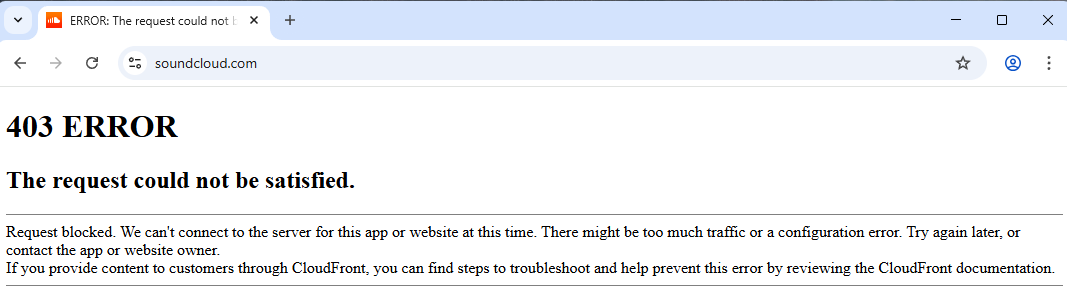
Source: BleepingComputer.com
In a statement for BleepingComputer, SoundCloud's senior director of communications Sade Ayodele said that "some configuration changes have caused some users on VPNs to experience temporary connectivity issues."
Ayodele confirmed that they are working to resolve the issues, as the platform also announced earlier today on social media in a post from the support team.
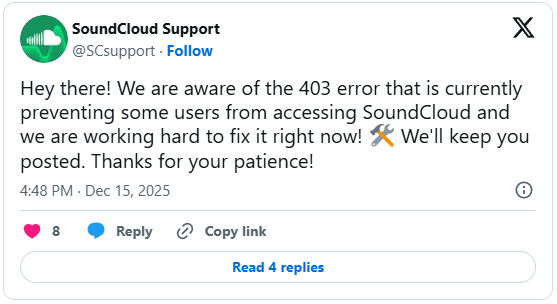
It is unclear what prompted the configuration changes and the company has not provided a timeline for when users will be able to access the service over VPN.
Reddit users have pointed out that the issue has been going on for four days now, preventing access to all accounts regardless of their membership status.
Some users have reported that specific services or server locations unlocked access to the service, though others who have tried the proposed workarounds reported little luck.
This is a developing story, and we will update the article as soon as we have more information

Break down IAM silos like Bitpanda, KnowBe4, and PathAI
Broken IAM isn't just an IT problem - the impact ripples across your whole business.
This practical guide covers why traditional IAM practices fail to keep up with modern demands, examples of what "good" IAM looks like, and a simple checklist for building a scalable strategy.
如有侵权请联系:admin#unsafe.sh